Europe warns of Russia’s hybrid attacks but struggles to counter them
  Former chief election commissioner calls SIR scheme illegal.
  A Corruption Scandal Is Reshaping Brazil’s Presidential Election
  US citizen injured in Illinois after ICE agents mistook him for fugitive, tried to arrest him
  At 10 years old, Smithsonian’s Black museum is undaunted amid pressure from Trump administration
 Supreme Court Grants Pawan Khera Anticipatory Bail, Shields Congress Leader from Assam Police’s Custodial Interrogation
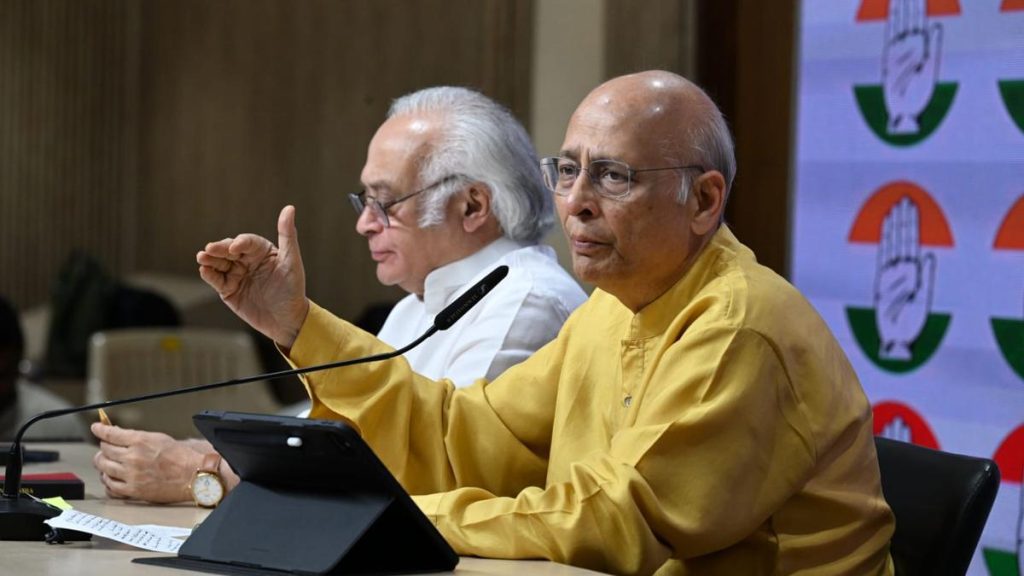
A major milestone has been reached in India’s tumultuous legal landscape with the Supreme Court’s recent decision to grant anticipatory bail to Congress leader Pawan Khera.
This development comes as a significant blow to Assam Chief Minister Himanta Biswa Sarma’s personal and professional reputation, whose wife lodged the complaint that led to Khera’s legal woes.
Updated: May 1, 2026
A major milestone has been reached in India’s tumultuous legal landscape with the Supreme Court’s recent decision to grant anticipatory bail to Congress leader Pawan Khera. This development comes as a significant blow to Assam Chief Minister Himanta Biswa Sarma’s personal and professional reputation, whose wife lodged the complaint that led to Khera’s legal woes.
The court’s decision effectively dismisses the charges brought against Pawan Khera, a high-profile Congress leader known for his outspoken stance on national politics. Khera was the subject of a criminal case filed by Sarma’s wife, which the Supreme Court has deemed was motivated by a desire for revenge rather than a genuine pursuit of justice. The case had sparked heated debate within the Indian parliament and had significant implications for the country’s rapidly deteriorating state of party politics.
According to sources close to the court proceedings, the Chief Justice of India was unconvinced by the grounds presented by the prosecution, stating that the allegations did not warrant the stringent custodial interrogation of Khera. This marked a significant departure from the initial response of the Assam police, who had vigorously pursued Khera with the backing of the state government.
The granting of anticipatory bail to Khera sends a strong message to the ruling Bharatiya Janata Party (BJP) that its efforts to silence opposition leaders will not be tolerated. The move underscores the growing tensions between the Congress and BJP, with each party using the Khera case as a means to fuel party rhetoric.
Congress party officials have hailed the decision as a victory for the truth and justice. This sentiment is backed by civil rights activists, who argue that the court’s decision has effectively checked the excesses of the state government and the Assam police. Many believe this move will embolden opposition voices and safeguard their freedom to speak without fear of reprisal.
At a time when India’s national narrative is increasingly divisive, the outcome of the Khera case has significant implications for the country. The Supreme Court’s move to shield an opposition leader from harassment by the state is being viewed as a beacon of hope. It highlights the resilience of India’s democratic institutions and the limits to which they will permit the government to curtail civil liberties.
The court’s decision has sent shockwaves across Assam, where the ruling BJP has been accused of pursuing a vindictive agenda against its opponents. Local officials have condemned the move, labeling it as an attempt to undermine the state government’s authority.
However, analysts have pointed out that the granting of bail to Khera may also embolden other activists and leaders to speak out against the government without fear of reprisal. This could potentially lead to a more robust public discourse on national issues, paving the way for greater accountability within the government.
In this regard, the impact of this decision is not limited to the immediate fallout in the Indian parliament. It resonates with the broader democratic narrative in India and serves as a reminder of the critical role played by the judiciary in safeguarding individual freedoms. The court’s decision sets a crucial precedent for the nation, underscoring the fundamental principles of justice and fairplay that define its democratic foundation.
Ultimately, the significance of this ruling lies in its far-reaching implications for India’s fragile democratic ecosystem. It demonstrates a vital safeguard against the excesses of the state and serves as a powerful reminder that the judiciary remains committed to upholding the nation’s constitutional ideals.
Why This Matters:
This landmark decision matters on several fronts. It highlights the enduring significance of India’s constitutional framework and the crucial role the judiciary plays in safeguarding individual rights. It also underscores the critical need for accountability within the government and the protection it offers to its citizens. Most notably, this decision stands as a powerful deterrent against the state and its officials from misusing the legal system for personal or political agendas.
Future Outlook:
The granting of bail to Pawan Khera sets the stage for a more contested national narrative in India. Opposition leaders are likely to use this development to push for greater accountability within the government. In response, the ruling BJP may become more aggressive in its pursuit of opposition voices, potentially leading to further escalation of tensions. However, the Supreme Court’s decision serves as a bulwark against these excesses, underscoring the judiciary’s commitment to maintaining the delicate balance between power and accountability.
This decision marks a crucial shift in India's power dynamics, with the judiciary firmly asserting its role as a counterbalance to the ruling party's aggressive pursuit of opposition voices. By shielding Pawan Khera from harassment, the Supreme Court is sending a powerful message that individual freedoms will not be silenced, and the government's overreach will not be tolerated.