 Tao Tokyo Spring 2027
  Karnataka SIR: Teaching on the back burner
  Trump administration offers mixed messages on limits to Ukraine’s Starshield access
  US Treasury proposes a rule to crack down on high-tech investments in China, other adversaries
  Calley Means, a key MAHA advocate, resigns as a top RFK Jr. adviser
 Supreme Court sets special bench to examine Centre’s plea on OBC creamy layer criteria
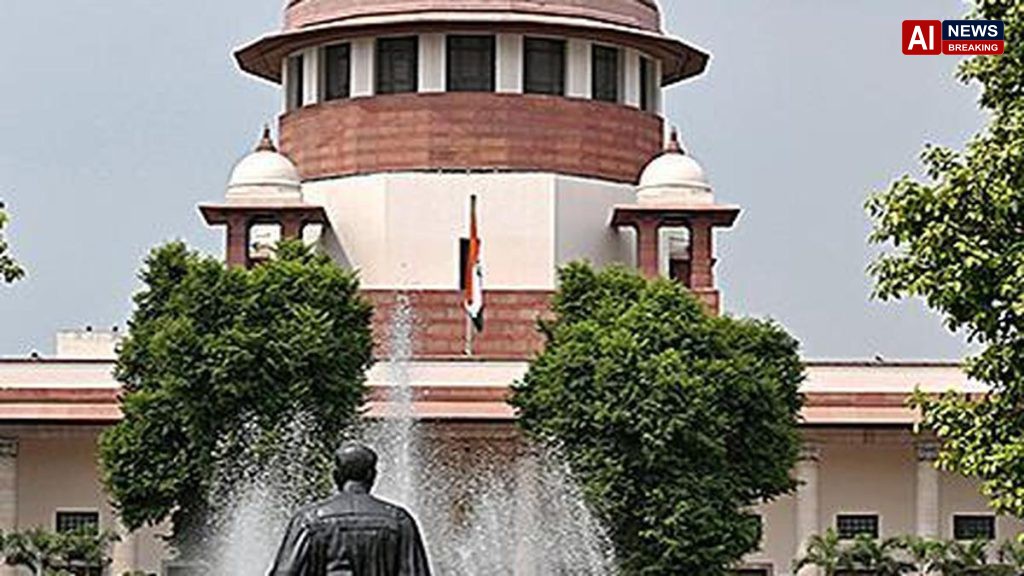
OBC creamy-layer criteria: Supreme Court to set up special Bench to hear Centre’s plea - AI News Breaking
The Supreme Court of India has agreed to constitute a special bench to examine the Central government’s plea regarding the creamy-layer criteria for Other Backward Classes. This development marks a significant procedural shift in the ongoing legal discourse surrounding affirmative action policies and their implementation in public sector recruitment. The request for a larger bench underscores the complexity of the issue and the potential broader implications for constitutional interpretation..
Chandrachud, who heads the Constitution Bench that recently delivered the landmark verdict, directed the formation of this special panel to address specific concerns raised by government representatives. The decision reflects the judiciary’s cautious approach to balancing social justice mandates with administrative efficiency and legal consistency.The Union government has expressed serious reservations about the immediate implementation of the recent judgment. Officials have warned that enforcing the new creamy-layer thresholds could trigger a cascade of litigation from previous years’ candidates..
This legal avalanche is expected to affect not only civil service examinations but also all other aspects of government recruitment. The concern stems from the potential invalidation of appointments and promotions made under earlier, different criteria. Government lawyers argued that such a scenario would create administrative chaos and uncertainty across vast stretches of the public sector..
They emphasized the need for clarity and stability in recruitment processes to ensure the smooth functioning of state machinery.At the heart of the controversy is the definition of who qualifies as socially and educationally backward. The recent verdict sought to refine the criteria for identifying the creamy layer within the OBC category. By raising the income limits and including certain professional occupations, the court aimed to exclude those who have already achieved a level of socioeconomic advancement..
However, the government contends that the retrospective application of these standards poses significant logistical challenges. There is a fear that thousands of appointments could be challenged in courts across the country. This could lead to a prolonged legal battle that drains judicial resources and creates uncertainty for employees.The special bench will likely delve into the technicalities of the order and its operational feasibility..
It must determine whether the judgment should apply prospectively or if it has retrospective effects on existing appointments. This distinction is crucial for maintaining the integrity of the recruitment system while respecting the court’s directive. Legal experts suggest that the bench will need to craft a nuanced solution that balances constitutional mandates with practical realities..
The outcome could set a precedent for how future socioeconomic reservations are implemented. It may also influence similar provisions for Scheduled Castes and Scheduled Tribes, although the immediate focus remains on the OBC category.Critics of the government’s stance argue that delaying implementation undermines the spirit of social justice. They contend that the creamy-layer concept was introduced precisely to ensure that the most deprived among the backward classes benefit from reservations..
Excluding the relatively affluent prevents the concentration of benefits among elite sub-groups within these communities. From this perspective, any hesitation to enforce the new criteria is seen as a resistance to progressive social change. Activists and civil society groups have welcomed the court’s initial verdict, viewing it as a step toward more equitable distribution of opportunities..
They urge the government to comply with the order rather than seek legal avenues to postpone it.Conversely, supporters of the government’s position highlight the potential disruption to administrative continuity. They point out that many candidates are currently serving in various government roles based on previous selection criteria. Invalidating their positions could lead to massive vacancies and operational bottlenecks..
The argument rests on the principle of legitimate expectation, where individuals acted on established rules at the time of their appointment. Disrupting these positions solely due to a change in interpretation could be seen as unfair to those who have since settled into their roles. There is also the question of financial implications, as refunds or compensations might become necessary, adding to the fiscal burden on the state.The composition of the special bench will be of keen interest to legal observers..
It is expected to include senior judges with expertise in constitutional law and social justice issues. Their collective wisdom will be tested in resolving the apparent conflict between judicial pronouncement and executive capability. The bench’s deliberations will likely involve detailed hearings and extensive submissions from various stakeholders..
Trade unions, employee associations, and civil rights organizations are expected to present their cases. The process will provide a platform for comprehensive debate on the evolving nature of reservation policies in a changing economic landscape.This case also highlights the broader tension between judicial activism and executive discretion in policy implementation. Courts often strike down provisions that are found to be unconstitutional or discriminatory..
However, the manner in which these rulings are executed requires careful coordination with the executive branch. Missteps in this coordination can lead to legal vacuums and administrative paralysis. The Supreme Court’s decision to form a special bench indicates an awareness of these complexities..
It suggests a willingness to engage in a detailed discussion rather than leaving the matter to individual High Courts, which might lead to conflicting interpretations.The potential ripple effects of this litigation are vast and far-reaching. Every government department that recruits through the OBC quota will need to reassess its procedures. Educational institutions that provide reservations in admissions may also face similar challenges..
The uncertainty could deter prospective applicants who fear that their selections might later be invalidated. Alternatively, it could encourage a wave of legal challenges from those who missed out in previous years, claiming that the new criteria unfairly disadvantage them. The legal landscape is poised for a period of intense activity as various parties navigate this new judicial terrain.As the special bench prepares to hear the Centre’s plea, the nation waits for a direction that provides both justice and stability..
The outcome will shape the future of affirmative action in India. It will determine how the state balances the rights of marginalized communities with the need for efficient governance. The proceedings offer a critical test of the legal system’s ability to manage complex social questions..
Ultimately, the judgment will reflect the country’s commitment to inclusive growth and equitable opportunity. All eyes are on the courtroom to see how this delicate balance is struck in the coming months..
Updated: August 25, 2026
Insight: Scrutinizing prospective application over retrospective upheaval exposes the deeper institutional friction between idealistic equity and bureaucratic stability.
The resolution will define whether social justice mechanisms can evolve without destabilizing the foundational trust in state employment.