Tamil Nadu CM orders Chennai flood‑prevention review.
 India and Bangladesh work
 Shikhar Mohan in India A squad for last two four-dayers against New Zealand A
 Belagavi police arrest two MES leaders.
 Arms Race Intensifies in Korea as the North Is Emboldened by Russia Alliance
The Taliban Are Using Europe’s Fear of Migrants to Their Advantage
**
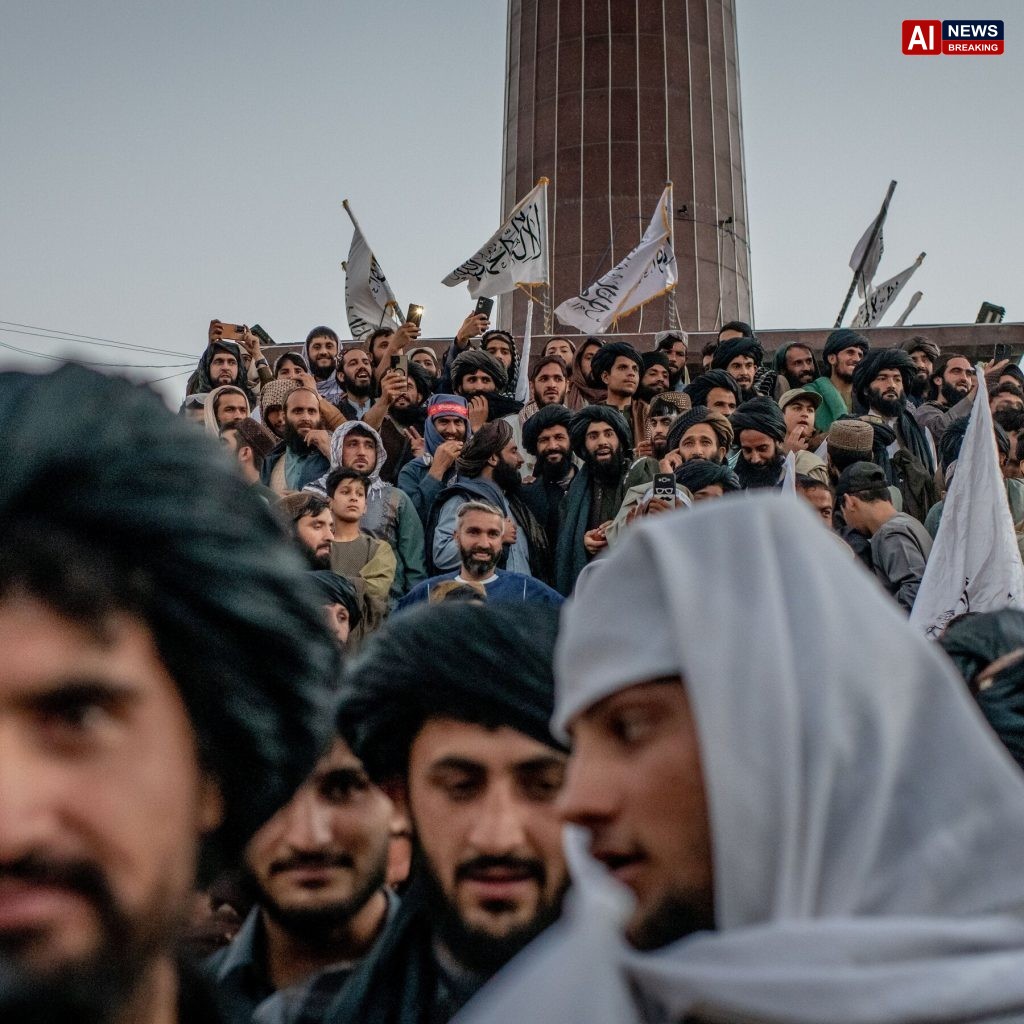
The Taliban Are Using Europe’s Fear of Migrants to Their Advantage - AI News Breaking
taliban using europes fear:
The Taliban Are Using Europe’s Fear of Migrants to Their Advantage European governments have long condemned the Taliban’s draconian policies on women’s rights, gender equality and political dissent. Yet, as the flow of asylum seekers from Afghanistan continues, several capitals are quietly courting the Islamist movement for assistance in returning refugees to the country they fled. Diplomatic cables obtained by investigative journalists reveal that behind public denunciations there is a growing willingness to negotiate “voluntary repatriation” schemes with the Taliban, despite the regime’s record of persecution..
This pragmatic shift underscores a widening gap between Europe’s moral rhetoric and the hard‑nosed realities of border politics. The surge in Afghan arrivals to the United Kingdom, Germany and Sweden over the past two years has reignited a contentious debate about the capacity of European asylum systems. In Westminster, the Home Office has faced mounting pressure from opposition parties and NGOs to tighten controls, while in Berlin the Interior Ministry has warned of “migration fatigue” among the public..
Against this backdrop, senior officials have reportedly opened back‑channel talks with Taliban representatives in Doha, seeking guarantees that returned migrants will not face reprisals – a promise that many human‑rights groups consider implausible. Sources close to the negotiations say the Taliban are exploiting Europe’s anxiety by offering swift processing of deportation requests in exchange for a modest easing of sanctions on the regime’s financial assets. In return, the insurgents pledge to allow “safe passage” for those who wish to leave, a claim that runs counter to their history of denying exit visas to opponents and journalists..
The quid‑pro‑quo has been framed by some European diplomats as a pragmatic solution to a “persistently unmanageable” influx, yet critics argue it legitimises a government that has systematically denied basic freedoms since retaking Kabul in August 2021. The United Nations High Commissioner for Refugees (UNHCR) has warned that forced returns to Afghanistan could breach the 1951 Refugee Convention, which obliges signatories to refrain from refoulement. Nonetheless, EU member states have begun to invoke “exceptional circumstances” clauses, arguing that the deteriorating security situation at home outweighs the risks faced by returnees..
In a recent European Council meeting, a majority of ministers voted to fast‑track asylum applications from Afghanistan, while simultaneously allocating additional funding for “re‑integration projects” overseen by the Taliban‑controlled Ministry of Refugees and Repatriation. Public opinion polls across the continent show a sharp rise in anti‑immigrant sentiment, with nearly 60 % of respondents in France and Italy expressing a desire for stricter border controls. Politicians have tapped into this mood, positioning themselves as defenders of national identity against what they describe as “uncontrolled migration”..
The Taliban, aware of this climate, have launched a sophisticated media campaign that frames Europe as a hostile “colonial power” seeking to “dump” its problems on Afghanistan. By portraying themselves as the only viable authority capable of restoring order, they aim to extract concessions from wary European capitals. Human‑rights NGOs have condemned the emerging cooperation as a betrayal of the principle of “non‑refoulement”..
Amnesty International’s Europe director warned that “any agreement that facilitates the return of people to a regime that routinely tortures, imprisons and executes its own citizens is a stain on European values”. Legal scholars echo this concern, noting that EU law requires a thorough assessment of individual risk before any deportation can proceed. Yet, in practice, many asylum seekers are denied the opportunity to present their cases fully, as expedited procedures limit access to legal counsel and translation services..
In Afghanistan, the Taliban’s internal calculations appear equally strategic. By securing European assistance, they hope to improve their international standing and possibly unlock frozen assets held by the United Nations and private banks. The promise of a “controlled return” of Afghans also serves domestic propaganda, suggesting that the regime can manage migration and protect its citizens abroad..
Analysts note that this could bolster the Taliban’s claim to legitimacy, both at home and in the broader Islamic world, where the narrative of resisting Western interference resonates strongly. The financial dimension of the deal is significant. Recent reports indicate that the European Union is considering a modest unfreezing of $1.5 billion in Afghan central‑bank reserves, contingent on the Taliban’s cooperation with repatriation efforts..
While critics argue the sum is insufficient to sway the regime’s policies, insiders claim that even limited access to funds can fund the Taliban’s military campaigns and consolidate power in remote provinces. This financial incentive, coupled with the prospect of reduced sanctions, may encourage the Islamist government to present a façade of compliance with international norms, despite little evidence of genuine reform. Back in Europe, the political fallout is already evident..
In the UK, the Conservative Party’s Home ary faced a vote of no‑confidence after leaked emails suggested that “quiet diplomacy” with the Taliban was being pursued. In Germany, the coalition’s interior minister was forced to resign after a parliamentary inquiry uncovered that the ministry had ignored warnings from intelligence services about the Taliban’s human‑rights abuses. These scandals highlight the tension between electoral imperatives to curb migration and the ethical obligations owed to vulnerable refugees..
Internationally, the United States has expressed concern over the EU’s overtures, warning that “engagement with the Taliban without strict safeguards undermines regional stability”. A senior State Department official, speaking on condition of anonymity, said that Washington is monitoring the situation closely and may reconsider its own humanitarian aid programmes to Afghanistan if Europe proceeds with mass deportations. The divergent approaches among Western allies risk fracturing.
Updated: October 12, 2026
Insight: Europe’s willingness to barter asylum control for Taliban‑sanction relief betrays a deeper erosion of its human‑rights credibility, sowing distrust both at home and among allies.
If the pact proceeds, it will not only legitimize a repressive regime but also empower the Taliban’s financial and propaganda war, tightening Europe’s own security dilemmas.