 UK Deploys Bomb Squad Near R.A.F. Fairford, Air Base Used by US
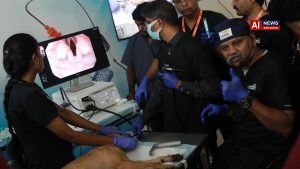
  Tracheal stents offer relief to dog breeds prone to breathing problems; veterinarians trained in Chennai
  Rajnath Singh Warns Pakistan: India Ready for ‘Every Kind of Strike’ Against Terrorism
  VACB seizes ₹14.10 lakh, $788 from GST official’s residence in Kochi
  As A.I. Accelerates, Governments Are Increasingly Being Left Behind
 Tracheal stents offer relief to dog breeds prone to breathing problems; veterinarians trained in Chennai
**
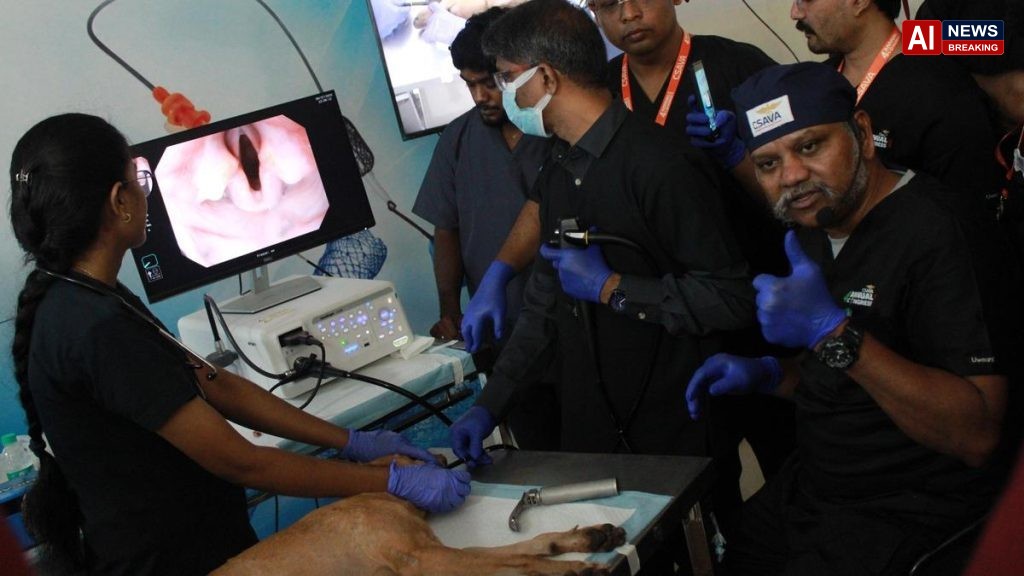
Tracheal stents offer relief to dog breeds prone to breathing problems; veterinarians trained in Chennai - AI News Breaking
Veterinary specialists from across India converged on Chennai last week for a hands‑on workshop focused on the use of tracheal stents to manage upper airway obstruction in dogs. The three‑day event, organised by the Tamil Nadu Veterinary and Animal Sciences University in partnership with several leading animal hospitals, combined theoretical sessions with practical training that included fluoroscopy‑guided deployment of stents on cadaveric specimens and live patients. Participants were given the opportunity to observe and perform the procedure under the supervision of experienced surgeons, with the aim of building capacity for a technique that has gained traction in recent years for treating brachycephalic breeds and other dogs prone to tracheal collapse.Tracheal collapse, a condition characterised by the weakening and flattening of the cartilaginous rings that keep the airway open, is a common cause of chronic respiratory distress in small‑to‑medium‑sized dogs, particularly breeds such as the Pug, French Bulldog, Boston Terrier and Chihuahua..
Traditional management has relied on medical therapy, weight control and, in severe cases, surgical reconstruction. However, the latter carries significant risk and often yields limited long‑term success. The advent of self‑expanding metallic stents, first introduced for human patients with malignant airway obstruction, has offered a minimally invasive alternative that can restore airway patency with comparatively low morbidity.The Chennai workshop began with a series of lectures that outlined the pathophysiology of tracheal collapse, criteria for patient selection and the range of available stent designs..
Ramesh Kumar, a professor of veterinary surgery, highlighted that while stenting can provide immediate relief, it is not a cure and requires careful monitoring for complications such as stent migration, fracture, granulation tissue formation or infection. He stressed the importance of a thorough pre‑operative assessment, including dynamic radiography and, where possible, computed tomography, to map the exact length and location of the collapse and to choose an appropriately sized implant.Following the didactic sessions, participants moved to a fluoroscopy suite where they practiced the technique on preserved canine cadavers. Under real‑time X‑ray guidance, the team demonstrated the step‑by‑step process: positioning the dog in dorsal recumbency, introducing a guidewire through the oral cavity, advancing a delivery catheter to the target segment, and finally deploying the self‑expanding nitinol mesh..
The hands‑on component allowed attendees to appreciate the nuances of catheter manipulation, the tactile feedback when the stent expands, and the importance of confirming correct placement before releasing the device. Trainers cautioned that fluoroscopy, while invaluable for accuracy, exposes both the animal and the operator to radiation, and recommended protective measures such as lead aprons and limiting exposure time.The most anticipated segment involved live canine patients admitted to the university’s teaching hospital. Six dogs, all presenting with moderate to severe tracheal collapse, were selected based on strict inclusion criteria that excluded those with concurrent cardiac disease or severe airway inflammation..
Each case was preceded by a consent discussion with the owners, who were briefed on the benefits, risks and the need for postoperative care. Under general anesthesia, the veterinarians performed the stenting procedure, replicating the steps practiced on cadavers but with the added challenge of maintaining stable ventilation throughout. Post‑procedure fluoroscopic images confirmed satisfactory expansion and positioning of the stents, and the dogs were extubated without immediate respiratory compromise.Outcomes from the live cases were monitored for a period of four weeks, during which the owners reported marked improvement in breathing effort, reduced cough frequency and increased activity levels..
Veterinary staff noted that the dogs tolerated the procedure well, with only minor transient side effects such as mild throat irritation and temporary dysphagia, which resolved within a few days. No instances of stent migration or fracture were observed during the follow‑up, although the team emphasized that longer‑term surveillance is essential to detect delayed complications that may arise months after implantation.The workshop also addressed the economic considerations of tracheal stenting in the Indian context. While the cost of a single stent and the associated imaging can be prohibitive for many pet owners, Dr..
Meena Patel, a veterinary economist, presented a cost‑benefit analysis comparing the expense of chronic medical management versus a one‑time interventional procedure. She argued that for dogs with advanced collapse, the stent offers a more predictable quality‑of‑life improvement, potentially offsetting the initial outlay by reducing ongoing medication costs and frequent veterinary visits. Nonetheless, she called for greater availability of affordable stent options and for insurance schemes that could make the technology accessible to a broader segment of the pet‑owning population.Feedback from the participants indicated that the hands‑on exposure significantly boosted confidence in performing tracheal stenting..
Many attendees, who had previously only observed the technique in videos or conferences, expressed enthusiasm about integrating the procedure into their own practices. Anil Singh, a practitioner from Delhi, noted that the workshop filled a critical knowledge gap, especially regarding the use of fluoroscopic guidance, which is not routinely employed in many regional veterinary clinics due to equipment constraints. He suggested that mobile fluoroscopy units could be a viable solution for extending the reach of advanced airway interventions to peripheral areas.In concluding remarks, the organisers underscored the need for continued education and research to refine stent materials, improve delivery systems and establish standardized postoperative protocols..
They announced plans for a multicentric registry that will collect data on canine tracheal stenting outcomes across India, aiming to generate evidence that can inform best‑practice guidelines and support regulatory approval of locally manufactured devices. The initiative reflects a broader shift in Indian veterinary medicine toward adopting cutting‑edge, minimally invasive technologies that were once confined to tertiary centres.As the workshop drew to a close, the consensus among the gathered veterinarians was clear: tracheal stenting represents a valuable addition to the therapeutic arsenal for canine respiratory disorders, offering tangible relief to dogs that would otherwise endure chronic dyspnoea. With adequate training, appropriate case selection and diligent follow‑up, the procedure has the potential to become a routine offering in veterinary hospitals throughout the country, improving the welfare of countless companion animals and providing reassurance to their owners..
Updated: September 27, 2026
India’s push to mainstream fluoroscopy‑guided tracheal stenting signals a turning point where high‑tech, human‑origin devices become a staple of everyday veterinary care, potentially reshaping the economics of chronic pet health.
If training spreads to peripheral clinics, the technique could democratize advanced airway rescue