 German Town Votes to Stop Adding Memorials Outside Homes of Slain Jews
  Local body ward bypolls in Keralam see 58.81% voter turnout
  Trump administration slashes fuel economy standards for cars, light trucks: Here’s what changes
  Trump announces $15 billion steel investment in Iowa.
 Trump administration slashes fuel economy standards for cars, light trucks: Here’s what changes
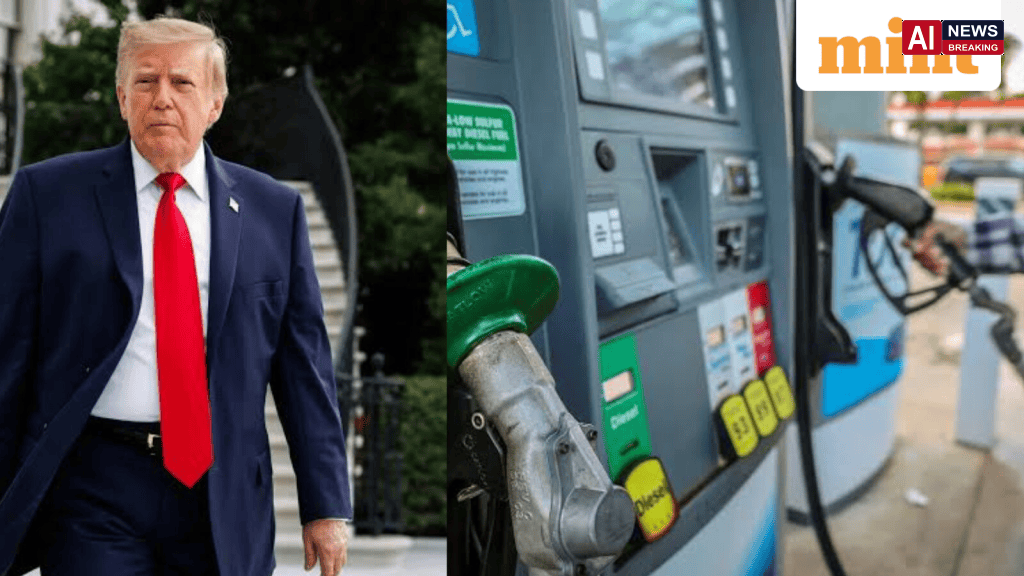
Trump administration slashes fuel economy standards for cars, light trucks: Here's what changes - AI News Breaking
The United States Department of Transportation unveiled a revised set of fuel‑economy standards on Monday, lowering the targets for new passenger cars and light trucks and projecting an average fuel‑efficiency of 34.9 miles per gallon (mpg) for the fleet by the model year 2031. The new rules replace the more stringent standards that were adopted under the previous administration, which had aimed for a 50‑mpg average by the same date. By easing the requirements, the Trump administration says it is responding to concerns from automakers about the cost and feasibility of meeting the earlier goals, while also seeking to reduce what it describes as “unwarranted regulatory burdens” on the industry.Under the revised framework, the Corporate Average Fuel Economy (CAFE) figures for passenger cars will rise more slowly, reaching roughly 38 mpg by 2031, while light‑truck standards will climb to about 31 mpg..
The combined average of 34.9 mpg represents a significant reduction from the 50 mpg target that had been projected for the same year. The agency also adjusted the “footprint‑based” methodology that links a vehicle’s size to its required fuel‑efficiency, allowing larger vehicles such as SUVs and pickup trucks to meet lower mpg thresholds than previously mandated. In practical terms, manufacturers can now certify a broader range of models without having to offset less‑efficient vehicles with a larger number of highly efficient ones.The changes are framed as a response to what the administration calls “unrealistic expectations” that could force manufacturers to raise vehicle prices or abandon certain product lines..
Officials argue that the new standards will preserve consumer choice, maintain the competitiveness of American auto makers, and avoid a scenario where buyers are forced into higher‑priced electric models that, according to the administration, still lack sufficient range and charging infrastructure. The Department of Transportation’s statement highlighted that the revised rules “reflect a balanced approach that safeguards jobs, supports the automotive sector, and continues to promote incremental improvements in fuel efficiency.”Critics, however, contend that the rollback undermines long‑term environmental goals and the United States’ commitments under international agreements to reduce greenhouse‑gas emissions. Environmental groups point to the Intergovernmental Panel on Climate Change’s warning that vehicle emissions must fall dramatically if the world is to keep warming below 1.5 °C..
By allowing a slower rise in fuel efficiency, the administration’s policy could add tens of millions of metric tons of carbon dioxide to the atmosphere over the next decade. A coalition of NGOs filed a lawsuit shortly after the announcement, arguing that the rule violates the Clean Air Act because it fails to consider the best available science on climate change.Automakers have issued mixed reactions. Some manufacturers, particularly those with large portfolios of trucks and SUVs, welcomed the flexibility, noting that the previous standards would have required costly redesigns and the introduction of new powertrains earlier than planned..
General Motors and Ford both issued statements praising the “predictable regulatory environment” and emphasizing that they remain committed to developing electric vehicles on their own timelines. Conversely, companies that have invested heavily in hybrid and fully electric technology expressed disappointment, suggesting that the diluted standards could reduce the incentive to accelerate the rollout of low‑emission models.The policy shift also has implications for the broader energy market. By slowing the transition to higher‑efficiency vehicles, the administration anticipates a modest increase in gasoline demand through 2030, which it argues will support domestic oil producers and help maintain energy security..
The Energy Information Administration’s forecasts, cited in the rulemaking, indicate that the revised standards could add roughly 200,000 barrels per day of gasoline consumption by 2031 compared with the previous trajectory. Critics argue that this short‑term benefit to the fossil‑fuel sector is outweighed by the long‑term costs of higher emissions, including health impacts from air pollution and climate‑related economic damage.The new standards also affect the regulatory landscape for electric‑vehicle incentives. The administration has signaled that it will review and potentially scale back federal subsidies that encourage EV purchases, aligning financial policy with the lowered fuel‑economy targets..
Lawmakers from both parties have raised concerns that the combined effect of weaker standards and reduced incentives could erode the United States’ position in the rapidly expanding global EV market, where China and Europe are investing heavily in battery technology and charging infrastructure.In Congress, the rule has already become a flashpoint. Several Democratic members of the House Energy and Commerce Committee have promised to introduce legislation that would restore the original 50 mpg target or at least set a higher floor for future standards. Meanwhile, a handful of Republican senators have expressed support for the administration’s approach, emphasizing the need to protect manufacturing jobs and avoid “over‑regulation.” The partisan divide underscores a broader debate about how to balance economic growth, consumer choice, and climate responsibility in the post‑pandemic era.Legal challenges are expected to delay the implementation of the new standards..
The automotive industry, through the Alliance of Automobile Manufacturers, filed a petition with the Department of Transportation seeking a stay on the rule, arguing that the agency did not conduct a proper cost‑benefit analysis and failed to adequately consider alternative policy options. If the courts grant a temporary injunction, the existing standards could remain in effect while the litigation proceeds, potentially creating uncertainty for automakers as they plan product cycles for the next decade.The Biden administration, now in its final year, has already signaled that it intends to reverse the Trump‑era changes if given the chance. In a recent briefing, the White House outlined a proposal to return to a 50 mpg target and to reinstate federal tax credits for electric vehicles, positioning the move as part of a broader strategy to achieve net‑zero emissions by 2050..
Whether that agenda will be realized depends on the outcome of the upcoming mid‑term elections, the courts’ rulings on the current standards, and the capacity of the automotive sector to adapt to shifting policy signals. As the debate continues, the ultimate impact on fuel consumption, emissions, and the pace of electrification will hinge on how quickly and decisively policymakers address the competing priorities of economic competitiveness and environmental stewardship..
Updated: September 28, 2026
The Department of Transportation has rolled back its fuel‑economy targets, easing the path for automakers but drawing fire from environmental groups who warn it will stall the nation’s emissions‑cutting progress. Meanwhile, lawmakers and industry groups are already bracing for legal challenges and a potential shift back toward stricter standards under the incoming administration.
Insight: This development highlights evolving dynamics and may have broader implications in the near term.