 Belagavi police arrest two MES leaders.
  Arms Race Intensifies in Korea as the North Is Emboldened by Russia Alliance
  Trying to establish ‘facts’ about incident ‘apparently’ involving Indians on yacht off Yemen coast: India
  Powerful Earthquake in Tibet Kills at Least 16
 US halts immigrant visa processing for staff training
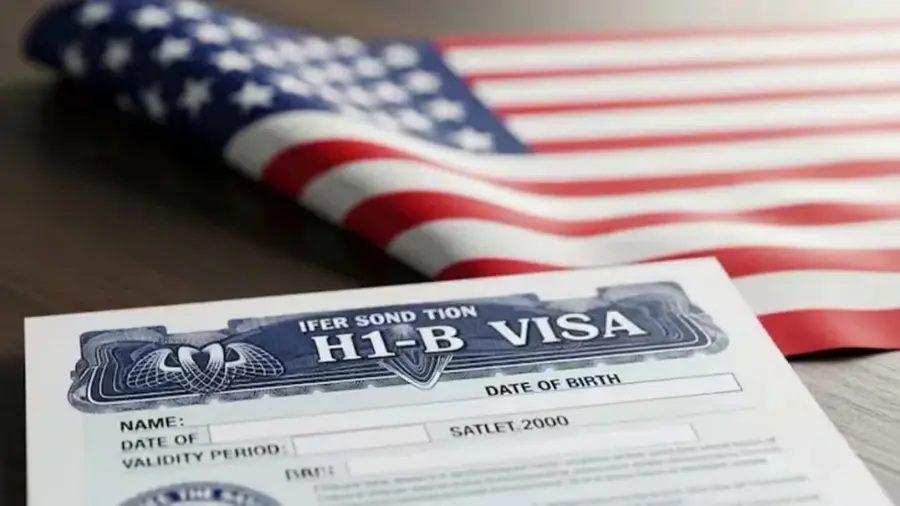
US H-1B, L-1 Visa Rule Change: Employers Face Up to 4.14 Lakh Cost for Indian Workers - AI News Breaking
The United States Department of State has implemented a comprehensive and immediate halt to all immigrant visa applications across the globe, marking a significant escalation in the Trump administration’s broader strategy to tighten border controls and restrict immigration flows. This sweeping measure, confirmed by a senior State Department official on Tuesday, effectively freezes the processing of petitions for family reunification, employment-based residency, and diversity lottery winners. The pause applies uniformly to all U.S..
embassies and consulates overseas, creating a sudden administrative vacuum that leaves hundreds of thousands of applicants in limbo as they await potential adjudication of their cases under newly stringent criteria.The decision was described by officials as a necessary step to align consular operations with the administration’s executive orders aimed at preventing individuals who might become a public charge from entering the country. According to the State Department, the initiative was launched at all diplomatic posts in early August, with the explicit goal of limiting access to applicants deemed at risk of relying on government assistance. The agency cited the need for rigorous enforcement of existing statutory requirements, arguing that previous guidelines had not been applied with sufficient consistency or thoroughness to protect the integrity of the nation’s immigration system and its social safety nets.In practical terms, the halt means that no new immigrant visa appointments are being scheduled, and current appointments are being delayed indefinitely to accommodate what officials are calling in-depth training for consular staff..
The administration asserts that this pause is not a permanent ban but a procedural adjustment designed to ensure that all consular officers are fully equipped to evaluate every visa applicant comprehensively. By recalibrating the interview and documentation review processes, the State Department aims to create a uniform standard of review that prioritizes national security and economic self-sufficiency over previous expedited processing protocols.The operational disruption was immediate and widespread, affecting candidates from every continent who were in the final stages of their visa applications. diplomatic missions in major global hubs such as London, Mexico City, and Manila, representatives informed applicants that their cases would be placed on hold pending the completion of the new training protocols..
Many applicants expressed confusion and anxiety, having already paid fees and submitted extensive documentation, only to be told that the process had effectively ground to a halt without a clear timeline for resumption.Senior officials emphasized that the training initiative has been in development since early this year, reflecting a long-planned shift in diplomatic approach rather than a reactive measure. The State Department stated that the goal is to ensure that consular officers are not only legally compliant but also consistent in their application of the public charge rule, which requires applicants to demonstrate that they are not likely to become primarily dependent on the government for subsistence. This involves a deeper scrutiny of financial records, health insurance coverage, and employability prospects, criteria that were previously interpreted with varying degrees of strictness across different jurisdictions.Critics of the policy, including civil liberties advocates and legal experts, argue that the suspension disproportionately affects low-income families and refugees who may lack extensive financial resources but pose no threat to national security..
They contend that the vague definition of public charge gives consular officers too much discretionary power, leading to arbitrary denials and a chilling effect on lawful immigration. The American Immigration Law Association, among other groups, has warned that the lack of clear, standardized guidelines could result in inconsistent outcomes, where similar cases are judged differently based on the individual officer’s interpretation of the new training materials.The halt also comes amid a broader political context of heightened rhetoric against both lawful and undocumented immigration. The Trump administration has framed these measures as essential to preserving American economic interests and social cohesion, arguing that unrestricted immigration places an unsustainable burden on public services..
Supporters of the policy point to the need for fiscal responsibility, suggesting that taxpayers should not be expected to support individuals who may not contribute economically in the short term. This perspective has resonated with a segment of the electorate that views immigration reform through the lens of economic protectionism and national sovereignty.However, the logistical fallout from the suspension is already being felt by families separated by borders, employers relying on foreign talent, and communities anticipating the arrival of new residents. The uncertainty surrounding the duration of the pause has created logistical nightmares for visa applicants who have made significant life decisions based on the expectation of relocation..
Real estate agents, educators, and healthcare providers in the United States have reported increased anxiety among their international clients and staff, who worry that their immigration status may be jeopardized by the administrative freeze.International reactions to the move have been mixed, with some governments expressing concern over the impact on bilateral relations and human mobility. Allies have questioned whether the sudden halt violates commitments made under international refugee conventions and bilateral agreements facilitating orderly migration. The European Union, in particular, has urged the United States to provide clear timelines and legal certainty for its citizens and residents seeking entry, warning that prolonged uncertainty could damage diplomatic ties and economic partnerships.Despite the criticism, the State Department maintains that the measures are lawful and necessary to enforce existing statutes in a manner that reflects the administration’s policy priorities..
Officials argue that the pause allows for a thorough review of the adjudication process, ensuring that no eligible applicant is incorrectly denied entry while simultaneously preventing those who might rely on public assistance from securing visas. The agency has promised that once the training is complete and the new guidelines are fully integrated, processing will resume, although no specific date has been provided for when normal operations might return.As the standoff continues, the human cost of the policy remains a focal point of debate. Families waiting for reunification, skilled workers eager to contribute to the U.S..
economy, and individuals fleeing persecution are left in a state of legal limbo, their futures hanging in the balance of bureaucratic deliberations. The long-term implications of this halt could ripple through the American immigration system for years, potentially reshaping the demographic and economic landscape of the nation. Whether viewed as a necessary safeguard or an unjust barrier, the pause in immigrant visa applications represents a pivotal moment in the ongoing contest over the definition of American identity and the boundaries of its borders.The United States now stands at a crossroads, balancing its self-proclaimed role as a sanctuary for the oppressed and aspirants for a better life against a political mandate to restrict entry and prioritize domestic interests..
The outcome of this policy shift will likely be tested in courts and legislative bodies, where the legality and fairness of the public charge rule and its application will be scrutinized. Until then, the silence from embassies and consulates worldwide serves as a stark reminder of the power held by administrative decisions to alter the trajectories of countless lives, leaving millions of individuals waiting in uncertain anticipation of what may come next..
Updated: August 26, 2026
This administrative freeze weaponizes bureaucratic inertia to enforce a subjective welfare test, effectively substituting legal clarity with discretionary gatekeeping. By prioritizing fiscal anxiety over established rights, the state risks eroding the rule of law while cementing a chilling effect on global mobility.