 Trying to establish ‘facts’ about incident ‘apparently’ involving Indians on yacht off Yemen coast: India
  Powerful Earthquake in Tibet Kills at Least 16
  How Pastors Mobilize Communities in Congo’s Fight Against Ebola
  Gadi Eisenkot
 Bihar Protests Turn Violent: Police Use Water Cannons as Student Demonstrators Clash in Patna
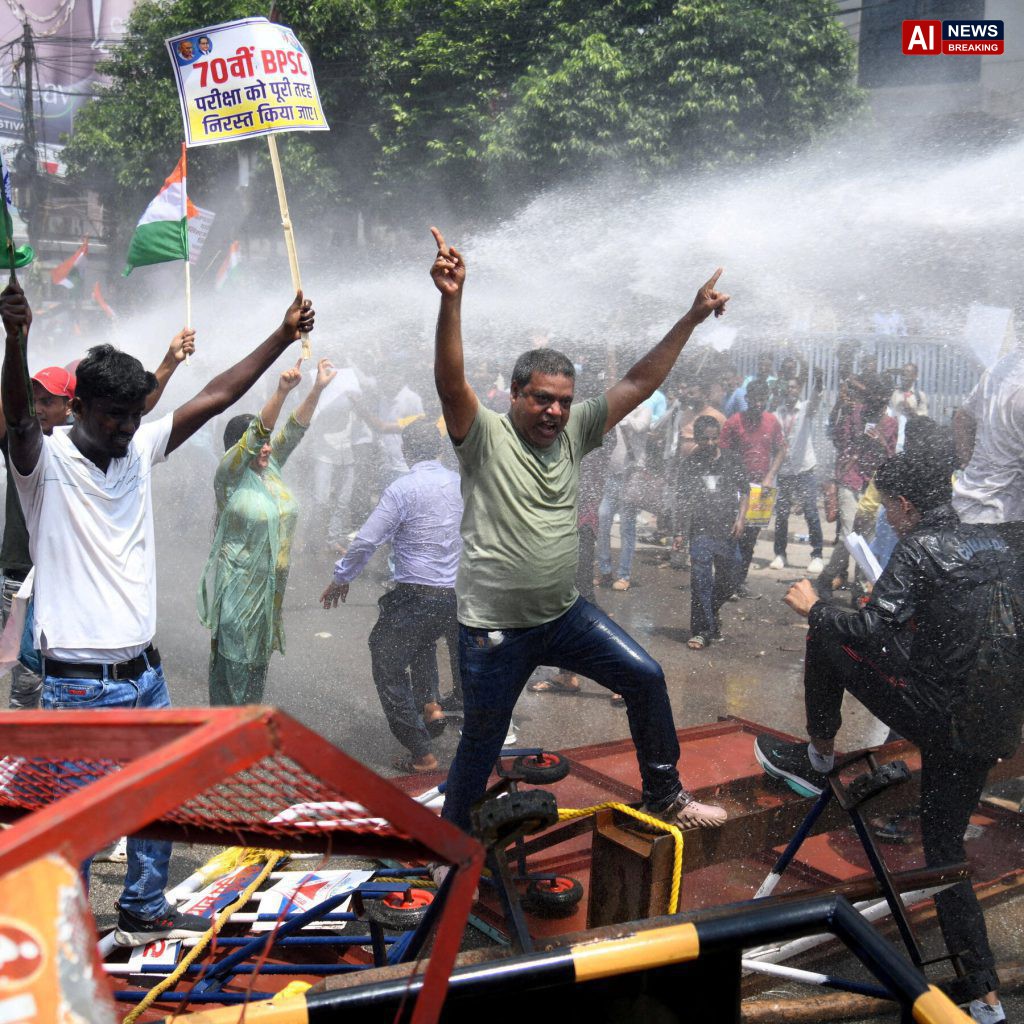
India’s Summer of Youth Protests Is Boiling Over - AI News Breaking
The latest wave of protests has taken a violent turn in the eastern Indian state of Bihar, where police forces have deployed water cannons against a crowd that has gathered in support of the national student movement known as the “Cockroach.” The clash, which began in the early afternoon, saw hundreds of young activists, many of them university students, confront police officers on the banks of the Ganga and the roads of Patna, the state capital. According to eyewitness accounts, the police, equipped with high-pressure hoses, attempted to disperse the demonstrators, resulting in a spate of injuries and several arrests.The “Cockroach” movement, which has gained traction across Indian campuses over the past year, is rooted in a broader call for systemic reforms in education, wages, and political representation. Its activists use the name metaphorically, highlighting their perceived resilience and the perceived systemic disregard for their needs..
In Bihar, the group’s leaders have organized a series of “marches to the capital” in protest against what they describe as a neglect of rural education infrastructure and a lack of investment in higher learning institutions. The movement’s slogan, “No More Rents, No More Taxes,” has been echoed by thousands of students at local colleges who feel that their academic pursuits are increasingly commodified.In the days leading up to the incident, the police had announced that they would be conducting a “security drill” in Patna, citing a rising threat of civil unrest. The declaration prompted a flurry of counter‑demonstrations by the “Cockroach” activists, who gathered at the main civic office and the university campus..
The demonstrators, armed with homemade banners and improvised barricades, blocked access to key transport routes, effectively preventing the police from accessing certain neighbourhoods. This escalation drew the attention of the state’s Minister for Home Affairs, who travelled to Patna to address the situation.Police officials maintain that the use of water cannons was a necessary measure to contain a violent mob that had allegedly set fire to a public building. An official from the Bihar Police Department stated that “the safety of the public and the officers was at risk, and the water cannon was deployed to restore order.” However, independent observers have raised questions about the proportionality of the force used, noting that the demonstrators were largely non‑violent and that alternative crowd control measures were not employed..
The incident has sparked an immediate debate among civil‑rights organisations, with several NGOs calling for a thorough investigation into the police conduct.The situation escalated further when the “Cockroach” leaders announced that they would return to Delhi’s streets in a renewed wave of protests. A spokesperson for the movement, speaking on a live video feed, warned that the movement would “not be deterred by force.” The leader’s message resonated with thousands of students in other states, many of whom had been monitoring the situation through social media channels. The call for a march to Delhi has drawn parallels with the 2019 “Quit India” protests, in which thousands of students marched across the country to demand policy changes.In response, Delhi’s municipal administration has announced a review of security arrangements for the upcoming weeks, as the city has already seen a surge in student activity in the past 48 hours..
Delhi Police, meanwhile, has pledged that it will not use water cannons in the capital, citing a desire to avoid further escalation. The city’s chief minister has called for calm and a constructive dialogue, stressing that the government is ready to engage with student leaders to address their grievances.The economic context of the protests cannot be ignored. Bihar’s education budget has seen a 15 per cent increase over the last four years, yet the state still lags behind the national average in terms of literacy and higher‑education enrollment..
The “Cockroach” movement has highlighted disparities between rural and urban institutions, as well as the lack of adequate infrastructure for science and technology programmes. Students point to the fact that many colleges in Bihar lack basic laboratory equipment, and the shortage of qualified faculty has led to a growing number of students opting for online courses offered by foreign universities. The movement’s demand for increased government funding and better job prospects for graduates has gained traction among a generation that feels increasingly disillusioned with the current political establishment.International observers, including the United Nations Development Programme, have expressed concern over the growing tensions between youth activists and law enforcement..
A senior UNDP representative in New Delhi highlighted that the use of force against peaceful demonstrators undermines India’s democratic credentials. The report called for “transparent investigations and accountability” for police officers involved. The United States Embassy in New Delhi issued a statement urging the Indian authorities to respect human rights and uphold the right to peaceful assembly.Within the political arena, the incident has become a lightning rod for criticism of the central government’s handling of civil unrest..
Opposition parties have accused the ruling party of adopting a hard‑line stance that has led to unnecessary violence. They argue that the government’s focus on maintaining a strict image of order has come at the expense of addressing the root causes of student dissatisfaction. Meanwhile, the ruling party’s spokesperson has defended the police action as a measured response to an “uncontrolled mob” that threatened public safety..
The spokesperson also pointed out that the government had already begun a dialogue process with student leaders, and that the protests were part of a wider national debate on education reform.The water cannon incident in Bihar has sparked a broader national conversation about the role of police in managing civic protests. Police chiefs across several states have called for stricter protocols on the use of water cannons, ensuring that such measures are only deployed in situations where the safety of the public is at immediate risk. They have also emphasized the need for better communication between law enforcement and protest organisers, so that demonstrations can take place without the risk of violent confrontation.In the days that follow, several universities across the country have announced “student‑rights days,” during which campus authorities will hold forums to discuss grievances and propose policy solutions..
The universities have also pledged to establish an independent oversight committee to monitor student protests and to provide a safe space for dialogue. The hope is that these initiatives will prevent a recurrence of violence and create a more inclusive environment for student participation in democratic processes. The movement’s call for a march to Delhi remains a symbolic gesture of defiance, but many students and civil society organisations have expressed a desire to achieve change through constructive engagement rather than confrontation.The events that unfolded in Bihar and the subsequent calls for a Delhi march underscore a growing impatience among India’s youth..
While the immediate crisis has been contained, it has underlying tensions between the state machinery and the next generation of citizens. The coming weeks will reveal whether the government’s willingness to engage with student demands will translate into tangible reforms or whether the cycle of protest and suppression will continue.
Updated: August 25, 2026
The heavy-handed response in Bihar signals a widening chasm between the state apparatus and its young citizens, eroding trust in a system already accused of neglecting rural education. If the government continues to equate dissent with disorder, it risks turning a growing cohort of disillusioned students into a permanent source of instability, undermining the very democratic dialogue it claims to champion.