Europe warns of Russia’s hybrid attacks but struggles to counter them
  Former chief election commissioner calls SIR scheme illegal.
  A Corruption Scandal Is Reshaping Brazil’s Presidential Election
  US citizen injured in Illinois after ICE agents mistook him for fugitive, tried to arrest him
  At 10 years old, Smithsonian’s Black museum is undaunted amid pressure from Trump administration
 US judge blocks Alabama nitrogen executions
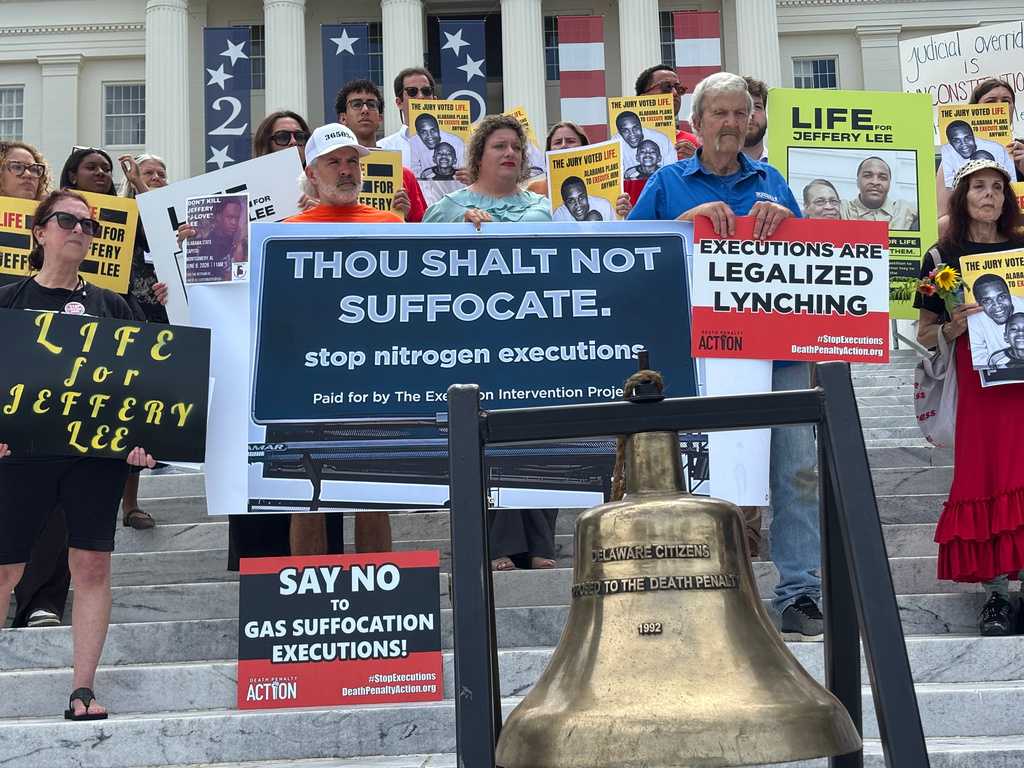
US federal judge blocks Alabama from executing man by nitrogen gas A federal judge on Tuesday permanently blocked Alabama from executing a man with nitrogen gas after declaring the method violates the ban on cruel and unusual punishment. Alabama became the first state in the nation to use the execution method in January 2024, but has faced repeated legal challenges to its use. The decision marks the latest development in a long-standing battle between state authorities and those advocating on behalf of prisoners who oppose capital punishment..
In many of these cases, it can take years for the issue to be resolved. However, in this case, a federal court took swift action. Jeffery Lee, a man convicted of murder, was scheduled to be executed by nitrogen gas on Thursday, prompting US district judge Emily C Marks to intervene..
The decision to intervene came amid concerns that the proposed execution method could subject the prisoner to undue suffering and pain. This decision to permanently block the proposed method is one step of a series of ongoing court battles over the use of nitrogen in executions. Marks stated in her ruling that the state was not able to prove that this new method would provide the necessary humanity, dignity, and respect for human life and dignity that Alabama’s own death penalty protocols state is necessary..
Alabama initially argued in its defence of the gas that the method would be more humane than traditional lethal injection methods, which have faced significant criticism due to alleged shortcomings in their ability to deliver efficient and painless executions. However, US district judge Emily C Marks rejected these claims. Marks argued that the state’s justification was not sufficient and that the state had yet to provide a reliable means of executing prisoners by gas, as required under state statute..
Alabama’s use of nitrogen has raised concerns about the safety of the method and its potential impact on prisoners. Some argue that the method could cause a prisoner’s body to freeze, leading to a prolonged and excruciatingly painful death. While the state insists that nitrogen poses no risk of such outcomes, critics point to the absence of scientific evidence to support these claims..
These concerns raise critical questions about the use of nitrogen as a means of execution. While the decision is a setback for Lee, who still faces a death sentence, the move marks an important moment in the ongoing fight for human rights in the US. It also highlights the contentious relationship that has developed between state authorities and those advocating on behalf of prisoners..
As debates over capital punishment continue, advocates for those on death row argue that the courts have a crucial role to play in ensuring prisoners are treated with all the deference due to their humanity, in the words of US district judge Emily C Marks. The decision to ban nitrogen gas comes amid a wider debate over capital punishment in the US, with many states grappling with concerns over the use of lethal injection and other methods. This is part of a broader effort to rethink the use of death as a form of punishment and to address long-standing issues related to its fairness, equity, and humanity..
While it remains unclear how the ruling will ultimately affect executions in Alabama, the long-term implications of the decision will be significant. By ruling against the state, US district judge Emily C Marks has set an important precedent that could influence other states to reassess their own use of nitrogen. It remains to be seen whether other states will follow Alabama’s lead in seeking to adopt the method as a means of execution..
In response to the decision, a spokesperson for the Alabama Attorney General’s office said that the state would continue to fight for its right to execute prisoners by nitrogen gas. The spokesperson argued that Marks’ decision would undermine the rule of law and undermine the state’s ability to carry out the sentence. As the battle continues, one thing remains clear: the debate over nitrogen gas has deep divides within the US justice system..
Marks’ decision marks a critical moment in the national debate over capital punishment and our collective understanding of the value of human life. The ruling has significant implications for those advocating for reform. It also poses difficult questions for state authorities to address, including the feasibility and ethics of nitrogen as an execution method..
In the coming weeks and months, it is likely that the case will be appealed by the state and that further court action will be taken. Ultimately, it is for the courts to ensure that prisoners receive the protection due to them under the ban on cruel and unusual punishment. In its ruling, US district judge Emily C Marks cited a range of international and national human rights frameworks that prohibit executions by methods deemed inhumane and degrading..
The decision also reflects an increasing awareness of the long-term consequences of allowing states to experiment with untested execution methods. In the end, this ruling brings attention to the long and arduous journey that those advocating for prisoners often have to take. The ongoing court battles that have taken place over capital punishment are just one sign of this challenge..
Updated: June 10, 2026
This ruling highlights the complex moral terrain surrounding capital punishment, where the pursuit of justice must be balanced with the protection of human dignity. By prohibiting the use of nitrogen gas, the court is essentially forcing states to confront the darker aspects of their own morality and the true value they place on human life.