Europe warns of Russia’s hybrid attacks but struggles to counter them
  Former chief election commissioner calls SIR scheme illegal.
  A Corruption Scandal Is Reshaping Brazil’s Presidential Election
  US citizen injured in Illinois after ICE agents mistook him for fugitive, tried to arrest him
  At 10 years old, Smithsonian’s Black museum is undaunted amid pressure from Trump administration
 US Strikes Iranian Radar Sites as Drone Swarm Heads Toward Strait of Hormuz, Escalating Gulf Conflict
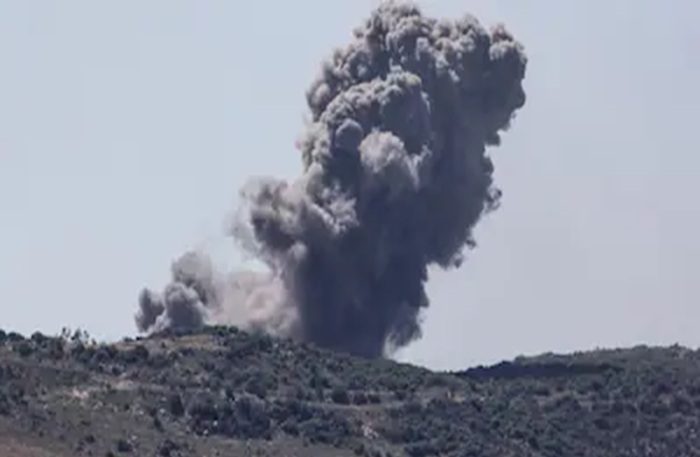
The United States has reportedly struck Iranian coastal radar sites after detecting hostile drone activity heading toward the strategic Strait of Hormuz.
The incident marks a sharp escalation in already rising US-Iran tensions, with maritime security in the Gulf increasingly under threat.
The United States carried out targeted strikes on Iranian coastal surveillance radar installations after detecting what it described as hostile drone activity approaching the Strait of Hormuz, one of the world’s most critical oil shipping corridors. The move comes amid a rapidly intensifying cycle of retaliatory actions between Washington and Tehran, with both sides increasingly engaging in direct and indirect military exchanges.
According to regional security updates, US forces in the Middle East intercepted multiple Iranian drones and subsequently launched strikes against radar infrastructure believed to be supporting surveillance and targeting operations along Iran’s southern coastline.
The timing of the strikes coincided with reports of additional drone activity moving toward maritime traffic lanes in the Strait of Hormuz, raising fears of disruption to global energy shipments passing through the chokepoint.
The Strait of Hormuz is one of the most strategically sensitive waterways in the world. Nearly one-fifth of global oil trade passes through this narrow channel linking the Persian Gulf to the Arabian Sea. Any disruption—whether through military action, drone harassment, or naval escalation—has immediate implications for global oil prices and shipping insurance costs.
In this context, even limited strikes on radar or surveillance systems can significantly alter regional risk calculations. Radar installations are critical for coastal monitoring, drone detection, and maritime defense coordination. Their destruction or degradation reduces early-warning capability and increases uncertainty in already volatile waters.
Sequence of Events Leading to the Strike
Based on available reporting:
- Drone Detection: US military surveillance systems identified Iranian-origin drones moving toward maritime traffic routes near Hormuz.
- Interception: US forces reportedly engaged and shot down multiple drones deemed a threat to shipping lanes.
- Retaliatory Action: Following the interceptions, US forces struck Iranian coastal radar sites believed to be supporting surveillance and targeting systems.
- Regional Spillover Risk: The exchanges occurred amid broader regional tensions involving Gulf states and ongoing diplomatic strain.
This pattern reflects a growing “action-reaction loop,” where drone incursions are met with defensive interceptions, followed by counterstrikes on military infrastructure.
Rising Military Tensions Between US and Iran
The latest escalation is part of a broader confrontation that has intensified over recent weeks. The United States has increasingly framed Iranian drone activity as a direct threat to international maritime security, while Iran has accused Washington of aggressive military posturing and violating ceasefire understandings.
Earlier incidents have included:
- Drone interceptions over Gulf shipping lanes
- Missile activity targeting regional US-aligned positions
- Strikes on surveillance infrastructure on both sides
The cumulative effect is a widening theater of conflict stretching across the Gulf region, with risks extending beyond military targets to global energy infrastructure.
Markets are closely watching developments around Hormuz due to its outsized role in global energy logistics. Even minor disruptions can lead to:
- Oil price volatility
- Increased shipping insurance premiums
- Temporary rerouting of tankers
- Heightened naval presence by multiple global powers
Analysts warn that sustained drone warfare or radar suppression operations could effectively create a “shadow blockade,” where shipping remains physically open but operationally risky.
This escalation reflects a shift from isolated tactical encounters to a sustained “sensor-and-drone warfare” environment, where surveillance infrastructure itself becomes a primary battlefield target. The conflict is no longer defined only by missiles or naval assets, but by the degradation of detection networks that enable real-time control over maritime space. If this pattern continues, the Strait of Hormuz risks evolving into a persistent high-alert zone where economic disruption occurs even without full-scale war, driven by uncertainty, intermittent strikes, and contested domain awareness rather than outright blockade.
This is a developing story. More updates will follow as new information becomes available.