Europe warns of Russia’s hybrid attacks but struggles to counter them
  Former chief election commissioner calls SIR scheme illegal.
  A Corruption Scandal Is Reshaping Brazil’s Presidential Election
  US citizen injured in Illinois after ICE agents mistook him for fugitive, tried to arrest him
  At 10 years old, Smithsonian’s Black museum is undaunted amid pressure from Trump administration
 Why Bhagwant Mann Is Talking About an SAD-BJP Reunion: Punjab CM Calls It a ‘Desperate Bid to Regain Power’
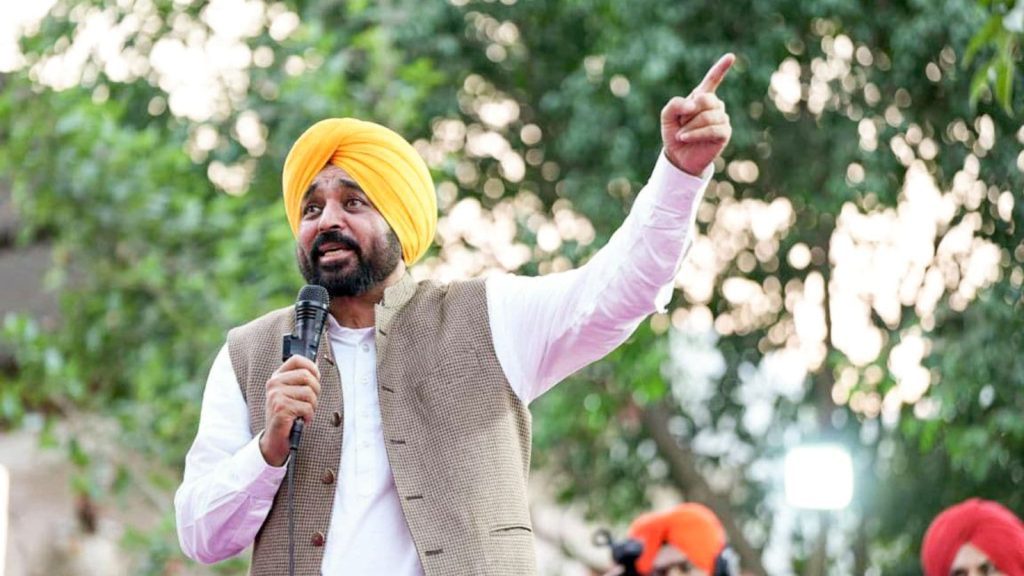
bhagwant mann talking about:
Punjab Chief Minister Bhagwant Mann has triggered fresh political debate by suggesting that the Shiromani Akali Dal (SAD) and the Bharatiya Janata Party (BJP) may once again join hands in Punjab. Mann described the possibility as a “desperate bid to regain power,” arguing that both parties are struggling to regain their lost political influence in the state.
The remarks come amid increasing speculation about potential political realignments ahead of upcoming electoral contests in Punjab. While neither the BJP nor the SAD has officially announced plans for a reunion, discussions surrounding the possibility have gained traction in political circles, prompting sharp reactions from rival parties.
Background: A Long-Standing Alliance That Ended
For more than two decades, the Shiromani Akali Dal and the BJP were among the most successful political allies in Punjab. Their partnership combined the SAD’s traditional support base among Sikh voters with the BJP’s influence among urban and Hindu voters.
The alliance governed Punjab for multiple terms and was considered one of the most durable political partnerships in Indian politics.
However, the relationship collapsed in 2020 during the nationwide controversy over the now-repealed farm laws. The Akali Dal withdrew from the National Democratic Alliance (NDA), citing concerns about the impact of the agricultural reforms on Punjab’s farmers.
The split significantly altered Punjab’s political landscape and left both parties searching for new electoral strategies.
Why Bhagwant Mann Raised the Issue: Political analysts believe Mann’s comments serve multiple purposes.
First, they allow the ruling Aam Aadmi Party (AAP) government to portray itself as the primary alternative to what it describes as traditional political forces in Punjab. By linking the SAD and BJP together, Mann seeks to remind voters of the period when the two parties jointly governed the state.
Second, raising the possibility of a reunion helps AAP frame future elections as a contest between its governance model and what it calls the return of established political alliances.
Third, Mann’s remarks come at a time when opposition parties are attempting to rebuild their organizations and expand their voter bases following electoral setbacks in recent years.
Political Challenges Facing SAD: The Shiromani Akali Dal has experienced one of the most difficult periods in its history since the end of its alliance with the BJP.
The party has struggled to regain the electoral strength it once enjoyed and has faced challenges in reconnecting with sections of its traditional support base. Electoral performances in recent state and parliamentary elections have reflected these difficulties.
A renewed understanding with the BJP could potentially help the Akali Dal consolidate anti-AAP votes and regain influence in urban constituencies where the BJP maintains a presence.
However, any move toward a reunion would also carry political risks, particularly among voters who supported the party’s decision to break away over the farm laws issue.
BJP’s Growing Ambitions in Punjab: Since the alliance ended, the BJP has sought to expand its independent footprint in Punjab.
The party has invested significant resources in strengthening its organizational network and attracting leaders from other political formations. BJP leaders have repeatedly stated their intention to emerge as a stronger force in the state rather than relying entirely on former allies.
At the same time, political realities suggest that coalition politics could once again become relevant if opposition parties seek to challenge the AAP government effectively.
Whether the BJP views a renewed partnership with the SAD as strategically beneficial remains a key question.
Can an SAD-BJP Alliance Return? : The possibility of an SAD-BJP reunion continues to generate debate among political observers.
Supporters of such a move argue that the two parties have a long history of working together and share common interests on several political and governance issues. They believe a reunited alliance could present a stronger challenge to the ruling AAP.
Critics, however, point out that the political environment in Punjab has changed significantly since the alliance ended. Public sentiment, voter priorities, and party strategies have evolved, making a simple restoration of the old partnership far from straightforward.
Moreover, unresolved differences stemming from the farm law controversy could complicate any efforts to rebuild trust between the two parties.
AAP’s Strategy : For the Aam Aadmi Party, highlighting the possibility of an SAD-BJP alliance serves a broader political objective.
AAP leaders have consistently positioned themselves as an alternative to both traditional regional parties and national political formations. By suggesting that former allies may reunite, the party seeks to reinforce its narrative that established political forces are attempting to return to power through alliances rather than offering new solutions to voters.
Mann’s comments also allow AAP to keep the focus on opposition politics while defending its own governance record.
Leaders from the SAD and BJP have largely dismissed Mann’s allegations, accusing the Chief Minister of attempting to divert attention from governance issues facing Punjab.
Opposition figures argue that speculation about alliances is being used to shift public debate away from concerns such as employment, law and order, agriculture, and financial management.
Nevertheless, political observers note that discussions about future alliances are common ahead of major elections, and strategic calculations can change quickly depending on electoral circumstances.
As Punjab moves toward future electoral contests, the question of whether the SAD and BJP will once again join forces is likely to remain a topic of political discussion. While no formal proposal has emerged, the possibility continues to attract attention because of the historic significance of the alliance and the changing political equations within the state.
For now, Bhagwant Mann’s remarks have reignited debate over opposition unity, electoral strategy, and the future direction of Punjab politics. Whether the speculation ultimately translates into a political alliance remains uncertain, but the issue is expected to feature prominently in the state’s evolving political narrative.