Europe warns of Russia’s hybrid attacks but struggles to counter them
  Former chief election commissioner calls SIR scheme illegal.
  A Corruption Scandal Is Reshaping Brazil’s Presidential Election
  US citizen injured in Illinois after ICE agents mistook him for fugitive, tried to arrest him
  At 10 years old, Smithsonian’s Black museum is undaunted amid pressure from Trump administration
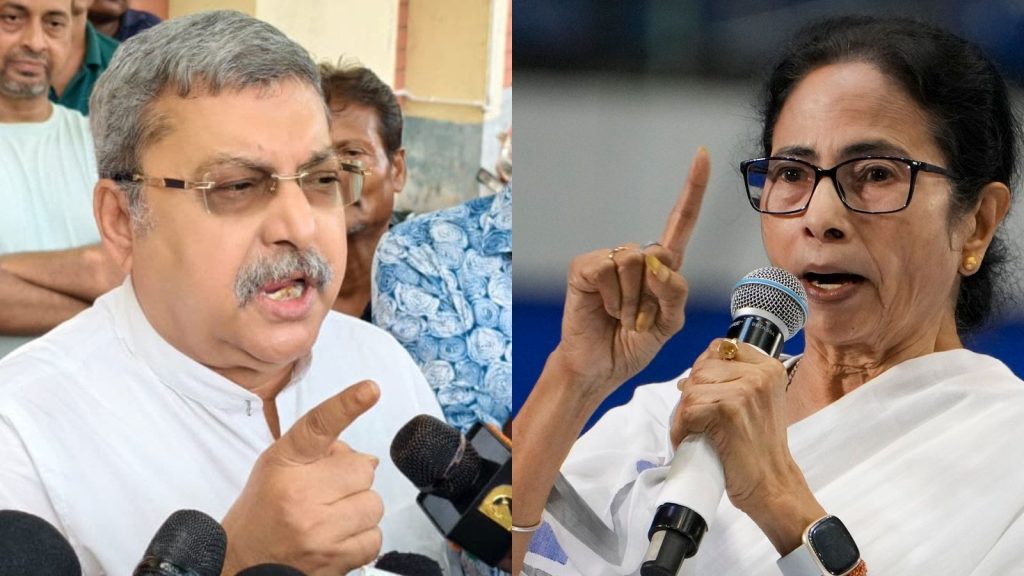
 Kalyan Banerjee’s ‘Abhishek or Us’ Challenge to Mamata Exposes Growing TMC Rift Amid Internal Turmoil
kalyan banerjees abhishek challenge:
Trinamool Congress (TMC) MP Kalyan Banerjee has sparked fresh political controversy by reportedly presenting West Bengal Chief Minister Mamata Banerjee with a stark choice—“Abhishek or us”—amid growing tensions within the party. The remarks have intensified speculation about internal divisions between supporters of Abhishek Banerjee and senior leaders, raising questions about the party’s unity ahead of crucial political battles.
The Trinamool Congress (TMC) is facing renewed scrutiny over internal tensions after senior party leader and MP Kalyan Banerjee reportedly challenged party chief and West Bengal Chief Minister Mamata Banerjee to choose between Abhishek Banerjee and a section of the party’s senior leadership.
The alleged “Abhishek or us” remark has become the latest flashpoint in what political observers describe as an increasingly visible power struggle within the ruling party. The development has fueled speculation about factionalism, leadership dynamics, and the future direction of the TMC as it prepares for upcoming electoral contests.
While the party has attempted to project unity in public, recent events suggest that differences among influential leaders may be becoming harder to contain.
What Triggered the Controversy? The controversy emerged following reports of disagreements within the Trinamool Congress over organizational decisions, leadership roles, and the growing influence of Abhishek Banerjee, the party’s national general secretary and nephew of Chief Minister Mamata Banerjee.
Abhishek has steadily risen within the party hierarchy over the past several years and is widely viewed as one of the most influential figures in the TMC after Mamata Banerjee herself.
His increasing prominence has strengthened perceptions that he could eventually play a larger leadership role within the party. However, this rise has also reportedly created discomfort among some veteran leaders who believe that organizational decisions are becoming increasingly centralized around a smaller leadership circle.
Against this backdrop, Kalyan Banerjee’s reported remarks have attracted significant political attention.
The ‘Abhishek or Us’ Message: According to reports, Kalyan Banerjee’s comments were interpreted as a warning that senior party leaders were becoming frustrated with internal developments and expected Mamata Banerjee to address their concerns.
The phrase “Abhishek or us” has been widely seen as symbolic of a broader divide within the party rather than a personal disagreement between individual leaders.
Political analysts suggest that the statement reflects concerns among some senior TMC figures about decision-making processes, distribution of responsibilities, and the future balance of power within the organization.
Although party leaders have sought to downplay the significance of the remarks, the controversy has exposed underlying tensions that opposition parties have been quick to highlight.
Abhishek Banerjee’s Growing Influence: Abhishek Banerjee has emerged as a key strategist and campaigner for the Trinamool Congress in recent years.
He has played an important role in election campaigns, organizational restructuring, and outreach efforts beyond West Bengal. Supporters credit him with helping modernize the party’s political messaging and expanding its national profile.
Many younger leaders within the TMC view Abhishek as the face of the party’s next generation, capable of guiding the organization through changing political realities.
However, his growing influence has also led to periodic speculation about succession planning and the future leadership structure of the party.
Despite repeated assertions by the TMC that Mamata Banerjee remains the unquestioned leader of the organization, discussions surrounding Abhishek’s role continue to generate intense political interest.
Challenges Facing the Trinamool Congress: The controversy comes at a sensitive time for the ruling party.
The TMC is preparing for future electoral battles while simultaneously managing governance responsibilities in West Bengal. Maintaining internal cohesion is particularly important as opposition parties attempt to capitalize on any signs of division.
Political observers note that large regional parties often experience internal debates as leadership structures evolve and new leaders emerge. However, public disagreements can create perceptions of instability, especially when they involve senior figures.
Recent controversies within the party have provided ammunition to political opponents who argue that internal conflicts could weaken the TMC’s organizational effectiveness.
Opposition Reacts: Opposition parties have seized on the reported remarks as evidence of growing discontent within the Trinamool Congress.
Leaders from the Bharatiya Janata Party (BJP), Congress, and Left parties have accused the TMC of facing an internal leadership crisis. They argue that the controversy reflects deeper disagreements about the party’s future direction and decision-making processes.
The BJP, in particular, has attempted to portray the episode as proof that factional struggles are intensifying within the ruling party.
TMC leaders, however, have dismissed these claims and insisted that the party remains united under Mamata Banerjee’s leadership.
For Mamata Banerjee, the controversy underscores the challenge of balancing competing interests within a large political organization.
As the party’s founder and central figure, she has historically managed internal differences through direct intervention and consensus-building. Her leadership has often been the glue holding together various factions and political interests within the TMC.
Analysts believe that her response to the current tensions could play a crucial role in determining whether the issue remains a temporary disagreement or develops into a larger organizational challenge.
Many within the party continue to view her authority as strong enough to contain any emerging divisions.
What This Means for TMC’s Future: The debate sparked by Kalyan Banerjee’s remarks highlights broader questions about leadership transition, organizational structure, and political strategy within the Trinamool Congress.
While there is no immediate indication of a formal split or major rebellion, the episode demonstrates that discussions about the party’s future leadership are becoming increasingly prominent.
As West Bengal’s political landscape continues to evolve, the TMC will likely seek to reinforce its message of unity while addressing concerns raised by senior leaders.
The coming months could prove important in determining how effectively the party manages internal dynamics while maintaining its political dominance in the state.
For now, the controversy has added a new layer of intrigue to West Bengal politics. Kalyan Banerjee’s reported “Abhishek or us” challenge has amplified discussions about succession, authority, and internal party management within the Trinamool Congress.
Whether the issue fades quickly or becomes a more significant political challenge will depend largely on how party leadership responds and whether underlying concerns among senior leaders are addressed. What remains clear is that the episode has once again brought the spotlight onto the evolving power structure within one of India’s most influential regional parties.
The significance of Kalyan Banerjee’s remarks extends beyond a single political controversy. They reflect the tensions that can emerge when a dominant political party begins navigating questions of generational leadership and organizational evolution. For the TMC, managing the balance between established leadership and emerging power centers will be critical to maintaining unity and electoral strength. How Mamata Banerjee handles these dynamics may shape not only the party’s future but also the broader political trajectory of West Bengal.