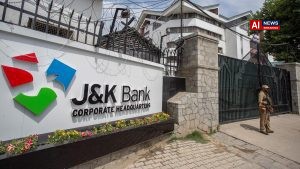
 Outcry as J&K Bank implements reservation policy pushed by ex-chairman and VHP trustee R.K. Chhibber
 China’s trade surplus passes $1 trillion.
 Why has NMC cautioned students against unauthorised medical colleges? | Explained
 Six injured as speeding BEST bus triggers multi-vehicle pile-up at Wadala traffic signal
 ‘It was ridiculous’ – Khawaja details Port Elizabeth sandpapering
Why has NMC cautioned students against unauthorised medical colleges? | Explained
**

Why has NMC cautioned students against unauthorised medical colleges? | Explained - AI News Breaking
The National Medical Commission (NMC) has issued a fresh advisory urging prospective medical students and their families to exercise caution when dealing with institutions that are not recognised by the regulator. The warning comes amid a growing number of reports that unaccredited colleges, often operating under the guise of legitimate medical schools, are using aggressive marketing tactics to attract applicants. By highlighting the risks of misleading advertisements, unauthorised admission offers and false representations, the NMC hopes to protect vulnerable students from financial loss, sub‑standard education and, ultimately, the erosion of public trust in India’s medical training system.In recent months, the Ministry of Health and Family Welfare has recorded a surge in complaints filed by candidates who were lured by glossy brochures, social‑media campaigns and websites that flaunted impressive infrastructure and promises of guaranteed seats..
Many of these platforms displayed forged affiliations with recognised universities, while some agents claimed that payment of a modest “processing fee” would secure a seat in a prestigious institution. The reality, however, has often been starkly different: students discover that the colleges lack the requisite accreditation, their curricula are not aligned with NMC standards, and the degrees they obtain may not be recognised for practice or further study.The NMC’s advisory underscores that only colleges listed on its official website have the authority to grant medical qualifications in India. This list is regularly updated and reflects institutions that have met stringent criteria relating to faculty qualifications, hospital attachments, laboratory facilities and compliance with the National Eligibility cum Entrance Test (NEET) framework..
Any college not appearing on this register is, by definition, unauthorised to admit students for the MBBS, BDS or postgraduate medical programmes. The commission stresses that enrolling in such an institution not only jeopardises a student’s career prospects but also contravenes legal provisions that protect the integrity of medical education.A key concern highlighted by the NMC is the proliferation of “ghost colleges” that exist solely online, offering admission through a veneer of legitimacy. These entities often operate from modest premises, lack proper teaching staff, and do not maintain the clinical exposure required for competent medical training..
In several documented cases, students have paid substantial sums – sometimes exceeding ₹10 lakhs – only to find that the promised campus was either a façade or an unfinished project. The resulting financial burden, coupled with the loss of an academic year, has left families scrambling to find alternative pathways, often at the expense of their children’s mental health and future prospects.The advisory also points to the role of unregistered agents who act as intermediaries between students and dubious colleges. These agents frequently promise “seat allotment guarantees” and claim to have insider connections with admission committees..
While some operate independently, many are part of larger networks that exploit the high demand for medical seats. By charging hefty commissions, they not only enrich themselves but also perpetuate a cycle of misinformation that undermines the merit‑based selection process established by NEET. The NMC has urged candidates to verify the credentials of any agent and to report suspicious activities to the commission’s grievance redressal portal.In response to the growing menace, the NMC has pledged to strengthen its monitoring mechanisms..
The commission plans to collaborate with state education departments, the Ministry of Information and Broadcasting, and law enforcement agencies to track and dismantle fraudulent operations. Digital surveillance tools will be employed to identify misleading content on social media platforms, and takedown notices will be issued against websites that falsely claim NMC approval. Additionally, the NMC is expanding its public awareness campaigns, using radio, television and online channels to disseminate clear guidelines on how to verify a college’s status.Legal ramifications for operating unauthorised medical colleges are also being reinforced..
Under the NMC Act, individuals and entities that contravene the commission’s regulations can face penalties ranging from fines to imprisonment. Recent court judgments have upheld the authority of the NMC to close down institutions that fail to meet standards, and to penalise those who deliberately mislead students. These precedents serve as a deterrent, but the commission acknowledges that enforcement alone cannot curb the problem without informed vigilance from the public.Experts in the field argue that the root of the issue lies in the intense competition for a limited number of medical seats..
With an enrolment ratio of roughly 1 seat for every 5‑6 aspirants, the pressure to secure a place can drive families to explore unconventional routes. While the NMC’s advisory is a step in the right direction, scholars contend that broader reforms are needed. Suggestions include expanding the number of approved seats, enhancing the transparency of the counselling process, and introducing stricter licensing requirements for agents who facilitate admissions.For students and parents navigating the complex landscape of medical education, the NMC recommends a few practical steps..
First, consult the official NMC website to confirm a college’s inclusion in the recognised list. Second, verify that the institution has a functional teaching hospital with the necessary patient load for clinical training. Third, avoid making any payment before receiving a formal admission letter that bears the signatures of authorised officials..
Finally, report any suspicious advertisement, website or agent to the commission’s helpline, which operates round the clock to address grievances.The advisory, while focused on immediate protection, also signals a broader commitment by the NMC to safeguard the quality and credibility of medical education in India. By tackling deceptive marketing, unregistered agents and unauthorised colleges, the commission aims to preserve the meritocratic ethos of the NEET system and ensure that future doctors receive training that meets national and international standards. As the sector evolves, continuous vigilance from both regulators and the public will be essential to prevent exploitation and to uphold the standards that underpin the health of the nation..
Updated: November 10, 2026