Europe warns of Russia’s hybrid attacks but struggles to counter them
  Former chief election commissioner calls SIR scheme illegal.
  A Corruption Scandal Is Reshaping Brazil’s Presidential Election
  US citizen injured in Illinois after ICE agents mistook him for fugitive, tried to arrest him
  At 10 years old, Smithsonian’s Black museum is undaunted amid pressure from Trump administration
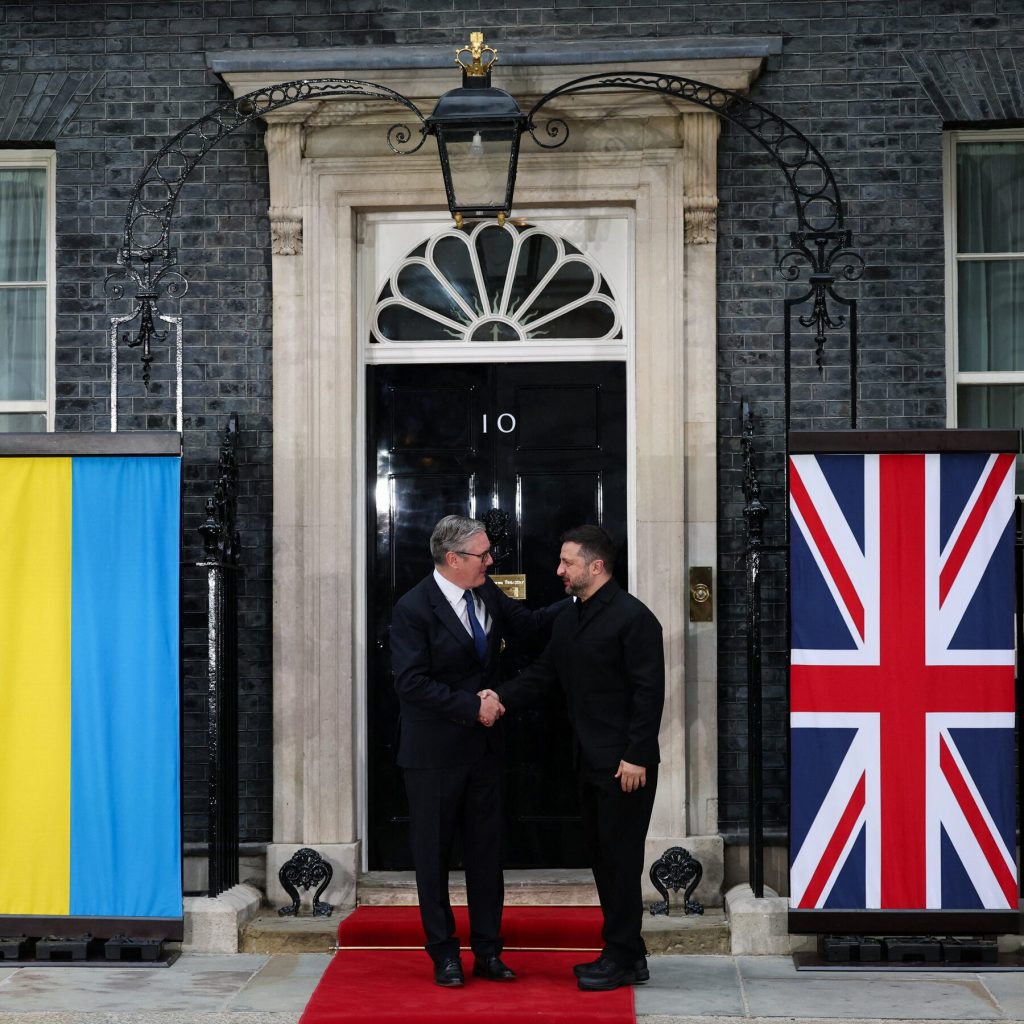
 Zelensky Turns to UK, Germany and France for Russia Peace Talks as U.S. Influence Recedes
zelensky turns germany france:
Ukrainian President Volodymyr Zelensky has intensified diplomatic outreach to European allies after signs that the United States is reducing its role as a mediator in potential peace talks with Russia. His visit to London, where he met leaders from Britain, Germany, and France, signals a strategic pivot toward Europe as the primary negotiation bloc. The move reflects a shifting geopolitical landscape in ongoing efforts to resolve the Russia–Ukraine conflict.
The geopolitical architecture surrounding the Russia–Ukraine war appears to be undergoing a notable shift, with Ukraine increasingly relying on European partners to take a more central role in potential peace negotiations. President Volodymyr Zelensky’s recent diplomatic visit to London—where he held discussions with leaders from the United Kingdom, Germany, and France—marks a significant recalibration of Kyiv’s diplomatic strategy at a time when the United States appears to be stepping back from its previously dominant mediating position.
For much of the conflict, Washington has played a central role in coordinating diplomatic initiatives, military assistance frameworks, and backchannel communications aimed at bringing Moscow and Kyiv to the negotiating table. However, recent developments suggest a gradual rebalancing, with European powers being positioned—or positioning themselves—as the more immediate and engaged interlocutors in future peace efforts.
Zelensky’s London visit is emblematic of this transition. His engagement with British Prime Minister and senior European leaders underscores Ukraine’s recognition that any durable settlement with Russia will require sustained political, economic, and security guarantees from Europe’s leading powers, even if U.S. diplomatic involvement diminishes or becomes more selective.
A Diplomatic Pivot Toward Europe: Ukraine’s outreach to Europe is not entirely new, but its urgency and prominence have increased significantly in recent months. European capitals—particularly London, Berlin, and Paris—have consistently maintained high-level diplomatic channels with Kyiv while also balancing complex internal political pressures, energy security concerns, and evolving public sentiment about the war.
Zelensky’s message in London reportedly centered on the idea that Europe must assume greater responsibility not only for Ukraine’s defense but also for shaping any eventual peace framework. This reflects Kyiv’s strategic understanding that Europe is both geographically and politically closer to the consequences of the conflict, particularly in terms of refugee flows, energy markets, and regional security stability.
The Ukrainian leadership has increasingly emphasized that peace negotiations cannot be successful without robust European participation. This is partly due to Europe’s sanctions regime against Russia, its military support packages for Ukraine, and its role in sustaining Ukraine’s wartime economy.
The Changing Role of the United States
The perceived reduction in U.S. mediation involvement marks a significant inflection point in the war’s diplomatic trajectory. Since the beginning of the conflict, Washington has been the single most influential external actor, providing intelligence support, advanced weaponry, financial assistance, and diplomatic coordination with NATO allies.
However, political recalibrations within the United States, combined with shifting global priorities, have contributed to a more cautious posture. Rather than leading direct mediation efforts, Washington appears increasingly focused on supporting allied-led frameworks while maintaining strategic distance from direct negotiation attempts between Kyiv and Moscow.
This shift does not necessarily indicate disengagement from Ukraine, but rather a redistribution of roles among Western allies. The U.S. continues to remain a critical security partner, yet the diplomatic burden of brokering peace may now be moving toward European institutions and governments.
For Ukraine, this evolution introduces both opportunities and challenges. On one hand, closer engagement with Europe could streamline decision-making processes and align regional security priorities more closely with Ukraine’s long-term integration goals. On the other hand, reduced U.S. mediation influence could complicate efforts to maintain unified Western pressure on Russia.
Britain, Germany, and France as Emerging Negotiation Pillars
The selection of Britain, Germany, and France as Zelensky’s primary European interlocutors is strategically significant. These three nations form the core leadership triangle of European diplomacy and defense policy.
United Kingdom
The United Kingdom has positioned itself as one of Ukraine’s most steadfast military and political supporters. London has consistently advocated for strong sanctions against Russia and has provided substantial military aid, including advanced training programs and weapons systems.
In a potential negotiation framework, the UK’s role could involve acting as a security guarantor and diplomatic bridge between transatlantic allies.
Germany
Germany’s role is more complex, shaped by its historical relationship with Russia, energy dependency concerns, and domestic political debates. However, Berlin has significantly shifted its posture since the beginning of the war, becoming one of Ukraine’s largest economic and military supporters in Europe.
Germany’s involvement in peace talks would likely focus on economic stabilization, reconstruction frameworks, and European Union coordination mechanisms.
France
France has consistently advocated for European strategic autonomy in foreign policy. President Emmanuel Macron has previously suggested the need for Europe to define its own security architecture, including long-term arrangements involving Russia and Ukraine.
Paris could therefore play a central role in shaping diplomatic language, negotiation formats, and potential ceasefire monitoring mechanisms.
This development reflects a structural transition in Western crisis diplomacy: from a U.S.-centered mediation model toward a distributed European-led framework. If sustained, this shift could redefine not only the Ukraine peace process but also the broader architecture of transatlantic security governance. However, Europe’s capacity to act as a unified negotiator will be the decisive constraint—without coherence among London, Berlin, and Paris, mediation risks fragmentation rather than leadership.