The Supreme Court will decide whether assault weapons bans violate the Second Amendment
 A Critic of Beijing Falls Short in Taiwan’s Key Mayoral Election
 EPA says no rise in contamination after Army detonates lead azide stockpile in Iowa
 Israeli Strike Kills 2 Workers at Gaza Clinic, Doctors Without Borders Says
 McQueen Pre-Fall 2027
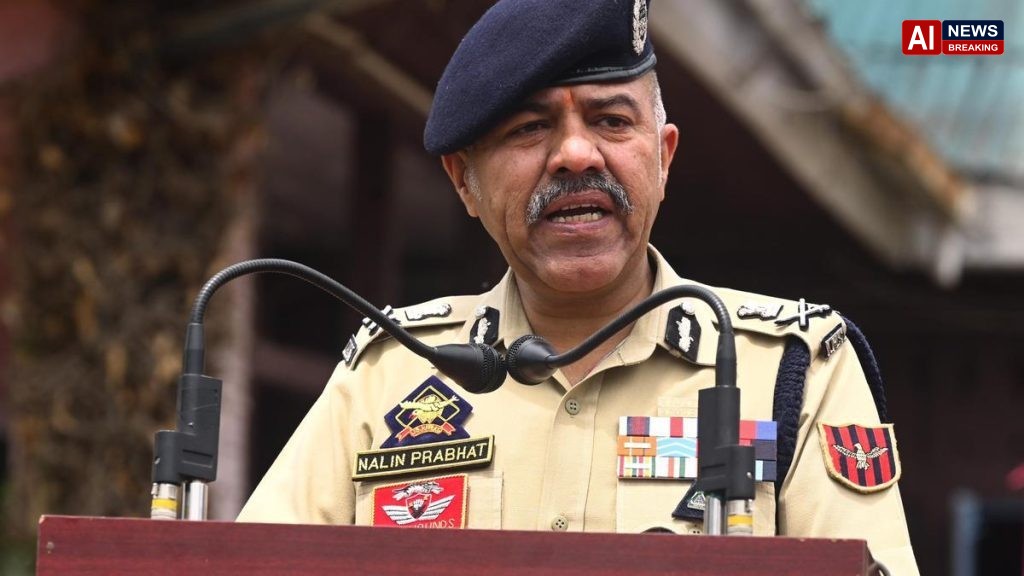
30 missing terrorists from Reasi exfiltrated to Pakistan for arms training, disturb peace in India: DGP
**
30 missing terrorists from Reasi exfiltrated to Pakistan for arms training, disturb peace in India: DGP - AI News Breaking
missing terrorists reasi exfiltrated:
The Director General of Police (DGP) of Jammu and Kashmir has confirmed that thirty individuals who had been missing from the Reasi district for more than two decades were recently exfiltrated across the border into Pakistan for the purpose of receiving arms training, a development the police chief warned could destabilise the fragile peace in the region. According to the DGP, the men, who originally hailed from the villages of Mahore and Chassana, disappeared between 1991 and 2003, a period that coincided with the height of insurgent activity in the state. The revelation, made during a press briefing in Srinagar, has prompted a flurry of questions from security analysts, political leaders and human‑rights groups about the circumstances of their disappearance, the mechanisms of their recent movement, and the potential implications for Indo‑Pak relations.Police sources said that the thirty men were identified after an intelligence tip-off received by Mahore Police Station..
The tip, described as coming from “reliable sources”, indicated that the individuals had been recruited by a cross‑border network that facilitated their covert passage into Pakistan’s tribal areas, where they underwent weapons and explosives training. The DGP, who declined to name the specific intelligence agency involved, said the information had been corroborated by multiple surveillance feeds and human sources before being acted upon. He added that a joint operation involving the state police, the Central Reserve Police Force (CRPF) and the Border Security Force (BSF) had been launched to monitor the exfiltration route and to prevent further infiltration.The thirty missing persons, now identified as “terrorists” by the police, were reportedly part of a loosely organised cadre that operated in the Reasi district during the early 1990s..
Contemporary reports from that era described a wave of kidnappings and disappearances that many local families still attribute to militant groups or alleged state‑linked disappearances. While the DGP’s statement frames the individuals as having been “missing” due to their involvement in insurgent activities, human‑rights organisations have previously called for an independent inquiry into the circumstances surrounding the disappearances, arguing that many families were left in limbo without closure.Security experts caution that the re‑emergence of these operatives could have a “cumulative effect” on the security environment in Jammu and Kashmir. Arun Sharma, a senior fellow at the Institute for Strategic Studies, noted that the training received in Pakistan’s Federally Administered Tribal Areas (FATA) – despite the region’s formal merger into Khyber Pakhtunkhwa – typically includes advanced guerrilla tactics, improvised explosive device (IED) construction, and indo‑regional networking..
“If even a fraction of those trained individuals return to the valley, they could significantly enhance the operational capability of existing militant outfits,” he warned. “The risk is not merely tactical; it is strategic, as it may embolden other dormant cells to reactivate.”The DGP’s remarks have also drawn a sharp response from the opposition in the Jammu and Kashmir Legislative Assembly. Leaders of the People’s Democratic Party (PDP) demanded a parliamentary enquiry, accusing the state government of failing to protect its citizens for decades..
“The fact that these men could vanish for over twenty years and now reappear under the patronage of a hostile neighbour is a damning indictment of the security apparatus,” said PDP legislator Farooq Ahmad. He called for a detailed report on how the individuals were able to cross the Line of Control (LoC) undetected, and urged the central government to reassess its border management protocols.In New Delhi, the Ministry of Home Affairs (MHA) issued a brief statement acknowledging the DGP’s briefing and affirming that “all necessary measures are being taken to safeguard the sovereignty and territorial integrity of the nation.” The statement refrained from commenting on the specifics of the intelligence, but reiterated the government’s commitment to “dialogue with Pakistan on counter‑terrorism cooperation.” Analysts note that the timing of the statement, coming shortly after a high‑profile visit by a senior Pakistani official to Islamabad’s capital, could signal a diplomatic overture or an attempt to defuse rising tensions.The incident also revives a long‑standing debate over the legal status of the missing individuals. Under Indian law, persons declared “absconders” or “terrorists” can be tried in special courts, but families of those who disappeared during the insurgency have repeatedly argued that many were victims of enforced disappearances, a crime prohibited under both domestic statutes and international human‑rights conventions..
A petition filed in the Supreme Court in 2021 sought a comprehensive audit of all missing persons cases in Jammu and Kashmir, but progress has been slow, hampered by the lack of accessible records and the sensitivities surrounding security‑related disclosures.International observers have taken note of the development, with the United Nations Office on Drugs and Crime (UNODC) issuing a brief advisory on the need for regional cooperation in counter‑terrorism training. The advisory, dated last week, highlighted the risk of “transnational recruitment and training pipelines” that can undermine local stability. While the UNODC stopped short of naming India or Pakistan, its language reflects a growing concern among multilateral bodies about the porous nature of the Indo‑Pak border, especially in the context of the ongoing Kashmir dispute.As the police continue to investigate the exfiltration, the DGP urged the public to remain calm and cooperate with security agencies..
“Our intelligence network is robust, and we are taking decisive steps to neutralise any threat that may arise from this episode,” he said. He also appealed to the families of the missing, asking them to come forward with any information that could aid the investigation. The statement concluded with a reminder that peace in the valley is a collective responsibility, and that any attempt to destabilise it will be met with “firm and lawful action”.The episode underscores the enduring complexities of Jammu and Kashmir’s security landscape, where historical grievances, cross‑border dynamics and the spectre of militancy intersect..
Whether the thirty individuals will indeed return to the valley, and what operational capacity they may bring, remains to be seen. For now, the DGP’s disclosure has put a spotlight on a chapter of the region’s past that many hoped was closed, and it serves as a reminder that the legacy of the 1990s insurgency continues to cast long shadows over contemporary security and political discourse..
Updated: November 25, 2026
The resurfacing of two‑decade‑old operatives hints that Pakistan’s militant pipelines remain active, turning historic disappearances into a fresh recruitment engine that could tilt the valley’s fragile balance.
If even a handful of these veterans re‑enter the insurgent mix, the security calculus for New Delhi shifts