A Critic of Beijing Falls Short in Taiwan’s Key Mayoral Election
 EPA says no rise in contamination after Army detonates lead azide stockpile in Iowa
 Israeli Strike Kills 2 Workers at Gaza Clinic, Doctors Without Borders Says
 McQueen Pre-Fall 2027
 Mushfiqur Rahim to retire from Test cricket in February 2027
Chittoor expands dialysis facilities, but access remains a hurdle
**
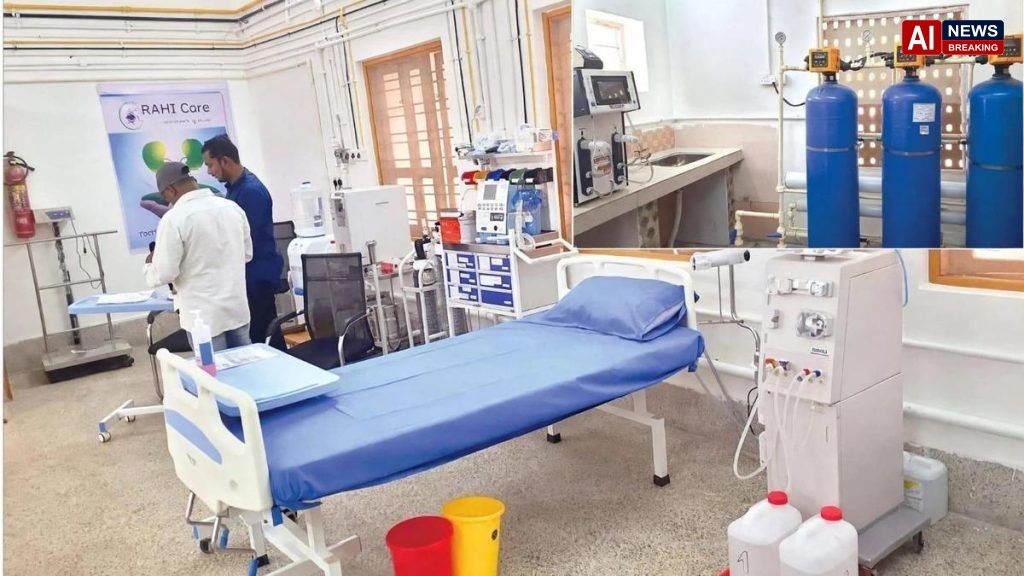
Chittoor expands dialysis facilities, but access remains a hurdle - AI News Breaking
The district of Chittoor in Andhra Pradesh is poised to broaden its capacity for renal dialysis, a move that officials say will ease the burden on patients who have long travelled great distances for treatment. According to District Collector M. Ramesh, the number of dialysis beds across the region’s nine public and private centres will rise by roughly 20 percent each year for the next three years, taking the total from the current 120 to an estimated 172 by 2027..
The expansion, which includes the addition of a new 24‑hour facility at the district hospital, is part of a broader state‑wide effort to bring chronic disease care closer to underserved communities.The push for more beds follows a recent health department audit that highlighted a steep rise in chronic kidney disease (CKD) cases across the Rayalaseema region. Data compiled from hospital records between 2019 and 2023 show a 38 percent increase in patients requiring regular haemodialysis, a trend mirrored in neighbouring districts of Kadapa and Anantapur. Experts attribute the surge to a mix of factors, including rising diabetes prevalence, hypertension, and exposure to contaminated water sources in agricultural areas..
While the new infrastructure promises to reduce waiting times, advocates warn that physical capacity alone will not resolve the deeper inequities that many rural residents face.For many patients, the journey to a dialysis centre is itself a health hazard. A 2022 survey conducted by the Chittoor Medical Association found that 62 percent of respondents travelled more than 50 kilometres for each session, often using overcrowded public transport or shared auto‑rickshaws. The average out‑of‑pocket cost per visit – encompassing fuel, fare, and occasional overnight stays – was estimated at ₹1,200, a sum that exceeds the monthly income of a substantial portion of the district’s agrarian households..
“Even when the bed is available, the expense of getting there can be prohibitive,” says Dr. Lakshmi, a nephrologist at the Government Medical College. “We see patients missing sessions, leading to complications that could have been avoided with better local access.”The district’s plan to increase bed capacity is being implemented alongside a modest subsidy scheme that aims to offset travel costs for low‑income patients..
Under the scheme, families earning less than ₹10,000 a month can apply for a travel allowance of up to ₹500 per dialysis session, disbursed through the local panchayat offices. However, bureaucratic delays and limited awareness have curtailed its impact. A recent audit by the State Comptroller’s office revealed that only 38 percent of eligible families had received the allowance in the past six months, largely due to incomplete documentation and the need for multiple attestations.In response, the collector’s office announced a pilot digital platform that will streamline applications and enable real‑time tracking of disbursements..
The system, scheduled for rollout in March, will integrate with the existing e‑Health portal used for patient registration at dialysis centres. By linking travel vouchers to patients’ electronic medical records, officials hope to reduce paperwork and cut down the processing time from weeks to a few days. “Technology can bridge the gap between policy and practice, but it must be accompanied by community outreach,” Ramesh noted in a press briefing.Beyond financial barriers, the quality of care remains a concern..
A 2023 study by the Indian Institute of Public Health highlighted significant variation in infection control practices among the district’s dialysis units. While the newly upgraded centre at the district hospital adheres to national standards, several smaller private facilities still lack proper water treatment systems, raising the risk of hepatitis and other blood‑borne infections. The health department has therefore issued a directive for all centres to undergo a mandatory audit by the end of the year, with penalties for non‑compliance ranging from fines to temporary suspension of services.Patient advocacy groups have welcomed the expansion but stress that a holistic approach is needed..
“Dialysis is just one piece of the puzzle,” says Anjali Rao, president of the Chittoor Kidney Care Forum. “We need early detection programmes, affordable medicines for managing diabetes and hypertension, and robust public awareness campaigns to prevent CKD from developing in the first place.” Rao’s organisation is currently lobbying for the inclusion of routine kidney function tests in the state’s free health check‑up camps, a measure that could identify at‑risk individuals before they require costly dialysis.The state government has pledged additional funding to support these preventative initiatives. In the recent budget, ₹150 crore was earmarked for chronic disease management, with a specific allocation for establishing mobile screening units that will visit remote villages on a quarterly basis..
The units, equipped with point‑of‑care testing kits, will be staffed by a team of nurses and lab technicians trained to assess blood sugar, blood pressure, and creatinine levels. If successful, the model could be replicated in other high‑risk districts across Andhra Pradesh.While the infrastructure upgrades signal a positive shift, the real test will be in how quickly the expanded capacity translates into tangible improvements for patients living in the district’s hinterlands. For 58‑year‑old Ramesh Kumar, who travels from the village of Peddavadugur to the district hospital three times a week, the news offers a glimmer of hope..
“If a centre opens closer to home, I will not have to spend my whole day on the road,” he says, eyes fixed on the horizon. “But we also need the money to get there, and the assurance that the machines will work properly.” His sentiment captures the dual challenge facing Chittoor: building more beds while simultaneously dismantling the economic and systemic obstacles that have long kept effective renal care out of reach for many of its residents..
Updated: November 25, 2026
Insight: The expansion of dialysis capacity in Chittoor exposes a classic development paradox: infrastructure can be erected overnight, yet without parallel reforms in financing, technology adoption, and preventive health, the new beds will merely shift, not solve, the chronic‑care burden.
If the digital subsidy platform and mobile screening units succeed, they could convert a reactive, travel‑driven model into a proactive, locally anchored one—turning Chittoor into a template for rural chronic‑disease management