Pond heron found dead in Coimbatore tests positive for avian influenza
 Pakistan’s leaders hail first astronaut aboard Chinese craft: ‘Proud one of us has gone into space’
 British tourist travels 29 hours from Mumbai to Amritsar for ₹5,461, rates Indian Railways 10/10 | Viral video
 The Supreme Court will decide whether assault weapons bans violate the Second Amendment
 A Critic of Beijing Falls Short in Taiwan’s Key Mayoral Election
‘Chasing Summer’ Director Josephine Decker Says That ‘Filmmaking Is Lonelier Than Ever,’ So It’s Time to Build a Community
**
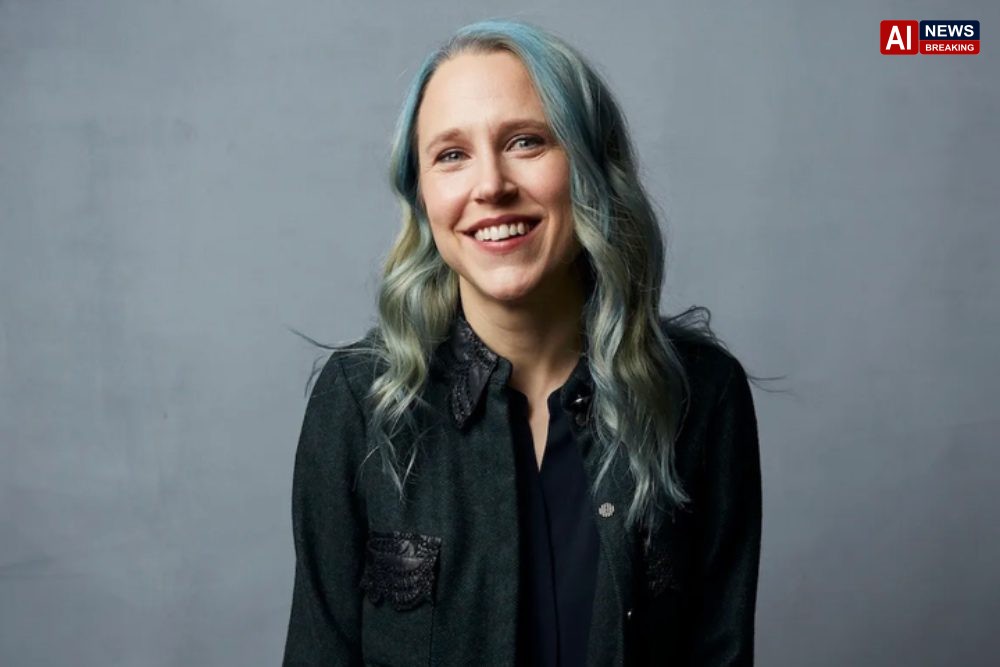
‘Chasing Summer’ Director Josephine Decker Says That ‘Filmmaking Is Lonelier Than Ever,’ So It’s Time to Build a Community - AI News Breaking
chasing summer director josephine:
‘Chasing Summer’ Director Josephine Decker Says That ‘Filmmaking Is Lonelier Than Ever,’ So It’s Time to Build a Community London – In a candid interview with Variety, Oscar‑winning director Josephine Decker described the modern film set as “a solitary island,” warning that the industry’s increasing reliance on digital tools and remote workflows has left many creators feeling isolated. Decker, whose latest feature Chasing Summer premiered at Cannes to critical acclaim, says the loneliness is not just a personal grievance but a systemic issue that threatens the collaborative spirit that once defined cinema. “We used to gather around a table, sketch storyboards, argue over lighting choices, and that friction was the engine of invention,” she mused, adding that today’s fragmented production pipelines often eliminate those spontaneous moments..
Decker’s solution is as bold as it is nostalgic: a residency for “movies without scripts.” Drawing inspiration from her own experimental short A Stable Marriage, she envisions a retreat where filmmakers, actors, and crew live together for weeks, improvising narratives from a single paragraph or a thematic prompt. “The magic happened when we threw away the safety net of a finished script and trusted each other’s instincts,” she explained. The residency would provide a shared living space, modest equipment, and a schedule that prioritises communal meals and nightly debriefs over rigid shooting timetables, fostering an environment where creative risk is not only allowed but expected..
The concept echoes the 1960s-era film collectives that blossomed in places like the New York avant‑garde scene, where artists pooled resources and lived in communal lofts to produce work that defied commercial expectations. Decker believes that revisiting this model could counteract the “digital loneliness” she perceives in today’s industry. “When you’re constantly on Zoom with a producer in Los Angeles and a cinematographer in Budapest, you lose the visceral, physical exchange that sparks new ideas,” she said..
Her residency would aim to restore that tactile sense of togetherness, offering a counterbalance to the increasingly virtual nature of pre‑production meetings and post‑production editing suites. Funding, however, remains a major hurdle. Decker is in talks with the BFI, Arts Council England, and several private philanthropists who have shown interest in supporting experimental film practices..
She hopes to secure a modest grant that would cover rent for a historic warehouse in East London, basic production gear, and stipends for participants. “We’re not looking to create a luxury retreat,” she clarified. “The goal is to strip everything back to the essentials—people, ideas, and a space to breathe together.” If successful, the residency could serve as a prototype for similar initiatives across Europe and North America..
Industry insiders have reacted with cautious optimism. Producer Amelia Hart, who has collaborated with Decker on Chasing Summer, praised the vision but warned that “the market’s appetite for unscripted, improvisational work is still niche.” Yet Hart added that the residency could act as an incubator for fresh talent, offering a pipeline of innovative projects that might later attract larger financing. “If you can prove that a compelling story can emerge from improvisation, you change the conversation about risk in the business,” she noted, referencing recent successes of low‑budget films that leveraged improvisation to great critical effect..
The residency’s educational component also excites academic circles. Samuel Greene, head of the Film Studies department at the University of Leeds, sees potential for a symbiotic relationship between the retreat and university curricula. “Students are hungry for experiential learning that goes beyond theory,” he said..
“A partnership could provide them with real‑world immersion, while the residency benefits from fresh perspectives and academic research on collaborative creativity.” Decker is already in preliminary discussions to host workshops and masterclasses as part of the residency’s schedule, ensuring that knowledge exchange remains a two‑way street. Critics of the script‑free approach argue that it may alienate audiences accustomed to tightly plotted narratives. Film critic Maya Patel, writing for The Guardian, cautioned that “while improvisation can yield moments of raw authenticity, it also risks producing meandering, unfocused stories that struggle to find distribution.” Decker acknowledges this risk but counters that the residency is not intended to produce commercial blockbusters..
“We want to make films that feel alive, that breathe, that capture the messiness of real life,” she said. “If they find an audience, that’s a bonus; if they don’t, the experience itself is valuable.” Decker’s own career illustrates the power of improvisation. Early in her trajectory, she turned a modest grant into the critically lauded Butter on the Latch, a film that relied heavily on spontaneous performance and fragmented narrative structures..
She attributes much of that success to the collaborative energy she cultivated with her cast and crew, a dynamic she hopes to replicate on a larger scale. “The day we shot A Stable Marriage with just a paragraph as a guide, we discovered a new language of trust between director and actor,” she recalled, smiling. “That language is what I want to teach.” The proposed residency would also address mental health concerns that have risen sharply among film professionals during the pandemic..
A 2023 BFI survey found that 68 % of filmmakers reported feeling “chronically isolated” while working on remote projects. Decker plans to incorporate wellness practices such as group yoga, meditation, and regular check‑ins, arguing that a healthy community is essential for sustained creativity. “When you’re exhausted and alone, the work suffers,” she said..
“A supportive environment nurtures both the mind and the art.
Updated: November 10, 2026
Oscar‑winning director Josephine Decker warns that digital workflows have turned film sets into isolated “solitary islands” and proposes a low‑budget, script‑free residency where creators live and improvise together to revive the collaborative spirit of cinema. Backed by potential BFI and Arts Council funding, the communal retreat aims to spark spontaneous creativity while addressing the mental‑health toll of industry loneliness.