Pond heron found dead in Coimbatore tests positive for avian influenza
 Pakistan’s leaders hail first astronaut aboard Chinese craft: ‘Proud one of us has gone into space’
 British tourist travels 29 hours from Mumbai to Amritsar for ₹5,461, rates Indian Railways 10/10 | Viral video
 The Supreme Court will decide whether assault weapons bans violate the Second Amendment
 A Critic of Beijing Falls Short in Taiwan’s Key Mayoral Election
Pond heron found dead in Coimbatore tests positive for avian influenza
**
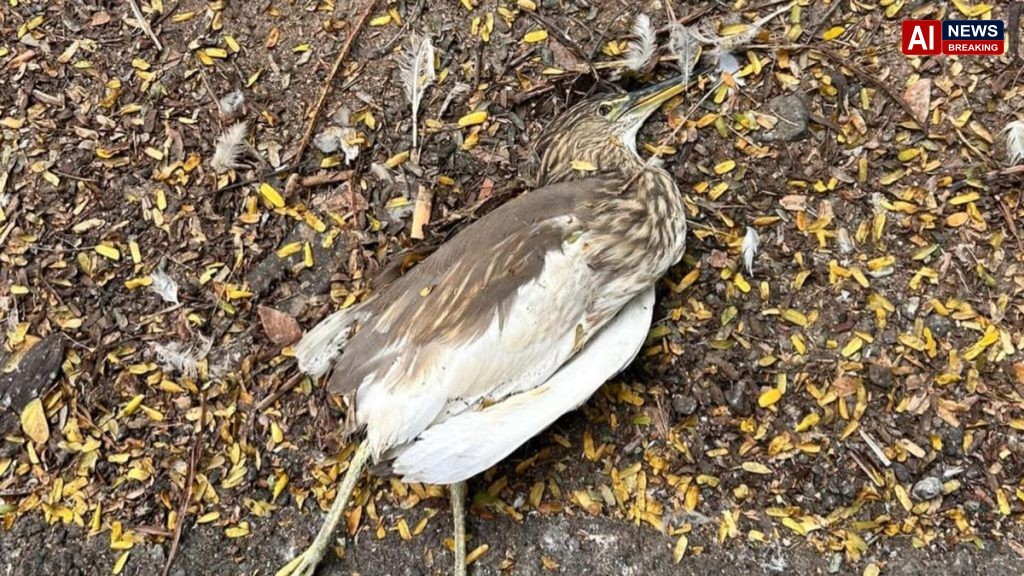
Pond heron found dead in Coimbatore tests positive for avian influenza - AI News Breaking
Pond heron found dead in Coimbatore tests positive for avian influenza The Forest Department confirmed that eight pond herons were discovered dead on the banks of the Sanganoor canal near Ganapathy, Coimbatore, on 18 November. The birds, a common sight in the region’s wetlands, were found lying together, their feathers ruffled and eyes clouded. Initial investigations by local wildlife officials ruled out obvious signs of predation or poisoning, prompting a rapid response from veterinary virologists..
Samples collected from the carcasses were sent to the National Centre for Disease Control (NCDC) for laboratory analysis, a standard protocol when unexplained avian mortality occurs. Preliminary results from the NCDC, released early on 20 November, indicated the presence of highly pathogenic avian influenza (H5N1) virus in the tissue samples. The strain, identified as a clade 2.3.4.4b variant, aligns with recent detections in poultry across several southern Indian states..
Health officials stressed that while the virus is known to affect birds, its zoonotic potential—meaning the ability to jump to humans—remains low, especially in the absence of direct contact with infected birds or their ions. Nevertheless, the finding has set off a cascade of precautionary measures across the region. The Coimbatore district administration, in coordination with the State Animal Husbandry Department, has issued an advisory urging residents, particularly those involved in bird‑watching, fishing or poultry farming, to avoid handling dead birds and to report any unusual bird deaths to the nearest veterinary office..
The advisory also recommends the use of protective gloves and masks when cleaning contaminated areas, echoing guidelines issued by the World Health Organization for avian influenza outbreaks. Authorities have set up a 24‑hour hotline to streamline reporting and to provide real‑time guidance. Local poultry farmers have expressed concern over the potential spread of the disease to domesticated flocks..
The Tamil Nadu Animal Husbandry Department has therefore ordered a sweep of nearby poultry farms, mandating immediate testing of all birds within a 5‑kilometre radius of the Sanganoor canal. Farmers found with infected stock will be compensated under the state’s disease‑outbreak scheme, which aims to minimise economic losses and discourage concealment of cases. The department also plans to intensify bio‑security measures, including disinfecting equipment, restricting movement of birds, and enforcing strict sanitation protocols at farms..
Epidemiologists from the Indian Council of Medical Research (ICMR) have been dispatched to Coimbatore to assess the risk of human infection. While no human cases have been reported linked to this incident, the ICMR team will conduct serological surveys among individuals with occupational exposure to birds, such as wetland rangers and poultry workers. The team will also review local healthcare facilities’ preparedness, ensuring that clinicians are aware of the clinical presentation of avian influenza and have access to antiviral stockpiles, should a case emerge..
The discovery has reignited debate over the adequacy of surveillance in India’s wetland ecosystems, which serve as breeding grounds for migratory and resident waterfowl. Conservationists argue that systematic monitoring of bird health in such habitats is severely under‑funded, making early detection of pathogens difficult. In response, the Ministry of Environment, Forest and Climate Change announced a modest increase in funding for the National Bird Health Monitoring Programme, pledging to deploy additional field teams and to integrate satellite‑based habitat mapping to pinpoint high‑risk zones..
Scientists from the Tamil Nadu Forest Department highlighted that pond herons (Ardeola grayii) are sentinel species; their health often reflects broader ecological changes. “When a flock of these birds succumbs suddenly, it is a warning sign that something is amiss in the environment,” said Dr. Vijayakumar, chief wildlife pathologist..
He added that climate anomalies, such as unseasonal rains and altered water flow in the Sanganoor channel, could stress bird populations, making them more susceptible to infection. The department plans to conduct a post‑mortem ecological assessment to determine whether habitat degradation contributed to the outbreak. The public health dimension of the case has drawn attention from the national media, with several outlets broadcasting the story within hours of the lab results..
Social media platforms have seen a surge in discussions, some spreading misinformation about the risk of a pandemic. In response, the Ministry of Health and Family Welfare released a fact‑sheet clarifying that avian influenza does not spread easily between humans and that there is no evidence of community transmission in India to date. The fact‑sheet also outlines steps for individuals who experience flu‑like symptoms after contact with birds, emphasizing prompt medical consultation..
Meanwhile, local NGOs working on wetland conservation have organized community outreach programmes to educate residents about safe bird‑watching practices and the importance of reporting dead wildlife. The Coimbatore Waterways Conservation Group is distributing laminated pamphlets at bus stops and market places, illustrating how to handle suspected infected birds without exposing oneself. Their volunteers are also training schoolchildren in basic bio‑security concepts, hoping to embed a culture of vigilance among the next generation of citizens..
International bodies are monitoring the situation closely. The Food and Agriculture Organization (FAO) and the World Organisation for Animal Health (WOAH) have both been notified of the H5N1 detection in the pond herons. In a joint statement, they urged member states to maintain transparent reporting mechanisms and to share genetic sequences of the virus for global surveillance..
Such data sharing helps track viral mutations that could affect vaccine efficacy or virulence. The FAO also reiterated its offer of technical assistance to India.
Updated: November 28, 2026
The sudden death of sentinel pond herons signals that degraded wetlands are turning into viral hotbeds, raising the odds that H5N1 will hop from wild to domestic birds before any human spillover.
If bio‑security lapses persist, the outbreak could evolve into a regional economic shock far bigger than the modest