
 Pond heron found dead in Coimbatore tests positive for avian influenza
 Pakistan’s leaders hail first astronaut aboard Chinese craft: ‘Proud one of us has gone into space’
 British tourist travels 29 hours from Mumbai to Amritsar for ₹5,461, rates Indian Railways 10/10 | Viral video
 The Supreme Court will decide whether assault weapons bans violate the Second Amendment
 A Critic of Beijing Falls Short in Taiwan’s Key Mayoral Election
Mumbai AQI Rises From 131 to 278 on Diwali
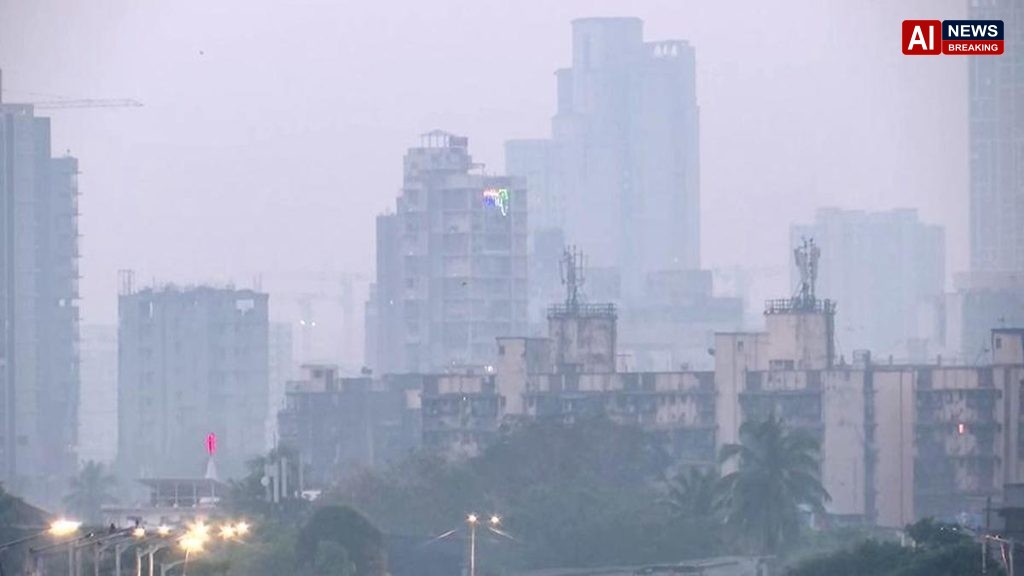
Mumbai AQI Rises From 131 to 278 on Diwali - AI News Breaking
mumbai rises diwali:
Mumbai AQI Rises From 131 to 278 on Diwali The Air Quality Index (AQI) for Mumbai surged dramatically on the night of Diwali, jumping from a moderate 131 to a hazardous 278 within a span of just a few hours. The sharp increase was recorded by the Maharashtra Pollution Control Board (MPCB) and confirmed by independent monitoring stations across the city. Residents awoke to thick, acrid smog that lingered over the western coastline, prompting health officials to advise vulnerable groups, such as children, the elderly and those with respiratory conditions, to remain indoors and limit exposure..
Meteorologists attribute the sudden spike to a combination of factors that converged on the festive evening. Professor Gufran Baig of the National Institute of Atmospheric Studies (NIAS) explained that winds blowing from the Arabian Sea intensified over the previous 48 hours, reaching speeds that were significantly higher than the seasonal average. While stronger sea breezes would normally aid in dispersing pollutants, the concurrent shift in wind direction altered the usual pattern of air movement, trapping contaminants over the densely populated urban area..
The change in wind direction, also observed by satellite imagery, turned the prevailing flow from a south‑westerly to a more north‑easterly trajectory. This shift prevented the usual flushing of smoke and particulate matter away from the city, causing the pollutants to accumulate in the lower atmosphere. Baig noted that such directional changes, when combined with stagnant air masses, can amplify the concentration of fine particles, especially during periods of heightened emissions such as Diwali..
Diwali, the Hindu festival of lights, traditionally involves the lighting of oil lamps, fireworks, and the burning of incense, all of which release a variety of pollutants, including sulfur dioxide, nitrogen oxides and particulate matter (PM2.5 and PM10). In recent years, the scale of firecracker usage has grown, leading to concerns among environmentalists about its impact on air quality. The MPCB reported that firework-related emissions alone accounted for an estimated 30‑40 percent of the total pollutant load measured during the night..
Compounding the issue, the city experienced an unusually dry spell in the days leading up to the celebration, resulting in lower natural humidity levels. Dry conditions hinder the formation of rain clouds that could otherwise help cleanse the atmosphere. Moreover, the temperature inversion that settled over the coastal plain during the early hours of the evening created a stable layer of warm air above cooler air near the surface, effectively capping the pollutants and preventing vertical dispersion..
Health authorities responded swiftly to the deteriorating conditions. The Mumbai Health Department issued an advisory urging hospitals to prepare for a surge in respiratory complaints, particularly among asthmatic patients and those with chronic obstructive pulmonary disease (COPD). Pharmacies reported a sharp rise in demand for inhalers, bronchodilators and over‑the‑counter cough remedies within hours of the AQI spike..
Local NGOs distributed masks to low‑income neighborhoods, emphasizing the need for N95‑type protection in areas where the smog was most dense. The economic impact of the pollution episode is also being felt. Several small businesses, especially those operating outdoor stalls and street food vendors, reported a decline in foot traffic as shoppers opted to stay indoors..
The city’s tourism board warned potential visitors that air quality could affect travel plans, particularly for those arriving from regions with stricter environmental standards. Analysts suggest that repeated episodes of severe smog could erode Mumbai’s reputation as a vibrant, livable metropolis, potentially influencing future investment decisions. In response to the crisis, the state government convened an emergency meeting of the Pollution Control Board, the Ministry of Environment, and representatives from the firework industry..
Discussions centered on immediate mitigation measures, such as temporary bans on certain high‑emission firecracker types, and longer‑term strategies, including stricter enforcement of existing emission standards for industrial units located near the coast. The meeting concluded with a pledge to enhance real‑time air quality monitoring and to disseminate alerts more efficiently through mobile applications and public broadcast channels. Environmental groups seized the moment to renew calls for a comprehensive overhaul of Diwali celebrations, urging a shift towards eco‑friendly practices..
Campaigns promoting the use of biodegradable fireworks, LED lighting and community concerts have gained traction in recent years, but adoption remains uneven across the city. Critics argue that without robust regulatory frameworks and public education, voluntary measures are insufficient to curb the recurring spikes in pollution that have become a seasonal norm. Scientists stress that while Diwali contributes a significant share of the pollutants, it is not the sole driver of the AQI surge..
Ongoing industrial activity, vehicular emissions and construction dust also add to the baseline pollution load. Baig highlighted the importance of an integrated approach that combines emission reductions from all sectors with better urban planning, such as creating green corridors that can act as natural filters for airborne contaminants. The episode serves as a stark reminder of the delicate balance between cultural traditions and environmental health..
As Mumbai grapples with the dual challenges of preserving its festive heritage and protecting its citizens from hazardous air, policymakers, industry stakeholders and the public are urged to collaborate on sustainable solutions. The forthcoming monsoon season may offer a natural reprieve, but experts warn that without structural changes, similar spikes could reappear with each subsequent Diwali, jeopardizing the city’s long‑term resilience. Looking ahead, the MPCB plans to release a detailed report outlining the precise contribution of each pollutant source during the Diwali period, alongside recommendations for mitigating future risks..
In the meantime, residents are advised to monitor daily AQI updates, limit outdoor activities during peak pollution hours, and adopt protective measures such as wearing certified.
Updated: November 10, 2026
This development highlights evolving dynamics and may have broader implications in the near term.






