
 Pond heron found dead in Coimbatore tests positive for avian influenza
 Pakistan’s leaders hail first astronaut aboard Chinese craft: ‘Proud one of us has gone into space’
 British tourist travels 29 hours from Mumbai to Amritsar for ₹5,461, rates Indian Railways 10/10 | Viral video
 The Supreme Court will decide whether assault weapons bans violate the Second Amendment
 A Critic of Beijing Falls Short in Taiwan’s Key Mayoral Election
What to Know About Thomas Massie, Leader of Drive to Impeach Hegseth
**
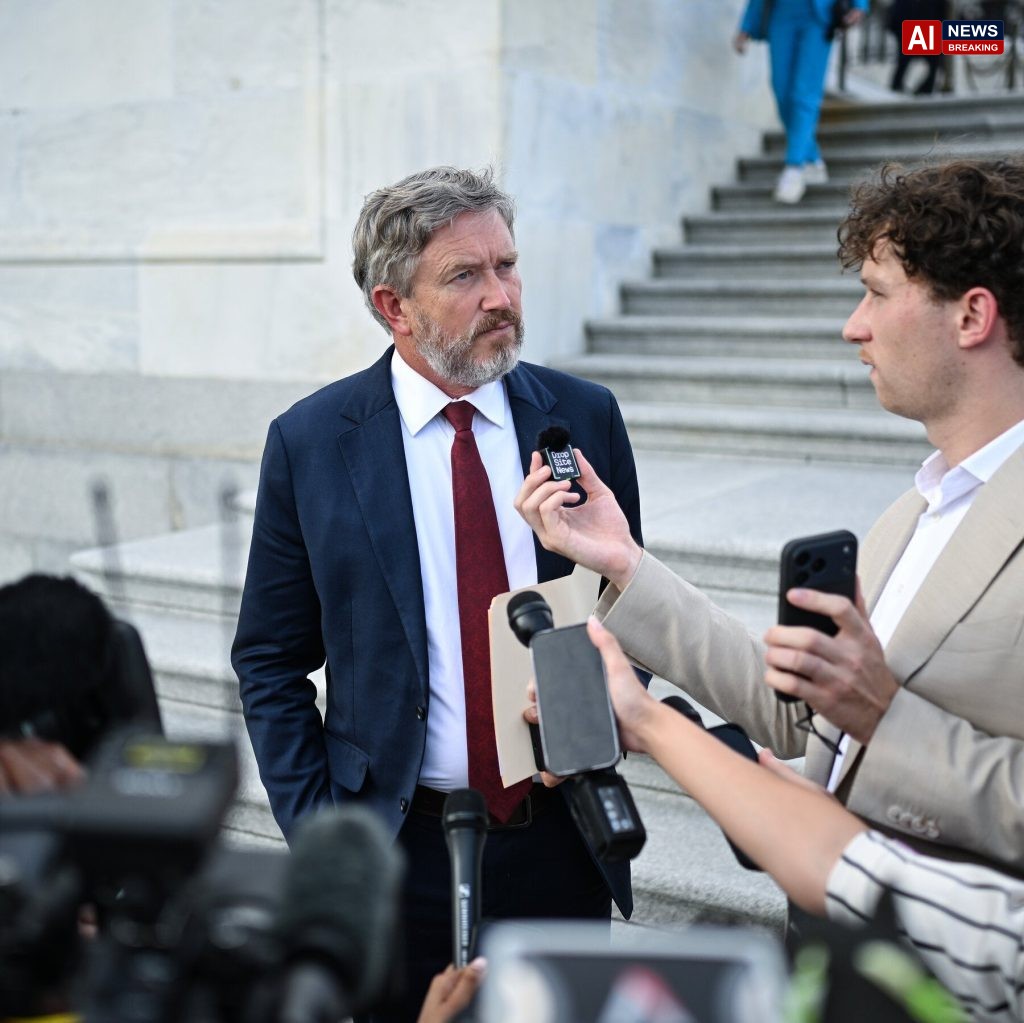
What to Know About Thomas Massie, Leader of Drive to Impeach Hegseth - AI News Breaking
what know about thomas:
Representative Thomas Massie, the libertarian‑leaning Republican from Kentucky’s 4th district, has announced that he will leave Congress at the end of his current term, a decision that follows his defeat in a Republican primary to a Trump‑endorsed challenger. Massie, a former Army engineer who has served in the House since 2012, built a reputation for his staunch opposition to government overreach, fiscal irresponsibility and what he describes as “big‑government” policies. His departure marks the end of a distinctive voice on Capitol Hill, one that often stood apart from both party leadership and the progressive wing of the Democratic Party.Massie’s political career has been defined by an unwavering commitment to limited government, a stance that earned him the nickname “the most consistent libertarian in Congress.” He has frequently voted against measures that his colleagues considered bipartisan, including the 2017 Republican tax overhaul, the 2021 infrastructure bill and the 2022 Inflation Reduction Act..
While these positions alienated some within his own party, they resonated with a core group of voters who prized fiscal restraint above partisan loyalty. His signature legislative efforts, such as the “Massie Amendment” to the National Defense Authorization Act, which sought to limit the Department of Defense’s ability to procure weapons systems without a clear, budgeted purpose, underscored his focus on curbing unchecked spending.In recent months, Massie turned his attention to a new political front: leading a campaign to impeach Representative Jamie Hegseth, a fellow Republican from Ohio whose outspoken support for a series of controversial foreign‑policy initiatives and domestic security measures drew sharp criticism from libertarian circles. Massie framed the impeachment drive as a principled stand against the erosion of civil liberties and the unchecked expansion of federal authority..
He argued that Hegseth’s advocacy for increased surveillance powers and a permanent “national emergency” declaration violated the Constitution’s separation of powers and threatened individual freedoms.The impeachment effort, while symbolic, garnered unexpected momentum. Massie convened a coalition of like‑minded legislators, including a handful of House Freedom Caucus members and a few Democrats wary of the growing executive reach. The group filed a resolution in the House Judiciary Committee, alleging that Hegseth had willfully misled Congress about the scope of surveillance programs and had failed to disclose material information regarding the budgetary impact of the emergency measures..
Although the resolution faced an uphill battle in a chamber dominated by party loyalty, it sparked a broader debate about the limits of congressional oversight and the role of impeachment as a political tool.Massie’s involvement in the impeachment drive came at a time when his own political future was increasingly uncertain. In early 2024, former President Donald Trump publicly endorsed a primary challenger, state senator James Cox, who positioned himself as a “true Trumpian” and promised to restore what he called “real Republican values” to Kentucky’s 4th district. Trump’s backing, combined with a wave of anti‑establishment sentiment among the district’s base, proved decisive..
Massie, who had previously resisted Trump’s attempts to intervene in House elections, found himself on the defensive, his campaign outspent and out‑messaged by Cox’s well‑financed operation.The primary loss was a bitter blow for Massie, whose supporters viewed the outcome as a repudiation of the party’s shift toward populist nationalism. In a post‑primary interview, Massie reflected on the changing dynamics within the GOP, noting that “the party has moved away from the principles of limited government, personal liberty and sound fiscal policy that originally defined our platform.” He expressed disappointment that his attempts to champion constitutional checks on power—exemplified by the impeachment drive—had been eclipsed by a political climate that prioritized loyalty to a single figure over substantive policy debate.Following the primary, Massie announced that he would not seek another term, citing a desire to focus on his family and his work in the private sector, where he plans to return to engineering and technology consulting. His decision also aligns with a broader trend of veteran lawmakers exiting Congress amid heightened partisan polarization and the growing influence of outside political operatives..
In a farewell address on the House floor, Massie emphasized his commitment to “principles over politics” and urged his colleagues to remember the Constitution’s original intent, warning that “when we sacrifice liberty for the illusion of security, we betray the very foundation of this nation.”The impact of Massie’s departure will be felt both in Kentucky and on the national stage. In the 4th district, the race now pivots to a contest between Cox and a Democratic challenger, with analysts predicting a tighter margin than in previous cycles. The seat’s future alignment could affect the balance of power in the House, especially as the Republican caucus navigates internal divisions over fiscal policy and the role of impeachment as a political weapon..
Meanwhile, the impeachment effort against Hegseth, though unlikely to result in a formal removal, has already prompted a reassessment of oversight mechanisms within the Intelligence Committee and sparked renewed calls for greater transparency in emergency powers.Massie’s legacy, while contested, underscores the enduring tension within American conservatism between libertarian ideals and the populist surge that has reshaped the Republican Party in recent years. His willingness to confront both Democratic and Republican leadership on matters of government size and civil liberty set him apart as an outlier in an increasingly homogeneous partisan environment. Whether future legislators will emulate his approach or retreat further into party orthodoxy remains an open question, but the debate he helped ignite over the proper limits of federal authority will likely endure.As the new congressional session approaches, the House will welcome a fresh cohort of members, many of whom will inherit the unresolved issues that Massie highlighted: the scope of surveillance powers, the fiscal burden of perpetual emergency declarations, and the appropriate use of impeachment in a highly partisan landscape..
Observers note that the dialogue sparked by Massie’s impeachment drive may serve as a catalyst for reform, even as the political winds continue to favor leaders who align closely with the former president’s agenda. In the meantime, Thomas Massie’s exit marks the conclusion of a distinctive chapter in the story of American legislative politics, one defined by an uncompromising pursuit of limited government and a willingness to challenge the prevailing currents of his own party..
Massie’s exit signals the GOP’s tilt toward brand‑centric loyalty, marginalizing the libertarian dissent that once kept fiscal restraint alive in congressional debate.
His impeachment crusade, though unlikely to topple a colleague, may plant the seeds for a future pushback against unchecked emergency powers and a re‑examination of impeachment as a substantive oversight tool.





