
 Pond heron found dead in Coimbatore tests positive for avian influenza
 Pakistan’s leaders hail first astronaut aboard Chinese craft: ‘Proud one of us has gone into space’
 British tourist travels 29 hours from Mumbai to Amritsar for ₹5,461, rates Indian Railways 10/10 | Viral video
 The Supreme Court will decide whether assault weapons bans violate the Second Amendment
 A Critic of Beijing Falls Short in Taiwan’s Key Mayoral Election
India and US advance trade talks in Delhi
**
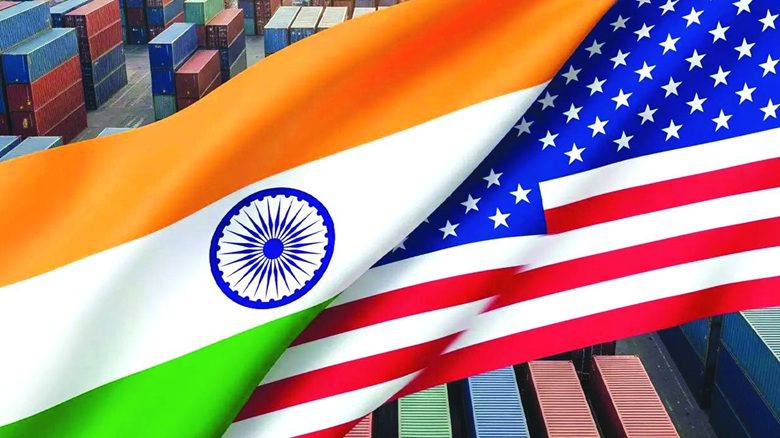
india advance trade talks:
India and the United States are pressing ahead with negotiations on a comprehensive trade agreement, with senior American officials arriving in New Delhi this week to deepen discussions on the customs and trade‑facilitation chapter. The visit, part of a broader diplomatic push that began with a virtual summit in early 2023, underscores the strategic importance both capitals attach to the deal, which is seen as a linchpin for deeper economic integration and a counterweight to China’s growing influence in the region. While the two sides have already cleared several contentious issues, the customs protocol remains a focal point, promising to streamline cross‑border procedures and reduce transaction costs for businesses on both sides of the Pacific.The American delegation, led by the Under‑ary for International Trade, includes senior officials from the Office of the United States Trade Representative, the Department of Commerce and the Treasury Department..
Their agenda in Delhi includes a series of high‑level meetings with Indian counterparts from the Ministry of Commerce and Industry, the National Institution for Transforming India (NITI Aayog), and the Federation of Indian Export Organisations. Sources close to the talks say the United States is keen to secure concessions that would allow its exporters—particularly in the high‑tech and services sectors—to navigate Indian customs more efficiently, while India seeks reciprocal gains for its burgeoning manufacturing base.At the heart of the negotiations lies the proposed “customs and trade‑facilitation chapter,” a set of provisions that would harmonise procedures, introduce electronic data interchange, and establish a joint oversight mechanism to resolve disputes swiftly. Indian officials have highlighted the need for capacity‑building support, arguing that many of the country’s smaller exporters lack the technological infrastructure to fully benefit from advanced customs systems..
In response, the United States has offered technical assistance, including training programmes and the sharing of best practices drawn from its own Automated Commercial Environment, a digital platform that has cut clearance times for U.S. imports by up to 30 percent over the past decade.Industry reactions in both nations have been cautiously optimistic. The Confederation of Indian Industry (CII) issued a statement welcoming the renewed focus on trade facilitation, noting that reduced paperwork and faster clearance could boost India’s attractiveness as a manufacturing hub for global supply chains..
Chamber of Commerce echoed similar sentiments, emphasizing that a smoother customs regime would lower costs for American firms exporting machinery, software and agricultural products to India, thereby enhancing competitiveness. Nevertheless, some analysts warn that the chapter’s success will depend on how quickly each side can align its regulatory frameworks, especially concerning rules of origin and standards verification.The broader trade deal, often referred to as the “U.S.–India Trade and Investment Partnership,” covers sectors ranging from pharmaceuticals and renewable energy to digital services and intellectual property. While progress has been steady, several sticking points remain, notably the treatment of digital trade, data localisation requirements and market access for agricultural commodities..
The customs chapter, however, is viewed as a “quick win” that could create momentum for tackling the more complex issues later in the negotiation cycle. Observers note that the timing of the Delhi visit is significant, coming just months before the G‑20 summit in New Delhi, where both leaders are expected to reaffirm their commitment to deepening bilateral ties.Political dynamics also colour the talks. In New Delhi, Prime Minister Narendra Modi’s administration is keen to showcase tangible economic outcomes ahead of the upcoming general elections, positioning the trade deal as evidence of a forward‑looking, globally engaged agenda..
Conversely, the Biden administration is seeking to cement a strategic partnership that extends beyond defence cooperation, aiming to lock in economic ties that can serve as a bulwark against Beijing’s Belt and Road Initiative. Both governments have stressed that the negotiations are “transparent and inclusive,” inviting inputs from civil society, small‑business groups and regional chambers of commerce.Logistical details of the customs chapter are already being hashed out. Proposals on the table include mutual recognition of electronic signatures, adoption of a single window system for submission of trade documents, and the establishment of a joint customs compliance forum that would meet quarterly..
The United States has also floated the idea of a “trusted trader” program, modeled after its own Customs‑Trade Partnership Against Terrorism (C‑TPAT), which would grant pre‑approved Indian exporters expedited clearance in American ports. Indian negotiators, while receptive, have asked for safeguards to ensure that any such programme does not disadvantage domestic firms lacking comparable certifications.Beyond the technicalities, the talks have broader implications for global supply‑chain resilience. As multinational corporations reassess their production footprints in the wake of pandemic‑induced disruptions and geopolitical tensions, a streamlined India–U.S..
customs regime could make the subcontinent a more attractive destination for reshoring and diversification. Economists estimate that a fully implemented customs facilitation framework could lift bilateral trade volumes by as much as 15 percent over the next five years, translating into billions of dollars of added economic activity and job creation on both sides of the Pacific.Critics, however, caution against over‑optimism. Consumer groups in the United States have raised concerns about potential standards erosion, fearing that a faster customs process might compromise safety checks on food and pharmaceuticals..
In India, labour unions worry that an influx of foreign firms could exert downward pressure on wages in certain sectors. Both governments have pledged to embed robust monitoring mechanisms within the agreement to address these anxieties, though the exact parameters are still under negotiation.As the American team prepares to leave Delhi later this week, the tone of the meetings appears constructive, with both sides signalling a willingness to compromise on procedural nuances while keeping core economic interests intact. The next phase will likely involve drafting a detailed text of the customs chapter, followed by a series of technical workshops to test the proposed electronic systems..
If successful, the chapter could be signed at the forthcoming G‑20 summit, setting the stage for a final treaty signing later in 2027. trade dialogue remains a focal point of diplomatic activity, reflecting a shared belief that deeper economic integration can reinforce strategic partnership in an increasingly multipolar world..
Updated: November 10, 2026
India and the United States are deepening talks on a comprehensive trade deal, with senior officials in Delhi working to finalize a customs‑facilitation chapter that could slash clearance times and boost bilateral trade by up to 15 percent. The negotiations, driven by strategic rivalry with China and a desire to strengthen economic ties ahead of the G‑20 summit, aim to blend technical cooperation with safeguards to protect domestic firms and safety standards.
Insight: India’s push to shave days off customs clearance is less a bureaucratic tweak than a gambit to cement a strategic axis against China, with both capitals ready to bankroll the tech leap that will let U.S. high‑tech and Indian manufacturing dovetail. Yet the deal’s real test will be whether the rapid‑track “quick win” can be translated into a balanced framework that protects domestic standards and wages while keeping the trade‑flow momentum alive.






