Pond heron found dead in Coimbatore tests positive for avian influenza
 Pakistan’s leaders hail first astronaut aboard Chinese craft: ‘Proud one of us has gone into space’
 British tourist travels 29 hours from Mumbai to Amritsar for ₹5,461, rates Indian Railways 10/10 | Viral video
 The Supreme Court will decide whether assault weapons bans violate the Second Amendment
 A Critic of Beijing Falls Short in Taiwan’s Key Mayoral Election
DC Studios cuts projects after $370 million loss.
**
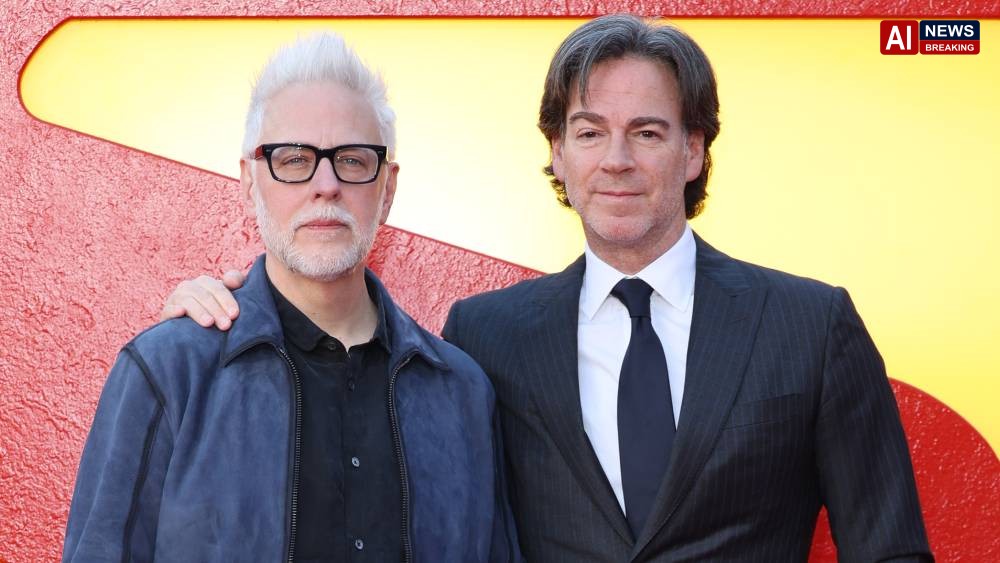
DC Studios Exit: James Gunn and Peter Safran Spent Big, Lost Money and Didn’t Hook Audiences - AI News Breaking
studios cuts projects 370million:
After “Superman” landed in theatres last summer, former Warner Bros. Discovery CEO David Zaslav was ready to pop Champagne. Although the film had only been playing on the big screen for three days, he touted the “bold 10‑year plan” of DC Studios co‑chiefs James Gunn and Peter Safran and promised “the DC vision is clear” – a statement that would soon appear out of sync with box‑office realities and audience sentiment..
The two executives had entered the role with a dual mandate: to bring a fresh, cohesive narrative to the DC universe and to achieve commercial success. Their strategy centred on a mix of high‑budget blockbusters, mid‑range films, and a steady stream of television projects aimed at building long‑term loyalty among fans. On paper, the roadmap seemed plausible, drawing on Gunn’s proven track record with Marvel and Safran’s experience with blockbuster franchises..
Within months, however, the first signs of trouble surfaced. “The Flash” – the flagship film of the new slate – opened to a lukewarm reception. Critics described it as derivative, and audiences complained that the film felt like a patchwork of previous DC tropes rather than an original narrative..
Despite a high‑profile marketing push that cost more than $150 million, the film returned a modest $600 million worldwide, falling short of the $900 million threshold that had been set for profitability. The disappointment of “The Flash” reverberated across the entire studio. Subsequent releases, such as the superhero spin‑off “Green Lantern” and the action‑thriller “Aquaman: Legacy”, performed even less well..
Both movies suffered from rushed production schedules, leading to uneven pacing and weak character development. Studios’ internal analysts warned that the cumulative loss of approximately $250 million over a single calendar year could not be justified by the projected future revenue streams. While box‑office numbers were a primary concern, audience engagement metrics painted an equally bleak picture..
Social‑media sentiment analysis revealed a sharp decline in positive mentions across major platforms. Fans voiced frustration that the new DC films ignored the deeper mythos of the characters, instead opting for generic superhero tropes. A survey conducted by a market‑research firm found that 58 percent of respondents would choose a Marvel film over a DC release when given a choice..
In response to these setbacks, Gunn and Safran announced a re‑allocation of the studio’s budget, with an emphasis on smaller, character‑driven stories. The plan included a series of limited‑run television specials and a reboot of the “Justice League” franchise set in a new universe. This shift aimed to reduce risk by focusing on mid‑budget projects with a higher likelihood of resonating with core audiences..
However, the transition was not seamless. Production delays compounded the problem; a key actor in the “Justice League” reboot suffered a health setback, postponing filming. Additionally, the studio’s partnership with a major streaming platform faced contractual complications, leading to a three‑month suspension of content delivery..
These setbacks further eroded investor confidence, with several institutional shareholders expressing concerns over the studio’s financial trajectory. Financial scrutiny intensified when a regulatory body launched an audit into the studio’s accounting practices. Allegations surfaced that the studio had inflated production costs by adding ancillary expenses, such as marketing and distribution fees, to the production budget..
The audit revealed that the studio’s net loss for the fiscal year amounted to $370 million, a figure that far exceeded initial projections. Amid this turmoil, the public perception of the DC brand suffered a significant dent. Former loyalists began to voice doubts about the studio’s creative direction, and new audiences increasingly turned to alternative superhero narratives..
Competitor studios capitalised on the moment, releasing high‑quality content that appealed to the same demographic that had previously supported DC films. The fallout led to a cascade of executive departures. Several senior producers and creative leads announced resignations, citing a lack of support and an inability to execute their creative visions within the confines of the new financial constraints..
The departures created a vacuum in leadership, leaving the studio with a fragmented creative strategy and an unclear brand identity. In light of these developments, the board convened an emergency meeting to reassess the studio’s strategic direction. The consensus was that a fundamental shift was required – one that would return focus to the core strengths of the DC brand and rebuild trust among audiences..
The board decided to appoint a new chief creative officer with experience in revitalising struggling franchises, and to reduce the number of simultaneous projects to avoid resource dilution. The future of DC Studios remains uncertain. While the studio’s leadership has pledged to rectify its mistakes, the path to recovery will depend on a combination of strategic realignment, financial prudence, and, most importantly, a renewed commitment to storytelling that honours the legacy of its iconic characters..
The coming months will be critical in determining whether the studio can regain its footing, or whether it will ultimately fade into a footnote in the history of superhero cinema..
Updated: November 10, 2026
If DC Studios can’t learn that blockbuster ambition is meaningless without a distinct voice, its entire franchise will become a financial mirage, eclipsed by competitors who dare to risk less and write more. The board’s move to shrink output and bring in a turnaround savant may revive trust, but only if it stops treating the DC universe as a box‑office ledger and starts treating it as a living mythos.