
 Pond heron found dead in Coimbatore tests positive for avian influenza
 Pakistan’s leaders hail first astronaut aboard Chinese craft: ‘Proud one of us has gone into space’
 British tourist travels 29 hours from Mumbai to Amritsar for ₹5,461, rates Indian Railways 10/10 | Viral video
 The Supreme Court will decide whether assault weapons bans violate the Second Amendment
 A Critic of Beijing Falls Short in Taiwan’s Key Mayoral Election
State seeks to block Christa Pike’s attorneys from inspecting execution drug
**
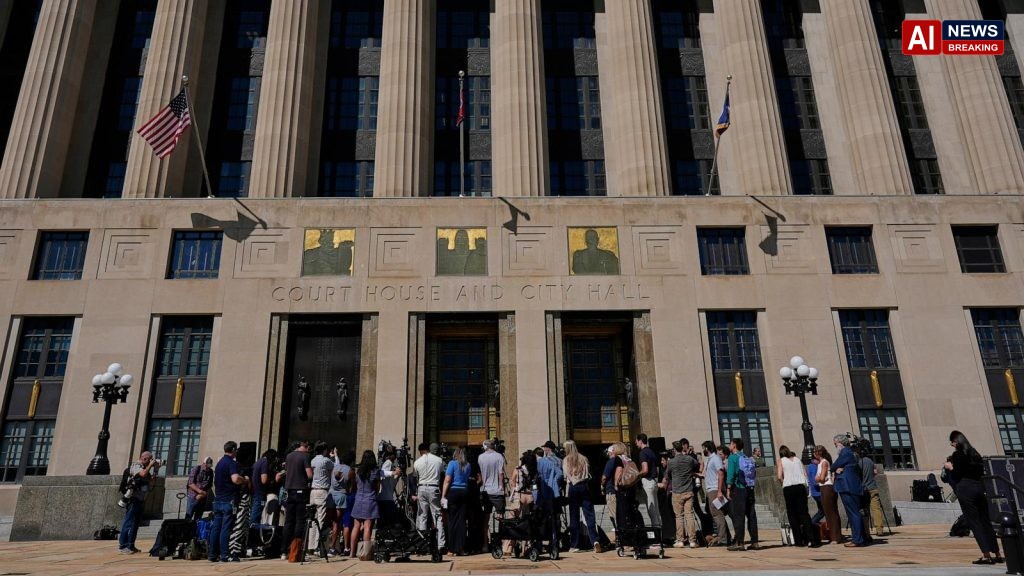
State seeks to block Christa Pike's attorneys from inspecting execution drug - AI News Breaking
state seeks block christa:
Tennessee officials have moved to prevent the legal team representing Christa Pike, a 50‑year‑old inmate whose execution was halted after a malfunction, from inspecting the pentobarbital that was to be used in the lethal injection. The state argues that allowing such an examination would jeopardise the anonymity of the drug’s source, a matter it says is critical to maintaining the supply chain for execution drugs that are already scarce and heavily scrutinised. The request has sparked a fresh round of legal challenges, drawing renewed attention to the opaque processes surrounding capital punishment in the United States and raising questions about transparency, accountability and the rights of condemned prisoners.Christa Pike was sentenced to death in 1997 for the murder of a teenage girl in Florida, a case that has long been the subject of appeals and public debate..
In August 2023, the state of Tennessee scheduled her execution, but the procedure broke down when the intravenous line failed to deliver the pentobarbital, a barbiturate commonly used in lethal injections. The malfunction resulted in a prolonged and painful death, prompting a temporary moratorium on executions in the state and a series of lawsuits aimed at preventing further mishaps. Pike’s attorneys, who have represented her through numerous appeals, have now sought a court order to examine the drug itself, asserting that doing so is essential to determine whether the failure was caused by a defect in the drug, the equipment, or the administration protocol.The state’s motion, filed by the Tennessee Department of Correction, claims that a forensic inspection of the pentobarbital would inevitably reveal identifying characteristics of the manufacturer or distributor, thereby exposing a “confidential source” that could be retaliated against..
The department cites a longstanding practice among states to keep the identities of execution‑drug suppliers hidden, a policy it says is necessary because many pharmaceutical companies have publicly opposed the use of their products for capital punishment. In recent years, firms such as Pfizer, Hospira and others have instituted strict bans on providing drugs for lethal injection, prompting states to turn to compounding pharmacies and other less‑transparent channels to obtain the necessary substances.Legal scholars note that the tension between a state’s interest in protecting its drug supply and a defendant’s right to a fair investigation is not new. In the 2014 case of Glossip v..
Supreme Court held that inmates must be able to challenge the efficacy of the drugs used in their executions, but the decision left open the question of how much information about the drugs’ provenance must be disclosed. Pike’s attorneys argue that the request for inspection falls squarely within the scope of that precedent, insisting that without an independent analysis of the pentobarbital’s composition and potency, the court cannot assess whether the botched execution was the result of a substandard product.Judge James L. Wickersham, who presided over the original execution case, has yet to rule on the motion, but a hearing is scheduled for early next month..
In a written response, the Department of Correction’s counsel, Michael H. Lyle, warned that granting the request could “undermine the state’s ability to procure lethal‑injection drugs in the future,” potentially leading to a situation where the only available sources are compromised or illegal. The department further contended that the inspection would be a “fishing expedition” with no clear relevance to the specific mechanical failure that occurred during Pike’s execution.Opponents of the state’s stance point out that the secrecy surrounding execution drugs has been a persistent obstacle to ensuring humane and constitutional methods of capital punishment..
Over the past decade, several states have faced lawsuits after lethal‑injection protocols resulted in prolonged deaths, with courts often ordering the disclosure of drug testing results or the identities of suppliers. In Ohio, for instance, a 2021 appellate decision required the state to reveal the source of its execution drugs after a botched execution raised doubts about their potency. Those rulings have been cited by Pike’s counsel as indicative of a broader judicial trend favouring transparency over protective secrecy.The issue also intersects with the growing controversy over the use of compounded medications for lethal injection..
Compounding pharmacies, which custom‑make drugs for individual patients, have become a primary source for execution drugs after major manufacturers withdrew from the market. Critics argue that compounded products lack the rigorous quality‑control standards of FDA‑approved pharmaceuticals, increasing the risk of errors like the one that occurred in Pike’s case. A 2022 report by the Government Accountability Office highlighted several instances where compounded drugs failed to meet potency specifications, suggesting that reliance on such sources could compromise the integrity of the execution process.Human‑rights advocates have seized upon Pike’s situation to call for broader reforms, arguing that the lack of oversight not only endangers the lives of condemned inmates but also erodes public confidence in the criminal‑justice system..
The American Civil Liberties Union of Tennessee issued a statement urging the court to reject the state’s motion, describing it as “another attempt to hide behind secrecy while the state continues to pursue the death penalty under questionable conditions.” The organization added that the inability of attorneys to scrutinise the drugs used in executions effectively denies prisoners a vital safeguard against cruel and unusual punishment.Meanwhile, legislators in Tennessee have been grappling with the political fallout from the botched execution. Governor Bill Lee, who signed the death‑penalty law into effect in 2021, has faced criticism from both sides of the aisle. While some lawmakers have called for a review of the state’s execution protocols and a possible moratorium, others have defended the current system, emphasizing the need for a swift and decisive response to violent crime..
In a recent Senate committee hearing, a representative from the Department of Correction testified that the state is actively seeking new suppliers and exploring alternative methods, such as nitrogen hypoxia, but that any change would require extensive legislative approval.If the court ultimately denies Pike’s request, it could set a precedent that further shields execution‑drug suppliers from scrutiny, potentially limiting the ability of future inmates to challenge the safety and legality of lethal‑injection protocols. Conversely, an order granting the inspection could force the state to confront the quality of its drug sources and perhaps accelerate the search for more reliable, transparent alternatives. Legal analysts suggest that the outcome will likely influence not only Tennessee’s approach but also that of other states that rely on similarly opaque supply chains.The case underscores a broader national debate about the future of capital punishment in an era where the procurement of execution drugs has become increasingly fraught..
As more pharmaceutical companies distance themselves from the practice, states are left to navigate a complex web of legal, ethical and logistical challenges. Whether courts will tilt toward protecting state interests or upholding the procedural rights of condemned inmates remains to be seen, but the decision will.
Updated: November 11, 2026
The fight over the drug’s secrecy exposes a paradox: states cling to opaque supply chains to keep executions alive, yet that very opacity undermines any claim of humane, constitutionally sound punishment. If courts side with transparency, the hidden market of compounded lethal‑injection drugs may finally be







