Pond heron found dead in Coimbatore tests positive for avian influenza
 Pakistan’s leaders hail first astronaut aboard Chinese craft: ‘Proud one of us has gone into space’
 British tourist travels 29 hours from Mumbai to Amritsar for ₹5,461, rates Indian Railways 10/10 | Viral video
 The Supreme Court will decide whether assault weapons bans violate the Second Amendment
 A Critic of Beijing Falls Short in Taiwan’s Key Mayoral Election
Bengaluru police recover M.M. Somaya’s 1980 Olympic gold medal, seven other international medals; two arrested
Bengaluru police’s “Eagle Eye” operation rescued a cache of stolen sporting treasures—including former hockey legend M.M. Somaya’s 1980 Olympic gold medal, seven other international medals, a traditional Kodava dagger and vintage camera—from a Whitefield warehouse, arresting two suspects and beginning the return of the medals to their rightful owners.
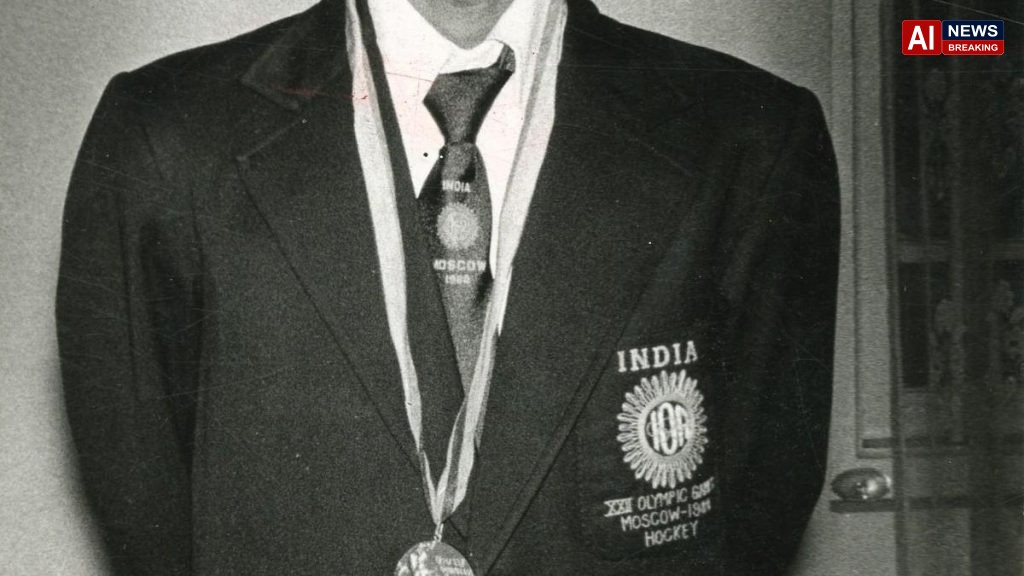
Bengaluru police recover M.M. Somaya’s 1980 Olympic gold medal, seven other international medals; two arrested - AI News Breaking
bengaluru police recover somayas:
Bengaluru police have announced the recovery of a cache of stolen sporting memorabilia that includes the 1980 Olympic gold medal of former Indian field‑hockey legend M.M. Somaya, along with seven other international medals belonging to a range of athletes. The haul, uncovered during a raid on a suburban warehouse on Monday, also yielded a traditional Kodava dagger, a vintage camera and an Olympic‑kit bag, as well as the two‑wheeler that investigators say was used to transport the items after the theft.The operation, code‑named “Eagle Eye”, was the culmination of a three‑month investigation that began after a series of anonymous tips pointed to a network of dealers dealing in illicit sports artefacts..
Detectives from the Cyber Crime and Economic Offences Wings traced a series of online advertisements that listed the medals and other equipment as “collectible memorabilia”, prompting them to monitor the sellers’ communications and map out a supply chain that led to the warehouse in the Whitefield area.According to police spokesperson Anil Sharma, the recovered medals span a period of four decades and were taken from the residences of athletes who had retired from active competition. Among the items is a gold medal awarded to Somya at the Moscow Games, a bronze from the 1998 Commonwealth Games, and a silver earned at the 2002 Asian Games. The other medals belong to a former national shooting champion, a discus thrower who represented India at the 2004 Olympics, and three members of the Indian wrestling team who competed at the 1996 and 2000 Games..
Each piece bore the distinctive engraving and serial numbers that allowed officials to confirm their provenance.“The recovery is a significant victory for the rule of law and for the sporting community,” Sharma said during a press briefing. “These medals are not just metal; they are symbols of national pride and personal sacrifice. Their theft was a violation that struck at the heart of our athletes’ legacies.” He added that the police had already begun the process of returning the medals to the rightful owners, many of whom have expressed relief and gratitude for the swift action.Investigators disclosed that the traditional Kodava dagger, known locally as a “katti”, was also part of the stolen collection..
The weapon, a handcrafted iron blade with an ornate wooden handle, is considered a cultural heirloom among the Kodava people of Karnataka and is protected under the Antiquities and Art Treasures Act. The presence of the dagger suggests that the criminal ring may have been diversifying its illicit trade to include heritage items, a hypothesis that is now being examined by the state’s Department of Archaeology and Museums.The raid also uncovered a vintage 35‑mm camera, believed to have been used by a sports photographer during the 1970s, and a leather Olympic‑kit bag stamped with the emblem of the International Olympic Committee. Both items are slated for forensic examination to determine whether they contain any hidden compartments or micro‑dots that could have been used to smuggle additional contraband..
The two‑wheeler, a black Yamaha scooter, was seized along with a set of keys that led detectives to a rented storage unit in the city’s industrial district, where further evidence was found.Two suspects, identified as 34‑year‑old Ramesh Kumar and 29‑year‑old Sunil Patel, were arrested at the scene. Both are alleged to have been part of a larger syndicate that operated out of multiple Indian states, coordinating the theft of high‑value sports artefacts and their subsequent sale on the dark web. Preliminary questioning revealed that the group had targeted athletes whose medals were not adequately insured, exploiting gaps in security at private residences and training facilities..
Prosecutors are now preparing charges under the Prevention of Money Laundering Act, the Indian Penal Code and the Antiquities Act.Legal experts note that the case could set a precedent for how India handles the protection of sporting heritage. “Historically, the law has focused on financial fraud and physical theft, but the cultural and emotional value attached to medals has often been overlooked,” said Dr. Priya Menon, a professor of sports law at the University of Delhi..
“The successful recovery and the swift arrests demonstrate a growing awareness that these items deserve the same level of protection as national art and artifacts.”The athletes involved have been briefed on the developments and have pledged to cooperate fully with the investigation. Somya, who retired from international competition in 1985, said in a brief statement that the return of his gold medal would “bring closure to a painful chapter” and that he hopes the incident will raise awareness about safeguarding personal trophies. The Indian Olympic Association, which has not yet released an official comment, is expected to review its security protocols in light of the breach.While the police have celebrated the operation as a win for law enforcement and the sporting fraternity, they caution that the broader network remains at large..
“This is only the tip of the iceberg,” Sharma warned. “We are continuing to pursue leads that could expose additional participants and dismantle the entire smuggling chain.” The department has appealed to the public for any further information, especially from individuals who may have unknowingly purchased similar items through online marketplaces.The incident has sparked a wider conversation about the need for a centralized registry of sports memorabilia in India, a suggestion that has garnered support from former athletes, museum curators and cultural heritage activists. Such a database, they argue, would enable quicker verification of provenance and provide a deterrent against illicit trade..
As the recovered medals make their way back to the families and institutions that cherish them, the case stands as a reminder of the fragile line between personal achievement and national heritage, and the responsibility of both authorities and citizens to protect it..
Updated: November 11, 2026
Summary: Bengaluru police recovered a cache of stolen sports medals, including M.M. Somaya’s 1980 Olympic gold, during a raid on a Whitefield warehouse, arresting two suspects linked to a wider smuggling ring. The haul also contained a Kodava dagger, vintage camera and Olympic‑kit bag, and authorities are now returning the medals while probing the syndicate’s broader activities.
The raid exposes a blind spot in India’s heritage protection, where personal sport trophies are treated as low‑priority loot, prompting urgent calls for a national registry that treats athletic accolades like priceless art.
Its swift resolution signals a shift toward criminalizing cultural theft, yet the lingering syndicate hints that safeguarding national pride will require systemic security upgrades beyond mere police heroics.