
 Pond heron found dead in Coimbatore tests positive for avian influenza
 Pakistan’s leaders hail first astronaut aboard Chinese craft: ‘Proud one of us has gone into space’
 British tourist travels 29 hours from Mumbai to Amritsar for ₹5,461, rates Indian Railways 10/10 | Viral video
 The Supreme Court will decide whether assault weapons bans violate the Second Amendment
 A Critic of Beijing Falls Short in Taiwan’s Key Mayoral Election
Biden discusses
**
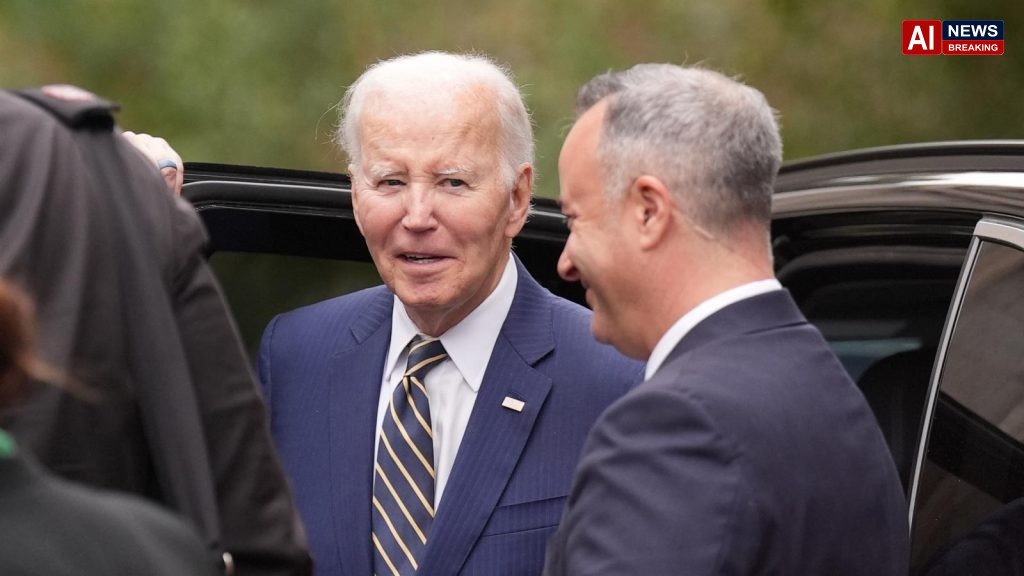
Biden discusses - AI News Breaking
President Joe Biden’s recent remarks about a hypothetical cancer diagnosis have sparked a fresh wave of scrutiny and speculation regarding his health, the transparency of his medical disclosures, and the broader implications for the 2024 election. In a candid interview aired on a national news program on Tuesday, the 81‑year‑old commander‑in‑chief reflected on a question he had been asked repeatedly since the start of his administration: what if he were diagnosed with a serious illness while in office? “If I had known I had cancer, I would not have run for a second term,” Biden said, adding that he had never received a cancer diagnosis during his first four years in the White House..
The comment, while framed as a hypothetical, resonated deeply with a public already attuned to the president’s age and health, and it prompted an immediate response from the White House, the president’s medical team, and political analysts across the aisle.Biden’s statement came after a series of recent medical briefings that have sought to reassure a skeptical electorate. In August, the White House released a detailed report from Dr. Kevin O’Connor, the physician who has overseen the president’s health since the start of his term, confirming that Biden is “in good health for his age.” The report noted that the president’s blood pressure, cholesterol levels, and cardiovascular metrics remain within normal ranges, and that his recent physical examination showed no evidence of malignancy or other life‑threatening conditions..
O’Connor, speaking on the same news program, reiterated that there has been no indication of cancer and that routine screenings continue as scheduled.The president’s remarks, however, have reignited a debate that has been percolating since his 2020 campaign: the adequacy of the transparency surrounding the health of senior public officials. Critics argue that the administration’s approach to medical disclosure is overly guarded, leaving voters with insufficient data to make an informed judgment about a candidate’s fitness for office. Supporters counter that the president’s health is a private matter, and that the existing medical releases already meet the standards set by previous administrations.Political opponents have seized on Biden’s hypothetical scenario to press the issue further..
In a press conference on Wednesday, Senate Republican leader Mitch McConnell warned that “the American people deserve full and timely disclosure of any health concerns that could affect the nation’s leadership.” He urged the White House to publish a comprehensive, unredacted version of the president’s medical records, citing the precedent set by former presidents who made their health information publicly available. The call for greater transparency has found resonance among a segment of independents who view health disclosure as a matter of national security.In response, the White House issued a statement emphasizing that the president’s health remains “stable and robust,” and that all medical assessments have been conducted in accordance with the highest standards of care. The statement also highlighted that the president undergoes regular screenings for a range of conditions, including cancer, and that any new findings would be communicated promptly to the American public..
The administration’s messaging underscores a delicate balance: providing reassurance without compromising the privacy of the president’s personal medical information.Behind the public statements lies a complex medical routine that many Americans may not fully appreciate. As part of his annual health evaluation, President Biden undergoes a battery of tests that include comprehensive blood work, imaging studies, colonoscopies, and cardiac stress tests. O’Connor, these examinations are designed to catch any early signs of disease, including malignancies, at a stage when treatment is most effective..
The physician noted that while no evidence of cancer has emerged, the president’s age places him in a higher risk category for certain cancers, prompting the administration to maintain a vigilant screening schedule.The president’s hypothetical admission also about the psychological and political calculus that accompanies a potential diagnosis. Had Biden learned of a serious illness during his first term, his decision to forgo a second campaign might have been influenced not only by personal health considerations but also by the perceived impact on national stability and party unity. Historically, presidents who faced health crises while in office have navigated a delicate path between personal privacy and public duty..
The case of President Ronald Reagan, who disclosed his diagnosis of colon cancer in 1985 after initial hesitation, serves as a cautionary tale about the ramifications of delayed transparency.Analysts suggest that Biden’s candidness about the hypothetical scenario could be a strategic move to pre‑empt speculation and demonstrate openness. By stating outright that he would have declined a second term had a cancer diagnosis been known, the president may be attempting to frame the narrative on his own terms, thereby reducing the potency of opposition attacks. This approach mirrors tactics used by other senior politicians who have addressed health rumors head‑on, often to neutralize the issue before it gains traction.Public reaction to the president’s comments appears mixed..
A recent Pew Research Center poll indicates that roughly 54 percent of Americans feel they have sufficient information about the president’s health, while 38 percent believe more detail is necessary. Among Democrats, confidence remains high, with 71 percent expressing trust in Biden’s ability to serve another term. Conversely, Republican respondents show heightened concern, with 62 percent indicating that health disclosures would influence their voting decision..
The data suggests that while the issue may not be decisive for the majority, it remains a salient factor for a significant portion of the electorate.The conversation about Biden’s health also intersects with broader discussions about the age of political leaders in the United States. At 81, the president is the oldest individual to assume the nation’s highest office, a fact that has repeatedly been highlighted in media coverage. Demographic trends show an aging electorate, and some scholars argue that older candidates may better reflect the experiences of a sizable voting bloc..
Others caution that age-related health risks could pose challenges to governance, especially in times of crisis. The hypothetical of a cancer diagnosis underscores the tangible uncertainties that accompany advanced age in public office.In the weeks ahead, the White House is expected to release an updated health summary as part of the routine annual report. Whether the administration will choose to expand the level of detail beyond prior releases remains to be seen..
Some experts predict that a more granular disclosure—such as specific imaging results or a timeline of upcoming screenings—could quell lingering doubts, while others warn that excessive detail may invite unnecessary scrutiny and speculation.Regardless of the eventual format of any new medical briefings, President Biden’s recent remarks have placed the issue of health transparency squarely in the public arena at a critical juncture in the 2024 campaign cycle. As both parties marshal resources to secure the decisive November election, the electorate will be asked to weigh a complex matrix of policy positions, personal character, and, inevitably, the physical capacity.
Updated: November 11, 2026
Biden’s pre‑emptive “no‑cancer‑I‑would‑quit” line reframes health speculation as a strategic confession, forcing opponents to chase a narrative he already controls. The ensuing demand for deeper medical disclosure could turn a routine transparency debate into a decisive wedge issue in the 2024 race, especially among swing voters wary of age‑related risk.





