
 Pond heron found dead in Coimbatore tests positive for avian influenza
 Pakistan’s leaders hail first astronaut aboard Chinese craft: ‘Proud one of us has gone into space’
 British tourist travels 29 hours from Mumbai to Amritsar for ₹5,461, rates Indian Railways 10/10 | Viral video
 The Supreme Court will decide whether assault weapons bans violate the Second Amendment
 A Critic of Beijing Falls Short in Taiwan’s Key Mayoral Election
Kerala HC Division Bench allows State’s appeal against Single Judge order quashing police association rejig
**
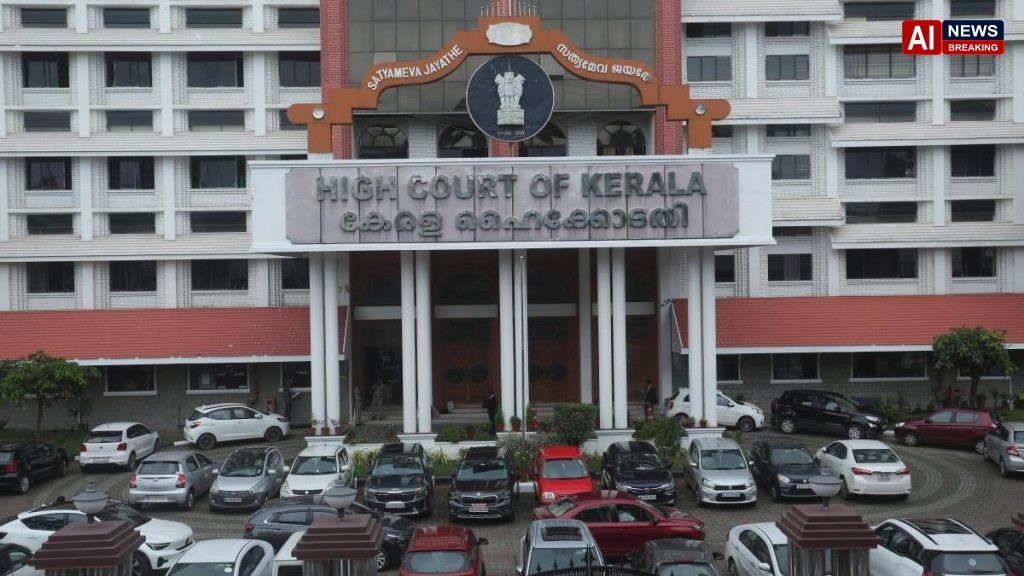
Kerala HC Division Bench allows State’s appeal against Single Judge order quashing police association rejig - AI News Breaking
kerala division bench allows:
Kerala High Court’s division bench on Tuesday set aside a single‑judge order that had nullified the state government’s decision to restructure police unions, thereby allowing the government’s appeal to proceed. The bench, comprising Justice V. Krishna Iyer and Justice Anupama Kumar, held that the earlier ruling, which had declared the restructuring “ultra vires,” required a fresh look in light of the arguments presented by the state..
The decision revives a contentious debate over the reorganisation of police personnel associations, a move the government says is essential to align union representation with the current service hierarchy. The controversy dates back to 2022 when the Kerala government issued a notification to merge several existing police unions into a single, streamlined body. The restructuring aimed to replace the fragmented network of regional and functional associations with a unified framework that mirrors the hierarchical nature of the police force..
The government argued that the previous arrangement, which comprised multiple overlapping bodies, no longer corresponded to the modern service structure and hampered coordinated decision‑making. Critics, however, warned that the move could dilute collective bargaining power and marginalise rank‑and‑file officers. The single‑judge order, delivered in November 2023 by Justice J. M. R. Rathore, had struck down the restructuring, holding that the government had overstepped its statutory authority under the Kerala Police (Amendment) Act, 2021..
The judgment asserted that any alteration to the composition of police unions required a legislative amendment, not an executive notification. It also cited concerns about procedural fairness, noting that the affected officers had not been consulted adequately before the changes were announced. In its appeal, the state contended that the restructuring was initiated because the existing association structure no longer reflected the prevailing service structure..
It emphasised that the reorganisation was not a discretionary exercise but a necessary administrative step to ensure that the representation mechanism kept pace with changes in rank, postings and functional responsibilities within the force. The state further submitted that the relevant provisions of the 2021 amendment grant it the discretion to restructure associations, provided that the changes are in the public interest and maintain internal discipline. The division bench examined these submissions alongside the earlier judgment’s reasoning..
While acknowledging the need for administrative flexibility, the bench cautioned that such flexibility must operate within the bounds of legislative intent. Justice Iyer observed that the term “restructuring” in the amendment could be interpreted to include the consolidation of overlapping bodies, provided the process respects statutory safeguards. He added that the bench would not rush to overturn the earlier order without a thorough assessment of whether the government’s action indeed falls within the ambit of the amendment..
Legal experts suggest that the bench’s willingness to entertain the appeal could signal a shift in how courts view executive powers over statutory bodies. Professor Ramesh K. Menon of the National Law School of India noted that the judgment underscores the importance of contextual interpretation, especially when statutes use broad terminology. He warned that future cases might hinge on the fine line between permissible administrative reform and unlawful encroachment on legislatively defined structures..
The Kerala Police Union, representing officers across the state, has expressed disappointment at the division bench’s decision to allow the appeal. In a statement, the union said that the restructuring threatens the democratic representation of its members and could erode the checks and balances that unions provide. It urged the government to engage in genuine consultations and to consider alternative reforms that preserve the multiplicity of voices within the force..
The state government, meanwhile, has reiterated its commitment to a transparent process. Minister for Home Affairs P. K. Saji announced that a committee comprising senior officers, legal experts and representatives from the existing unions would be set up to review the restructuring plan. The committee, he said, would address concerns raised by the unions and ensure that any final restructuring complies with both statutory mandates and the principles of natural justice..
Political reactions have been mixed. The ruling Left Democratic Front (LDF) government has defended the move as part of broader police reforms aimed at modernising the force and enhancing operational efficiency. Opposition parties, however, have seized upon the controversy to criticize the government for perceived authoritarian tendencies..
In the Kerala Legislative Assembly, opposition leader V. S. Achuthanandan called the restructuring “a top‑down imposition that disregards the rights of the rank‑and‑file”. The case also draws attention to a national trend where several Indian states are revisiting police union structures amid calls for reforms. In Maharashtra and Karnataka, similar debates have unfolded over the balance between operational command and unionised representation..
Observers note that while reforms may improve administrative cohesion, they risk weakening the collective voice that has historically championed officers’ welfare and accountability. As the division bench prepares to hear oral arguments in the coming weeks, legal analysts anticipate that the final verdict will hinge on the interpretation of “restructuring” within the 2021 amendment and the extent of procedural safeguards afforded to officers. The court is likely to weigh the government’s claim of administrative necessity against the unions’ assertion of statutory protection..
A definitive ruling could set a precedent for how state governments across India manage the delicate interplay between organisational efficiency and statutory union rights. Regardless of the outcome, the episode highlights the challenges inherent in reforming legacy institutions within democratic frameworks. It underscores the need for transparent dialogue, robust legal foundations and a balanced approach that safeguards both the operational integrity of the police force and the democratic rights of its personnel..
As Kerala navigates this legal crossroads, the broader Indian polity watches closely, aware that the resolution may reverberate far beyond the state’s borders..
Updated: November 12, 2026






