
 Pakistan’s leaders hail first astronaut aboard Chinese craft: ‘Proud one of us has gone into space’
 British tourist travels 29 hours from Mumbai to Amritsar for ₹5,461, rates Indian Railways 10/10 | Viral video
 The Supreme Court will decide whether assault weapons bans violate the Second Amendment
 A Critic of Beijing Falls Short in Taiwan’s Key Mayoral Election
 EPA says no rise in contamination after Army detonates lead azide stockpile in Iowa
DOGE cuts cost tribes $470M, gutting funding for climate projects
**
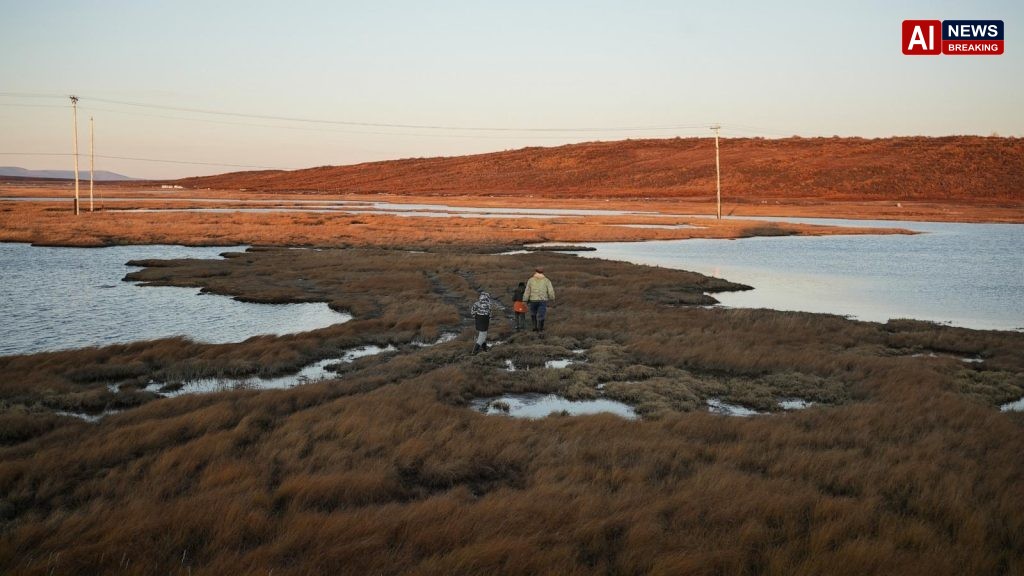
DOGE cuts cost tribes $470M, gutting funding for climate projects - AI News Breaking
DOGE cuts cost tribes $470M, gutting funding for climate projects The Department of Government Efficiency (DOGE) has slashed $470 million from the federal budget earmarked for tribal nations, according to two new reports released this week by the Brookings Institution. The cuts, which affect a suite of climate‑adaptation programmes, will see the majority of funds withdrawn from initiatives aimed at protecting water sources, restoring forests and bolstering renewable‑energy infrastructure on reservations. Brookings analysts say the reductions represent the single largest fiscal retreat from Indigenous climate projects in a decade, raising concerns about the ability of tribal governments to meet escalating environmental threats..
The reports, titled Fiscal Re‑allocation and Tribal Climate Resilience and Budgetary Shifts in Indigenous Environmental Funding, were compiled by a team of economists and policy experts who examined DOGE’s 2025 spending plan. Their findings suggest that while the department cited “efficiency gains” and “overlap with existing programs” as justification, the actual savings stem from eliminating entire grant streams that were previously administered jointly with the Environmental Protection Agency and the Department of the Interior. The analysts warn that the abrupt withdrawal of resources could undermine years of progress made in reducing wildfire risk and improving water quality across the Southwest and Great Plains..
Tribal leaders have responded with alarm, convening an emergency summit in Washington, D.C. on Tuesday to discuss the ramifications. “These cuts are not just numbers on a spreadsheet; they are a direct threat to the health, safety and sovereignty of our peoples,” declared N. Red Cloud, chair of the National Congress of American Indians..
Representatives from the Navajo Nation, the Confederated Tribes of the Umatilla Indian Reservation and dozens of other sovereign entities have called for an immediate congressional hearing, arguing that the decision contravenes the government’s trust‑responsibility obligations under numerous treaties and statutes. The Department of Government Efficiency, created in 2020 to streamline federal spending, defended the move as a necessary step toward fiscal prudence. In a statement released on Friday, DOGE spokesperson Melissa Grant said the agency “identified overlapping grant mechanisms that duplicated efforts and diverted funds from core government priorities.” She added that the department is reallocating a portion of the savings to a new “tribal innovation fund” that will award competitively‑bid projects, though critics contend that the new fund’s $45 million cap is a fraction of what was previously available..
Brookings researchers stress that the shift from guaranteed allocations to competitive grants could disproportionately disadvantage smaller or less‑resourced tribes. “Competitive models tend to favour entities with established administrative capacity, which many reservations lack due to historic underfunding,” noted Dr Eleanor Patel, a senior fellow at Brookings. “The net effect is a de‑facto reduction in available climate‑aid for the most vulnerable communities, precisely those that need it most to combat rising temperatures, drought and flood risks.” Environmental groups have also weighed in, warning that the cuts could stall national climate goals..
The Sierra Club’s Western chapter issued a press release linking the $470 million reduction to a projected 12 percent slowdown in the United States’ overall greenhouse‑gas emission reduction trajectory by 2030. The organization points to successful tribal projects—such as the solar micro‑grid on the Pine Ridge Reservation and the flood‑plain restoration in the Yakama Nation—as demonstrable models that have delivered both ecological and economic benefits. Legal experts anticipate a wave of challenges, citing the Administrative Procedure Act and the Tribal Consultation Requirement embedded in the 1975 Indian Self‑Determination and Education Assistance Act..
Professor James Monroe, a professor of Indigenous Law at the University of California, Berkeley, told BBC News that “the administration’s failure to provide a clear, reasoned explanation and to engage in meaningful consultation could render the cuts vulnerable to judicial review.” He added that several tribes have already filed notices of intent to sue, citing potential violations of both domestic law and international human‑rights standards. Congressional reaction has been mixed. While some Republicans have lauded DOGE’s cost‑saving measures as “fiscally responsible,” a bipartisan coalition of lawmakers introduced the Tribal Climate Funding Restoration Act (H.R. 7894) on Thursday..
The bill seeks to restore the original $470 million allocation and to establish a standing oversight committee to monitor tribal climate‑project funding. Its sponsor, Representative Rosa De Luna (D‑AZ), argued that “protecting tribal lands from climate disaster is not a partisan issue; it is a matter of national security and moral duty.” The White House, meanwhile, has remained largely silent on the specifics of the budgetary changes, opting instead to emphasize broader climate‑action initiatives announced earlier this year. In a press briefing, Press ary Karine Patel said the administration “remains committed to working with tribal nations to develop resilient, sustainable solutions,” but declined to comment on the Brookings reports or the pending legislation..
Analysts at the Center for American Progress suggest that the controversy could prompt a reassessment of how federal agencies coordinate on Indigenous climate policy. Their recent policy brief recommends a “joint stewardship model” that would integrate DOGE, the EPA and the Bureau of Indian Affairs under a single governance framework, ensuring that tribal voices are embedded in decision‑making from the outset. The brief also calls for a statutory guarantee of minimum funding levels for tribal climate programmes, to prevent future abrupt cuts..
As the debate unfolds, tribal communities are already feeling the impact. On the Hopi Reservation, officials report that a planned water‑conservation project, which would have installed rain‑.
Updated: November 12, 2026
The $470 million slash exposes a paradox: federal “efficiency” is being pursued at the expense of the very climate safeguards that protect the nation’s most vulnerable lands, undermining long‑term cost savings. By shifting guaranteed tribal aid to a tiny competitive fund, the government risks turning climate resilience into a






