
 Pakistan’s leaders hail first astronaut aboard Chinese craft: ‘Proud one of us has gone into space’
 British tourist travels 29 hours from Mumbai to Amritsar for ₹5,461, rates Indian Railways 10/10 | Viral video
 The Supreme Court will decide whether assault weapons bans violate the Second Amendment
 A Critic of Beijing Falls Short in Taiwan’s Key Mayoral Election
 EPA says no rise in contamination after Army detonates lead azide stockpile in Iowa
Judge Richard A. Posner dies at 87
**
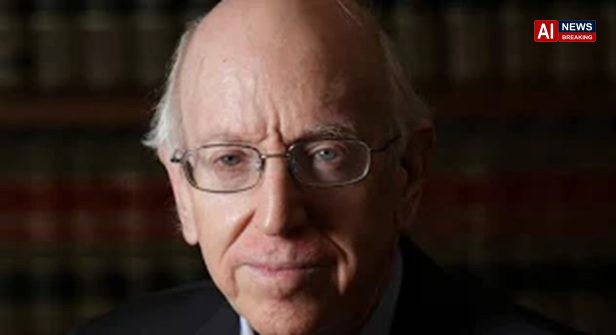
judge richard posner dies:
Former United States Court of Appeals Judge Richard A. Posner, whose legal mind reshaped American jurisprudence through the application of economic analysis, died on Tuesday at the age of 87. The cause, according to his family, was complications from a long‑standing illness, though they declined to specify further. He leaves behind a legacy that spans more than half a century of scholarship, judicial service, and public debate, cementing his place as one of the most influential jurists of the post‑World War II era.Born in 1939 in New York City to a family of modest means, Posner attended the City College of New York before earning a doctorate in philosophy at the University of Chicago, where he studied under the economist Milton Friedman..
He later returned to Chicago for his law degree, graduating at the top of his class in 1965. The intellectual crucible of the Chicago School, with its emphasis on market forces and rational choice theory, would become the foundation for Posner’s pioneering work in law and economics, a field that was then in its infancy.In 1971, President Richard Nixon appointed Posner to the United States Court of Appeals for the Seventh Circuit, a position he would hold for 35 years. On the bench, he was renowned for his prolific output, authoring more than 3,000 opinions, many of which were noted for their clarity, wit, and willingness to embrace interdisciplinary insight..
He famously described his approach as “law and economics in a nutshell,” arguing that judges should consider the efficiency of legal rules in the same way economists evaluate market outcomes. This perspective proved transformative, influencing not only the way courts assess antitrust, tort, and contract disputes, but also the curricula of law schools across the country.Beyond his judicial duties, Posner was an extraordinarily prolific scholar. His 1973 treatise, Economic Analysis of Law, quickly became a foundational text, laying out a systematic framework for evaluating legal doctrines through the lens of cost‑benefit analysis..
Over the following decades he authored dozens of books and hundreds of articles, tackling subjects as varied as intellectual property, criminal sentencing, and even the philosophy of law. His willingness to cross disciplinary boundaries earned him both admiration and criticism; some colleagues praised his intellectual daring, while others warned that an overreliance on economic efficiency could marginalize moral and social considerations.Posner’s influence extended into the public arena, where he was known for his candid, sometimes contrarian, commentary on contemporary legal and political issues. He contributed regularly to The New York Review of Books and The Atlantic, and his op‑eds often sparked vigorous debate..
In a 2008 piece, he urged the Supreme Court to reconsider its stance on the death penalty, arguing that the procedural complexities and costs outweighed any deterrent effect. In 2014, he sparked controversy by suggesting that the United States should rethink its immigration policies through a cost‑efficiency framework, prompting both applause from free‑market advocates and condemnation from human‑rights groups.His judicial philosophy evolved over time, reflecting a restless intellect unafraid of reassessment. While early in his career he championed the “law and economics” paradigm as a near‑universal tool, later writings revealed a growing skepticism about the limits of quantitative analysis..
In The Future of the Supreme Court (2009), Posner warned that the Court’s institutional rigidity could undermine its legitimacy, and in The Catastrophe of American Justice (2020) he lamented the erosion of public trust in the legal system. These later works underscored a shift toward a more nuanced view that combined economic insight with a deeper concern for procedural fairness and democratic accountability.Posner’s personal life, though less publicized, was marked by a commitment to education and mentorship. He taught at the University of Chicago Law School for over four decades, where he was celebrated for his rigorous seminars and willingness to engage students in heated debates..
Former students recall his sharp humor and his habit of assigning dense readings on both legal theory and classic literature, reflecting his belief that a well‑rounded mind is essential for sound jurisprudence. Many of his protégés have gone on to occupy prominent positions in academia, the judiciary, and public policy.The impact of Posner’s work can be measured in both tangible legal outcomes and the broader intellectual climate. Courts across the United States routinely cite his opinions when evaluating liability, damages, and regulatory standards, often invoking his principle that “the law should aim to maximize social welfare.” Law schools have integrated economic analysis into core curricula, and the field now boasts dedicated departments, research centers, and annual conferences—a testament to the institutionalization of ideas he helped forge..
Critics, however, maintain that his emphasis on efficiency sometimes eclipses considerations of equity, a tension that continues to animate scholarly discourse.In the weeks following his death, tributes poured in from a spectrum of legal figures. Supreme Court Justice Stephen Breyer called Posner “a towering intellect whose work reshaped the way judges think about the law,” while former colleague and fellow appellate judge Frank Easterbrook described him as “a relentless curiosity personified, unafraid to question even his own doctrines.” The American Bar Association issued a statement noting that Posner’s writings “expanded the horizons of legal thought and inspired generations of lawyers to view the law through a broader, interdisciplinary lens.”Richard Posner is survived by his wife, Joan, and their two children. A private funeral service will be held in Chicago, a city that shaped much of his professional journey..
As the legal community reflects on his passing, his influence endures in the countless opinions that still bear his signature, the textbooks that continue to teach his theories, and the ongoing debates he ignited about the proper role of economics, morality, and pragmatism in the law. His death marks the end of an era, but the intellectual tools he forged will likely shape American jurisprudence for decades to come..
Updated: November 12, 2026
Posner’s death leaves a double‑edged legacy: his economic lens sharpened judicial efficiency, yet it also exposed a persistent blind spot toward equity that continues to haunt courts.
His career reminds us that when law leans too heavily on numbers, it risks sidelining the very human values it’s meant to protect







