
 Pakistan’s leaders hail first astronaut aboard Chinese craft: ‘Proud one of us has gone into space’
 British tourist travels 29 hours from Mumbai to Amritsar for ₹5,461, rates Indian Railways 10/10 | Viral video
 The Supreme Court will decide whether assault weapons bans violate the Second Amendment
 A Critic of Beijing Falls Short in Taiwan’s Key Mayoral Election
 EPA says no rise in contamination after Army detonates lead azide stockpile in Iowa
Restrictions on me arbitrary, vague: Sonam Wangchuk
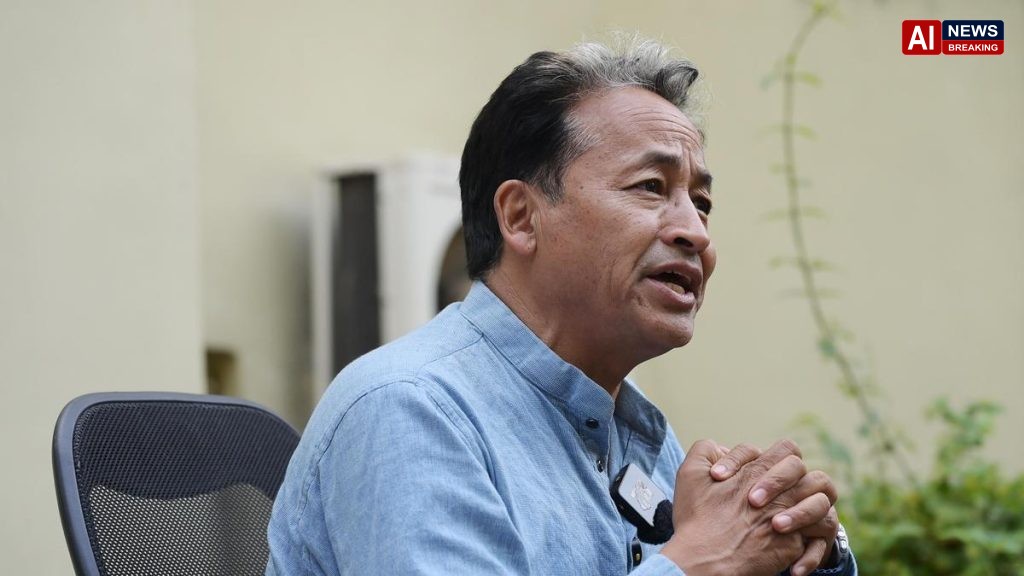
Restrictions on me arbitrary, vague: Sonam Wangchuk - AI News Breaking
restrictions arbitrary vague sonam:
Restrictions on me arbitrary, vague: Sonar Wangchuk The Ladakh administration has moved activist Sonam Wangchuk from a public protest site to his own home in Leh, a decision that rights groups say amounts to a covert house‑arrest. Wangchuk, a prominent figure in the region’s environmental and cultural campaigns, was seized on Tuesday evening after a demonstration against the expansion of a hydro‑electric project on the Indus River. Officials claim the relocation was for his “personal safety”, yet the activist has been barred from leaving his residence, sparking accusations of arbitrary and vague restrictions that breach constitutional guarantees..
Wangchuk, 38, has been a fixture of Ladakh’s civil‑society landscape for over a decade, leading campaigns that blend ecological stewardship with the preservation of Buddhist heritage. His recent protest drew dozens of locals who feared that the proposed dam would submerge sacred sites and disrupt fragile alpine ecosystems. Police officers arrived at the scene, citing a “law‑and‑order” directive, and escorted the group to the district headquarters before ordering Wangchuk to return to his house, where he was instructed not to travel beyond a 500‑metre radius without prior permission..
Legal experts warn that such confinement, lacking a formal court order, skirts the boundaries of India’s preventive detention laws. “The Constitution guarantees the right to personal liberty and freedom of movement, which can only be curtailed through a transparent, judicial process,” says Advocate Priya Singh of the Ladakh Bar Association. She adds that the administration’s vague justification – “security concerns” – does not satisfy the stringent standards set by the Supreme Court for imposing restrictions on a citizen’s freedom..
Human Rights Watch, in a statement released on Thursday, described the move as “a chilling signal to dissenters in a region already grappling with political marginalisation”. The organisation highlighted a pattern of similar measures in other Union Territories where local activists face administrative orders limiting travel, communication, and assembly. “When the state cloaks repression in the language of protection, it erodes public trust and undermines democratic accountability,” the statement read..
The Ladakh administration, meanwhile, defended its actions as a necessary response to “potential escalation of unrest”. A spokesperson for the Lieutenant Governor’s office told reporters that intelligence inputs suggested the protest could attract “outside agitators” seeking to destabilise the fragile peace in the high‑altitude border area. The spokesperson declined to provide specifics, emphasizing that the decision was taken after “consultation with senior officials and the police”..
Critics argue that such opacity is itself a hallmark of arbitrary governance. Local residents have voiced mixed reactions. While some sympathise with Wangchuk’s environmental concerns, others fear that prolonged protests could jeopardise development projects deemed essential for the region’s connectivity and employment..
“We need roads, schools, and hospitals,” says Tsering Lama, a shopkeeper from the nearby village of Basgo. “But we also want our rivers and monasteries to survive. The administration must find a middle path, not silence those who speak up.” Wangchuk’s family, who have been barred from visiting him without prior clearance, describe the situation as “psychologically taxing”..
His wife, Lhamo, told the BBC that she receives “sporadic updates” from her husband through a single mobile line, and that any attempt to contact him directly results in the line being disconnected. “He is a journalist in his own right now, documenting his confinement on paper and in his mind,” she said, adding that she hopes a court will intervene soon. In the national arena, the issue has drawn the attention of several parliamentary committees..
A member of the Lok Sabha’s Standing Committee on Home Affairs raised a question regarding the legal basis for the residence‑restriction order, seeking clarification on whether the Ladakh administration has invoked any provisions of the Unlawful Activities (Prevention) Act or the Armed Forces (Special Powers) Act. The Ministry of Home Affairs has yet to respond, prompting further speculation about the political calculus behind the move. International observers note that Ladakh’s strategic position—bordering both China and Pakistan—adds a layer of complexity to local governance..
The region’s integration into the Union Territory framework in 2019 heightened security sensitivities, prompting the central government to adopt a more hands‑on approach. However, analysts caution that conflating legitimate security concerns with the suppression of civil liberties can backfire, potentially fueling dissent and attracting unwanted global scrutiny. The Indian Supreme Court has, in recent years, struck down several preventive‑detention orders that lacked procedural safeguards..
In a 2022 judgment, the bench underscored that “the very essence of liberty is its protection from the arbitrary will of the executive.” Legal scholars argue that Wangchuk’s case could become a litmus test for the judiciary’s willingness to assert its authority over the Union Territory’s administration, especially as similar cases have surfaced in Jammu and Kashmir and the Andaman Islands. As the days pass, the activist’s supporters have launched a digital petition demanding his immediate release and the lifting of all movement bans. The petition, which has already garnered over 150,000 signatures, calls for a transparent inquiry into the administration’s decision‑making process and urges the central government to intervene..
Social media platforms have seen a surge in hashtags such as #FreeSonam and #LadakhRights, indicating a growing digital mobilisation that may pressure officials to reconsider their stance. The coming weeks will likely determine whether Sonam Wangchuk remains a house.
Updated: November 13, 2026
Summary: Ladakh authorities have effectively house‑arrested environmental activist Sonam Wangchuk by moving him from a protest site to his home and barring him from leaving a 500‑metre radius. The move, justified as a “security” measure, has drawn criticism for violating constitutional rights and sparked a growing digital campaign demanding his release and a judicial review.
Ladakh’s “security” narrative feels less like protection and more a cloak for silencing dissent, turning a climate‑conscious activist into a political pawn.
If the judiciary doesn’t step in, this could set a dangerous precedent—turning constitutional rights into bureaucratic buzzwords and eroding






