
 Pond heron found dead in Coimbatore tests positive for avian influenza
 Pakistan’s leaders hail first astronaut aboard Chinese craft: ‘Proud one of us has gone into space’
 British tourist travels 29 hours from Mumbai to Amritsar for ₹5,461, rates Indian Railways 10/10 | Viral video
 The Supreme Court will decide whether assault weapons bans violate the Second Amendment
 A Critic of Beijing Falls Short in Taiwan’s Key Mayoral Election
Can India bridge trade gap with Southeast Asia as PM Modi heads to Manila for ASEAN amid China’s growing clout
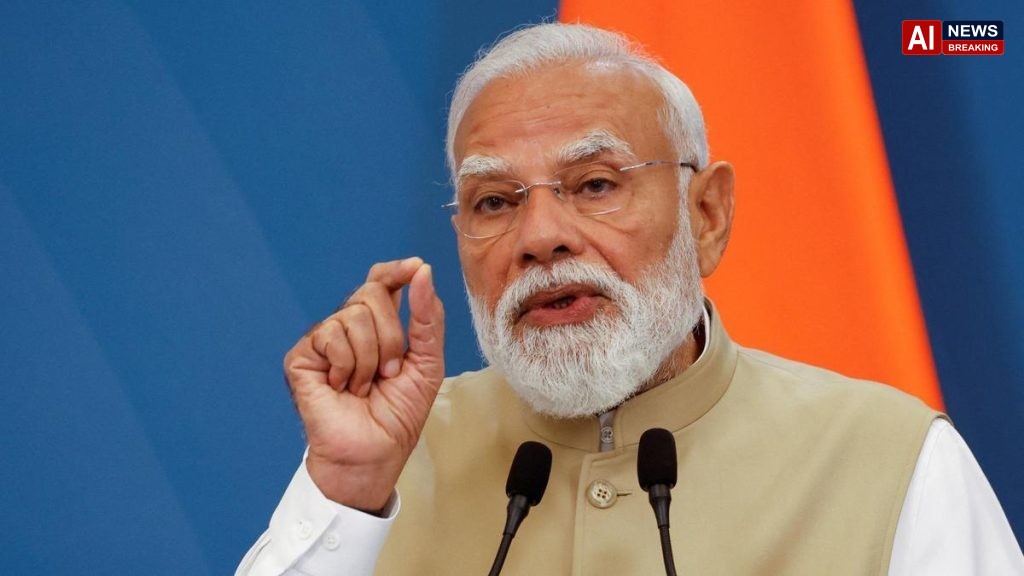
PM Modi to visit Bihar’s Bhagalpur on November 20 to launch projects - AI News Breaking
india bridge trade southeast:
Title: Can India bridge trade gap with Southeast Asia as PM Modi heads to Manila for ASEAN amid China’s growing clout? Prime Minister Narendra Modi arrived in Manila on Friday, signalling a bold push for deeper trade ties with Southeast Asia. The 18‑day ASEAN‑India Summit will run from 16 to 18 November, and the visit marks the first time a sitting Indian leader has led a delegation to the archipelago’s political heart..
Manila’s President Ferdinand R. Marcos Jr., who has long championed closer economic integration with India, welcomed the PM with a formal ceremony at the Manila Hotel. The event underscores the Philippines’ ambition to position itself as a bridge between India and the broader region. India’s trade deficit with ASEAN members exceeded $45 billion last year, a gap that has widened despite a steady rise in bilateral exports..
The country’s imports from the region – dominated by electronics, raw materials and consumer goods – far outstrip its export of textiles, pharmaceuticals and services. The trade imbalance has prompted Delhi to seek new mechanisms to level the playing field. As Modi outlines a “new chapter” in economic cooperation, he will push for a comprehensive review of existing free‑trade agreements, citing a need for better access to Southeast Asian markets for Indian goods..
In a speech delivered at the Philippine International Convention Center, Modi highlighted the importance of “value‑adding” projects that could lift Indian manufacturers into the region’s supply chains. He pointed out that a sizeable portion of ASEAN imports comes from China, whose manufacturing hubs dominate the islands’ production corridors. “India can provide an alternative that is both competitive and resilient,” the PM said..
His remarks came after a joint press conference with Marcos, where the leaders reiterated their shared goal of creating a “trust‑based, people‑centred” partnership that could counterbalance China’s economic dominance. The ASEAN‑India Summit will feature a series of high‑level dialogues on trade, digitalisation and green technology. Delegates from the 10‑country bloc – Indonesia, Malaysia, Thailand, Vietnam, Singapore, the Philippines, Brunei, Laos, Cambodia and Myanmar – will discuss ways to streamline customs procedures and reduce non‑tariff barriers..
The meeting is expected to produce a “mini‑agenda” for a comprehensive review of the 2009 ASEAN‑India Free Trade Agreement. Analysts predict that the summit could pave the way for a new, more balanced trade pact that addresses the longstanding concerns of Indian exporters. China’s growing clout in Southeast Asia is a key backdrop to India’s push for stronger ties..
Beijing’s Belt and Road Initiative has cemented its presence in the region through ports, rail links and massive infrastructure projects. The result has been an unprecedented concentration of Chinese investment across the archipelago, especially in the Philippines and Indonesia. Indian officials are keen to offer a more sustainable alternative, one that focuses on clean energy, digital infrastructure and inclusive manufacturing, rather than the heavy‑industrial model championed by China..
India’s trade strategy with ASEAN is not only about counter‑balancing China but also about securing access to raw materials and markets that are vital for its growing economy. The country is a major importer of minerals, timber and palm oil, all of which come predominantly from Southeast Asia. “We must ensure that we have reliable supply chains that can withstand geopolitical shocks,” said Finance Minister Nirmala K. Sundar..
The PM’s itinerary includes meetings with senior officials from Malaysia’s Ministry of International Trade and Industry and Indonesia’s Ministry of Trade, where he will outline the benefits of a diversified sourcing strategy. A crucial element of the summit is the “India‑ASEAN Digital Trade Initiative,” which seeks to harmonise digital trade rules and foster cross‑border e‑commerce. In an era where data flows have become a critical commodity, India’s Ministry of Electronics and Information Technology is proposing a framework that would allow Indian fintech firms easier market entry into ASEAN states..
The initiative also aims to tackle data localisation requirements that have hampered the growth of Indian software providers. This digital push could be a decisive factor in narrowing India’s trade deficit. Environmental concerns are increasingly shaping the dialogue, as both India and ASEAN members seek to meet climate commitments under the Paris Agreement..
The summit will feature a “Green Transition Forum,” where leaders will discuss joint ventures in renewable energy, electric vehicles and battery technology. Singapore’s Prime Minister Lee Hsien Loong has already announced a partnership with India’s National Grid to develop solar farms in the region, a move that could set a precedent for future collaborations. The focus on green tech aligns with India’s own ambition to become a global hub for sustainable technology..
While Modi’s visit has generated optimism, critics caution that the structural issues behind the trade imbalance are deeply entrenched. Economists argue that India’s tariff‑heavy agricultural sector and bureaucratic red tape are significant deterrents for ASEAN investors. A review of the Free Trade Agreement could address tariff reductions, but it must also tackle non‑tariff barriers such as complicated customs procedures and inconsistent regulatory frameworks..
The outcome of the summit will therefore be measured not just by rhetoric but by concrete reforms. The Philippines has emerged as a strategic partner in India’s regional playbook, with both nations sharing a common interest in ensuring a rules‑based order in the Indo‑Pacific. In a bilateral statement, Marcos emphasised the importance of a “strategic partnership” that could counterbalance China’s naval presence..
India’s Navy has already conducted joint exercises with the Philippine Marine Corps, and the PM announced a new “India‑Philippines.
Updated: November 13, 2026
Prime Minister Narendra Modi’s Manila visit kicks off an 18‑day ASEAN‑India summit aimed at reshaping trade ties and narrowing a $45 billion deficit by overhauling the 2009 free‑trade pact and launching a digital‑trade framework. The talks also seek to offer a sustainable, China‑counterbalancing alternative through greener manufacturing, diversified sourcing and deeper India‑Philippines cooperation.
Insight: This development highlights evolving dynamics and may have broader implications in the near term.






