
 Pakistan’s leaders hail first astronaut aboard Chinese craft: ‘Proud one of us has gone into space’
 British tourist travels 29 hours from Mumbai to Amritsar for ₹5,461, rates Indian Railways 10/10 | Viral video
 The Supreme Court will decide whether assault weapons bans violate the Second Amendment
 A Critic of Beijing Falls Short in Taiwan’s Key Mayoral Election
 EPA says no rise in contamination after Army detonates lead azide stockpile in Iowa
Eisenkot criticises Netanyahu speech on Arab vote threat.
**
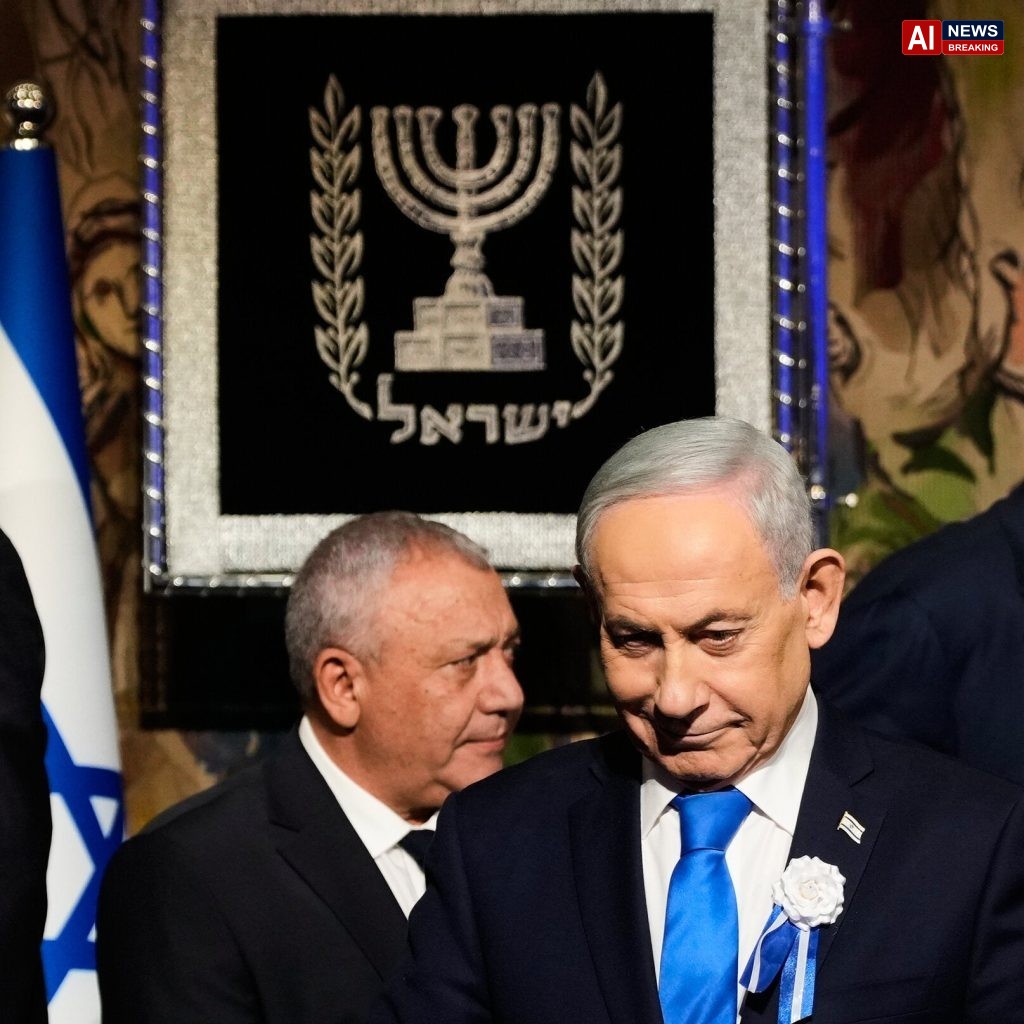
Eisenkot Accuses Netanyahu of Fueling ‘Racist’ Hostility Against Arabs - AI News Breaking
The Israeli defence establishment has entered an unusually public dispute with the country’s political leadership after Chief of Staff Gadi Eisenkot accused Prime Minister Benjamin Netanyahu of stoking “racist” hostility toward Arab citizens in a speech that has sparked heated debate across the political spectrum. Eisenkot’s remarks, delivered in a closed‑door briefing to senior officers on Monday, marked a rare instance of a senior military figure directly challenging the prime minister’s rhetoric, and they have quickly become a focal point of a broader conversation about Israel’s democratic character, the role of the armed forces and the limits of political discourse in a nation long defined by its security concerns.Eisenkot’s criticism centred on a speech Netanyahu gave to a gathering of right‑wing lawmakers last week, in which the prime minister warned that “the Arab vote is the biggest threat to our sovereignty” and warned of “demographic erosion” that could undermine the Jewish character of the state. While Netanyahu’s comments were framed as a warning about the political influence of Arab parties in the Knesset, opponents described them as an appeal to ethnic prejudice..
In his briefing, Eisenkot said the language used by the prime minister “feeds a narrative that portrays Arab citizens as a monolithic, hostile bloc, and that is dangerous for the cohesion of Israeli society.” He warned that such rhetoric could erode the trust between the Israel Defence Forces (IDF) and the Arab communities that live within Israel’s borders, a relationship the military has long described as essential for internal security.The chief of staff’s statement was not merely a moral rebuke. He outlined concrete concerns that the prime minister’s words could have operational implications for the IDF. “When the public discourse casts a whole segment of the population as an enemy, it complicates the work of our soldiers on the ground, who must engage with neighbours, students and civilian leaders on a daily basis,” Eisenkot told the audience..
He added that the IDF’s code of conduct obliges its personnel to treat every citizen with dignity and respect, and that any erosion of this principle could undermine the army’s legitimacy, especially in the Arab‑majority towns of the north and the Negev where the military maintains a visible presence.Netanyahu’s office responded swiftly, defending the prime minister’s right to articulate what it described as “legitimate security concerns.” A spokesperson said the prime minister’s remarks were intended to highlight the growing political power of parties that, in the view of many Israelis, have historically aligned with hostile actors abroad. “The prime minister did not call for violence or discrimination,” the statement read. “He simply raised a question that every democratic leader must face: how do we balance the rights of all citizens with the security of the state?” The statement also suggested that Eisenkot’s comments were “politically motivated” and could be interpreted as an attempt to undermine the government’s agenda on national unity and security.The exchange has ignited a broader public debate, with commentators on both the left and the right weighing in..
Critics of Netanyahu argue that his rhetoric inflames existing tensions and could embolden extremist elements within Israeli society, potentially leading to an increase in hate crimes against Arab citizens. A recent report from the Israel Police’s hate‑crime unit noted a 12 per cent rise in anti‑Arab incidents in the three months following the prime minister’s speech, though the report stopped short of establishing a direct causal link. Meanwhile, supporters of the prime minister contend that the focus on “racist” accusations distracts from the very real demographic and political challenges facing a country that identifies itself as both a Jewish and democratic state.Political analysts point out that the episode reflects an ongoing shift in Israeli politics, where the lines between security policy, demographic concerns and identity politics have become increasingly blurred..
Yael Zilbershatz, a senior fellow at the Institute for National Security Studies, noted that the debate “is symptomatic of a larger struggle over the narrative of Israel’s future.” She added that the military’s involvement in the conversation is unusual but not unprecedented, recalling similar public statements by senior officers during the early 2000s regarding the treatment of Palestinians in the occupied territories. “The IDF has a vested interest in maintaining the trust of all citizens,” Zilbershatz said, “but it must also navigate the political expectations of a government that sees security and demography as intertwined.”The legal framework governing civil‑military relations in Israel allows for a degree of public commentary by senior officers, but it also imposes constraints designed to preserve civilian supremacy over the armed forces. The Israeli Defence Forces’ regulations stipulate that officers may not “publicly criticize government policy in a manner that could undermine public confidence in the state’s institutions.” Eisenkot’s briefing, however, was not a public address but a confidential session with senior commanders, a detail his office emphasized to argue that the remarks fell within permissible boundaries..
Legal scholars are divided on whether the chief of staff’s comments cross the line into prohibited territory, with some suggesting that the content, given its direct reference to the prime minister’s speech, could be interpreted as a breach of the principle of civilian control.In the meantime, Arab leaders in Israel have seized on Eisenkot’s remarks as evidence that the military shares their concerns about rising hostility. Ahmad Tibi, a veteran Arab member of the Knesset, said in a televised interview that “the chief of staff’s words confirm what many of us have felt for years: that the rhetoric from the top is feeding suspicion and fear among ordinary citizens.” He called for a “national dialogue” that would address both security needs and the rights of Arab Israelis, a population that makes up roughly 20 per cent of the country’s citizens yet often feels marginalized in public discourse. Tibi’s comments were echoed by several NGOs that monitor minority rights, which issued a joint statement urging the government to “recalibrate its language and policies to reflect the pluralistic reality of Israeli society.”The controversy has also resonated within the United States, where congressional committees monitoring foreign affairs have taken note of the internal Israeli debate..
A senior aide to a Senate subcommittee on the Middle East sent a briefing to several members, highlighting Eisenkot’s concerns as “indicative of fissures within Israel’s security establishment over the direction of domestic policy.” The aide suggested that the United States should “encourage Israeli leadership to pursue inclusive rhetoric that strengthens, rather than weakens, democratic resilience.” While the briefing stopped short of calling for any policy shift, it underscores the extent to which Israel’s internal debates are now part of broader diplomatic conversations.As the week draws to a close, both Eisenkot and Netanyahu are expected to address the issue in separate public appearances. The chief of staff is slated.
Updated: November 13, 2026
Insight: Eisenkot’s rare rebuke signals a fracture in Israel’s civil‑military consensus, warning that politicized demography threatens the army’s legitimacy and the fragile social contract with Arab citizens.
If unchecked, Netanyahu’s rhetoric could convert demographic anxiety into institutional bias, eroding democratic resilience and inviting both domestic unrest and international censure.





