Pakistan’s leaders hail first astronaut aboard Chinese craft: ‘Proud one of us has gone into space’
 British tourist travels 29 hours from Mumbai to Amritsar for ₹5,461, rates Indian Railways 10/10 | Viral video
 The Supreme Court will decide whether assault weapons bans violate the Second Amendment
 A Critic of Beijing Falls Short in Taiwan’s Key Mayoral Election
 EPA says no rise in contamination after Army detonates lead azide stockpile in Iowa
The European Union says Europe will send a team of diplomats from across the continent to the Ukraine peace talks
**
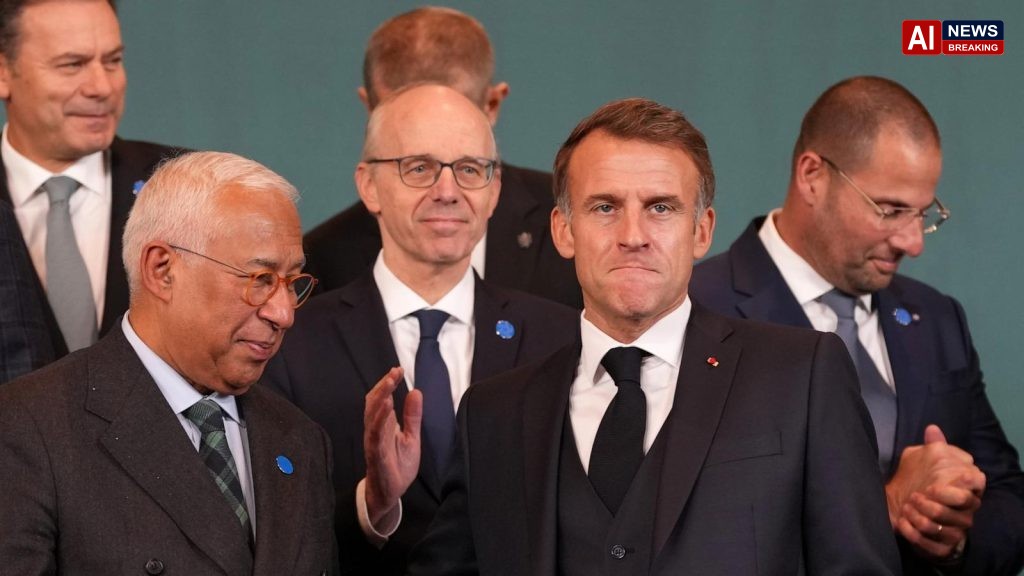
The European Union says Europe will send a team of diplomats from across the continent to the Ukraine peace talks - AI News Breaking
The European Union says Europe will send a team of diplomats from across the continent to the Ukraine peace talks The European Union announced on Wednesday that it would deploy a multinational diplomatic envoy to the ongoing Ukraine peace negotiations, signalling a shift towards a more cohesive European stance on the conflict. The decision follows months of diplomatic friction and growing frustration over stalled progress at the talks hosted by the United Nations in Geneva. By uniting voices from across the continent, Brussels aims to present a unified front that could bridge gaps between Kyiv and Moscow while ensuring that European interests are effectively represented..
Sources told the EU Council that the envoy will comprise senior diplomats from 25 member states, including France, Germany, Poland, and Romania, as well as representatives from the European External Action Service (EEAS). The delegation will be led by a seasoned European foreign affairs officer and will operate under the umbrella of the EEAS’s political affairs unit. Their mandate will be to coordinate positions, draft consensus proposals, and facilitate direct communication channels with both Ukrainian and Russian diplomatic missions..
The decision comes after a series of failed ceasefire attempts and an escalating humanitarian crisis in eastern Ukraine. Kyiv has repeatedly called for a comprehensive, lasting settlement that addresses security guarantees, territorial integrity, and the return of displaced persons. Moscow, meanwhile, has demanded a negotiated settlement that recognises its security concerns and offers concessions on the status of the Donbas region..
The EU’s new diplomatic approach seeks to keep the peace process afloat amid mounting pressure from both sides. European diplomats have warned that a fragmented EU presence could weaken the bloc’s credibility. In 2022, the European Council attempted to coordinate a joint stance, but divergent national interests and varying threat assessments led to uneven participation..
By contrast, the new team will bring a unified policy package, drawing on the collective experience of EU member states that have been involved in past ceasefire negotiations. This collective voice is expected to carry more weight in Geneva. The EU’s foreign policy chief, Josep Borrell, highlighted the importance of “a single European voice” in the negotiations..
Speaking at a press conference in Brussels, Borrell said the EU’s involvement would not be a direct mediation role but rather a facilitative one, ensuring that European diplomatic standards and legal frameworks guide the discussion. He added that the team would be ready to propose “innovative confidence‑building measures” that could help restore trust between the parties. Ukraine’s Foreign Minister, Dmytro Kuleba, welcomed the development and urged the new envoy to act swiftly..
In a statement, Kuleba praised the EU for recognising that peace is not solely a bilateral issue but a continental one. He emphasized that the EU’s participation would help prevent external actors from undermining the peace process. “The European Union has always stood for the rule of law, and its involvement in this crucial moment can make a difference,” he said..
On the Russian side, officials have remained silent about how they will respond to the EU’s announcement. Analysts speculate that Moscow may view the move as a diplomatic pressure tactic, especially as it continues to claim that it has no intention to withdraw troops from the front lines. Some Russian experts argue that an EU-led diplomatic push could force Moscow to re‑engage with the talks, but others warn that it might also harden Russia’s negotiating position..
The European Parliament, which has long debated the extent of the bloc’s involvement, welcomed the decision. A spokesperson for the European Parliament’s Foreign Affairs Committee said the move demonstrates the EU’s commitment to multilateralism. The statement also highlighted the need for a coordinated approach that incorporates both hard and soft power tools, including sanctions, humanitarian aid, and diplomatic outreach..
Financially, the EU will fund the envoy’s operations through its Common Foreign and Security Policy budget. The €15‑million allocation will cover travel, accommodation, and logistical support, ensuring that diplomats can focus on negotiations rather than administrative burdens. The European External Action Service will also provide technical experts, legal advisers, and security analysts to support the team’s work..
The next meeting of the Ukraine peace talks is scheduled to take place on Friday in Geneva, with the EU team set to arrive a day early for preparatory briefings. The delegation will meet with the heads of the UN’s mediation team and the Ukrainian and Russian representatives to establish a working framework. The expectation is that the EU’s presence will help streamline discussions, reduce redundancies, and foster a constructive environment for progress..
Despite the optimism, there are concerns about the practicality of the EU’s plan. Critics point out that the diplomatic team will face significant logistical challenges in coordinating 25 different national viewpoints while adhering to a single policy agenda. Furthermore, the EU will need to manage the delicate balance between supporting Ukraine’s territorial integrity and addressing Russia’s security concerns, a task that has historically been fraught with complexity..
Nevertheless, the EU’s move is seen by many as a bold step towards revitalising the stalled peace process. By deploying a united diplomatic front, the bloc hopes to demonstrate that it is willing to invest the necessary resources and political will to restore stability to Eastern Europe. Whether this strategy will yield tangible results remains to be seen, but it marks a decisive shift in how the EU intends to engage with one of its most pressing foreign policy challenges..
Updated: November 13, 2026
A unified EU envoy could tip the diplomatic scales, forcing Moscow to choose between a collective European pressure cooker or a costly diplomatic isolation.
If the bloc can truly harmonise 25 national agendas, the peace talks may finally shift from endless rhetoric to concrete concessions on security guarantees.