Pakistan’s leaders hail first astronaut aboard Chinese craft: ‘Proud one of us has gone into space’
 British tourist travels 29 hours from Mumbai to Amritsar for ₹5,461, rates Indian Railways 10/10 | Viral video
 The Supreme Court will decide whether assault weapons bans violate the Second Amendment
 A Critic of Beijing Falls Short in Taiwan’s Key Mayoral Election
 EPA says no rise in contamination after Army detonates lead azide stockpile in Iowa
Brother of Mexican cartel leader sentenced to 22 years for drug trafficking plot
**
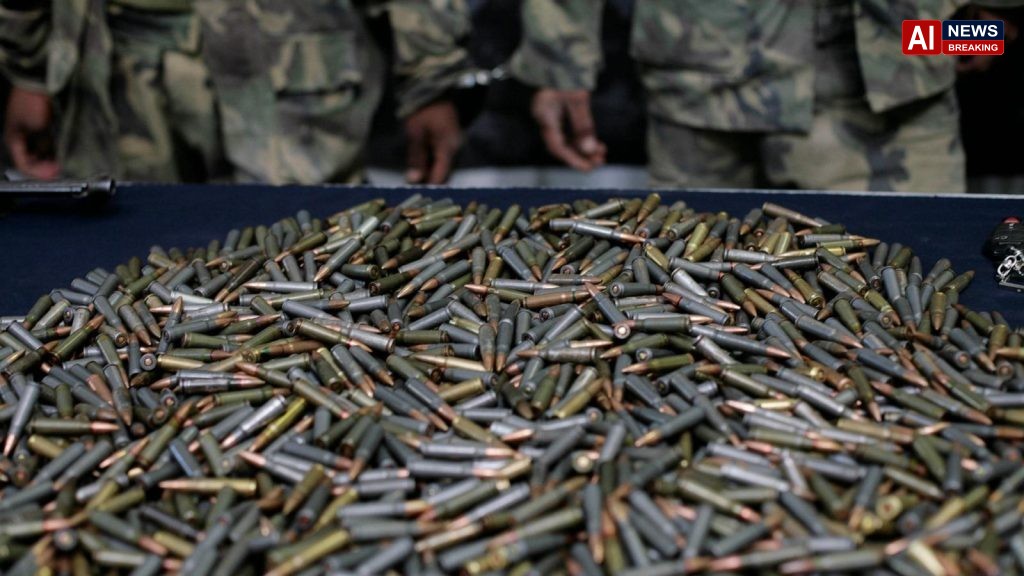
Brother of Mexican cartel leader sentenced to 22 years for drug trafficking plot - AI News Breaking
brother mexican cartel leader:
The United States federal court in San Antonio has handed down a 22‑year‑and‑four‑month prison sentence to Luis Alberto “Lu” Zúñiga‑González, the brother of the late Joaquín “El Chapo” Guzmán, after a jury found him guilty of participating in a multi‑state drug‑trafficking conspiracy that moved large quantities of cocaine and methamphetamine from Mexico into the United States. The verdict marks the latest high‑profile conviction linked to the Sinaloa cartel, a criminal organization that has long been identified by U.S. authorities as one of the most dangerous and sophisticated drug‑trafficking networks in the world.Zúñiga‑González, 48, was sentenced on Tuesday after the government presented a detailed case that spanned more than a decade of illicit activity..
Prosecutors argued that he served as a key logistical coordinator for the cartel’s northward shipments, arranging the movement of narcotics through a series of safe houses, couriers and freight routes that stretched from the Mexican state of Sinaloa to the interior of the United States. The indictment alleged that he helped to launder the proceeds of the drug trade through a network of front companies and offshore accounts, effectively turning the proceeds of violence into legitimate financial assets.The case was built on a trove of wire‑tapped phone calls, intercepted shipments and testimonies from cooperating witnesses, including former cartel members who turned state’s evidence in exchange for leniency. Federal agents seized more than 500 kilograms of cocaine, 2,300 kilograms of methamphetamine and over 5,000 pounds of marijuana during a series of raids in Texas, Arizona and New Mexico between 2015 and 2022..
The drugs, valued at an estimated $250 million, were destined for distribution hubs in Los Angeles, Chicago and the East Coast, according to the government’s opening statements.During the sentencing hearing, Assistant U.S. Ramos highlighted the human cost of the operation. “Every kilogram of cocaine or methamphetamine that entered a U.S..
community carried with it a cascade of violence, addiction and death,” she said. “The Zúñiga‑González family has already caused immeasurable suffering through the actions of Joaquín Guzmán, and this conviction demonstrates that the law will hold even the relatives who facilitate these crimes accountable.”The defense, led by veteran criminal lawyer Thomas J. O’Connor, sought to mitigate the sentence by emphasizing Zúñiga‑González’s lack of direct involvement in the violent acts that the Sinaloa cartel is notorious for..
“My client was a middle‑man, a logistical coordinator, not a hit‑man,” O’Connor argued. He presented character witnesses who testified that the defendant had been a family man who had attempted to distance himself from his brother’s criminal empire after Guzmán’s arrest in 2016. The lawyer also referenced Zúñiga‑González’s cooperation with authorities after his own arrest in 2020, noting that he provided valuable intelligence that helped dismantle several ancillary trafficking cells.The judge, U.S..
Hensley, rejected the mitigation arguments, citing the severity of the offenses and the defendant’s continued engagement in the cartel’s operations despite the heightened risk after his brother’s high‑profile capture. “The evidence presented demonstrates a sustained, organized effort that contributed to the flow of dangerous drugs across our borders,” Hensley said. “The sentence imposed reflects both the gravity of the conduct and the need to send a clear message that participation in such enterprises will be met with decisive punishment.”The conviction comes at a time when U.S..
law‑enforcement agencies are intensifying their focus on transnational drug networks that have adapted to the disruptions caused by the death of El Chapo in 2023. While the cartel’s leadership structure has become more decentralized, analysts say the organization’s capacity to move large shipments of illicit substances remains largely intact. “Removing a single figure, even a high‑profile one, does not dismantle a cartel,” said Dr..
Elena Ramirez, a criminology professor at the University of Texas. “What matters is disrupting the logistical and financial arteries that keep the operation alive, and that is exactly what this case targeted.”The sentencing also underscores the broader strategic shift in U.S. policy toward a more punitive approach for high‑level traffickers, contrasted with recent calls for drug‑policy reform and harm‑reduction measures..
Critics argue that lengthy prison terms do little to address the root causes of drug demand and that resources might be better allocated to treatment programs. However, federal officials maintain that the threat posed by sophisticated cartels warrants robust criminal sanctions to deter future trafficking and protect public safety.Family members of victims of the cartel’s violence were invited to the courtroom, and several took the opportunity to address the judge directly. One survivor, whose brother was killed in a 2019 shooting linked to the Sinaloa cartel, spoke of the lingering trauma that the drug trade continues to inflict on communities across the United States..
“When you see men and women behind bars for the crimes that took my brother’s life, you feel a small sense of justice,” she said, “but the pain never fully goes away.”Zúñiga‑González will be transferred to a federal penitentiary in Colorado, where he is expected to serve at least 85 percent of his sentence before becoming eligible for parole, according to the Bureau of Prisons guidelines. The case remains a stark reminder that the reach of Mexican drug cartels extends far beyond the border, and that the United States will continue to pursue those who enable their operations, even when they are kin to the most infamous drug lords of the past decade..
Updated: November 13, 2026
Even a brother’s logistical role can’t shield a cartel’s financial lifelines—this sentencing signals that U.S. law‑enforcement is now targeting the supply chain’s architects, not just the headline kingpins.
Yet the punitive focus may clash with emerging drug‑policy debates, risking a cycle of incarceration that addresses symptoms while the underlying demand and transnational networks remain largely untouched.