Pakistan’s leaders hail first astronaut aboard Chinese craft: ‘Proud one of us has gone into space’
 British tourist travels 29 hours from Mumbai to Amritsar for ₹5,461, rates Indian Railways 10/10 | Viral video
 The Supreme Court will decide whether assault weapons bans violate the Second Amendment
 A Critic of Beijing Falls Short in Taiwan’s Key Mayoral Election
 EPA says no rise in contamination after Army detonates lead azide stockpile in Iowa
Meet the Fans Who Traveled to Bangkok for Eurovision Asia
**
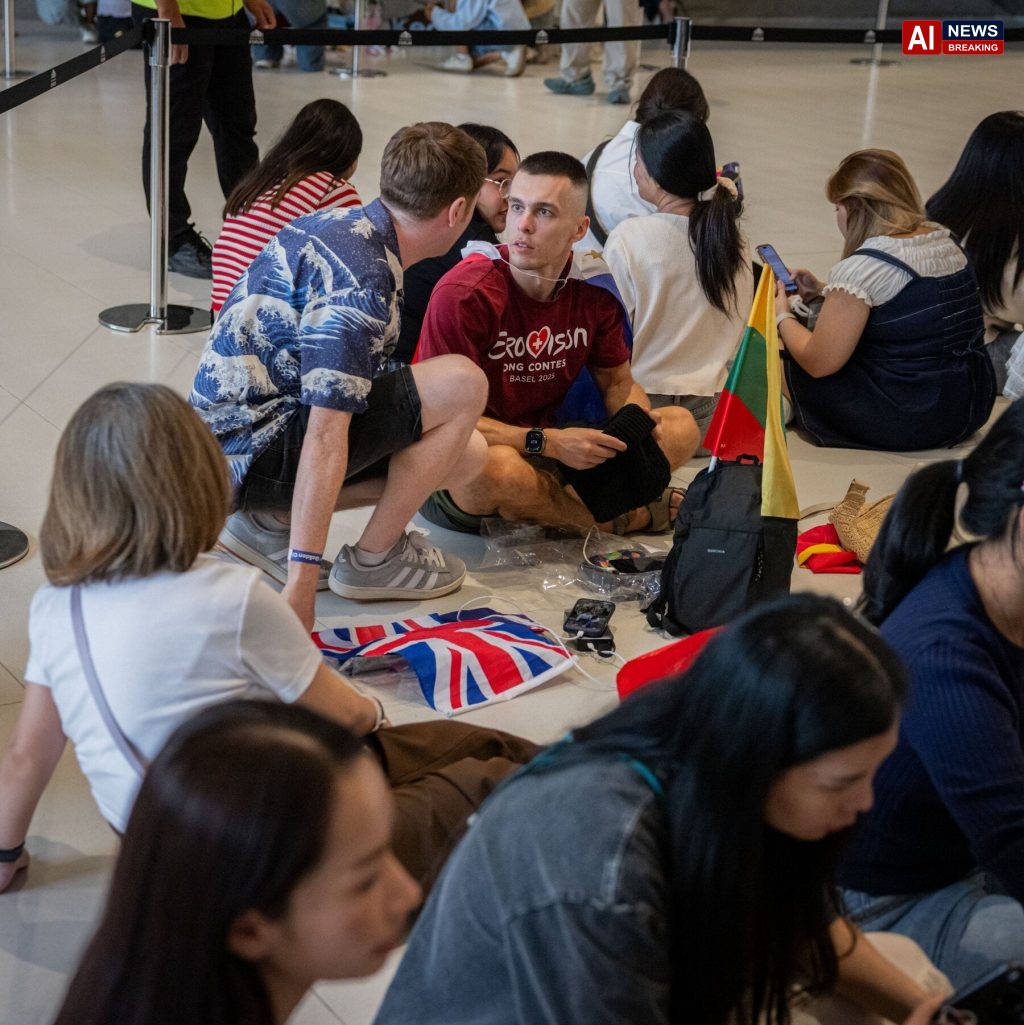
Meet the Fans Who Traveled to Bangkok for Eurovision Asia - AI News Breaking
meet fans traveled bangkok:
The first edition of Eurovision Asia took place last week in Bangkok, Thailand, and it was not only the performers and organizers who made the event a spectacle. A motley crew of fans from across the continent—some born and raised in the East, others from the West—traveled thousands of miles to witness their favourite songs performed under the glittering lights of the Royal City Avenue arena.A 28‑year‑old Austrian, Anna Müller, had been a fan of the Eurovision Song Contest since she was a child. She told the reporters that the idea of an Asian version of the competition was a dream come true, especially as she had never been able to watch the original contest live..
“The European community here in Bangkok feels like a family reunion,” she said. “Even though the languages on stage were different, the enthusiasm was unmistakable.” Anna, along with a small group of German and Polish supporters, had booked a group tour that included a guided walk around the city, a visit to the Grand Palace, and an evening of Thai street food before heading to the arena.Meanwhile, a 23‑year‑old music student from New York, Carlos Reyes, travelled to Thailand on a scholarship that covered his flight and a short‑term visa. He had never heard of the Eurovision Song Contest until an online forum told him about the new Asian iteration..
“I was skeptical at first,” he admitted. “But the energy in the stadium was electric. It felt like a cross‑cultural festival, and I was thrilled to be part of it.” Carlos was accompanied by a group of American students from the University of California, who had come to Bangkok for a summer break and saw the contest as the highlight of their trip.In addition to Western visitors, the arena was filled with locals who had grown up listening to international pop music..
Thai participants in the contest, such as the Thai‑Japanese duo “Lumiere,” were greeted by fans who had followed their journey from the initial auditions through the online voting process. Many of the Thai supporters were also members of the newly formed Eurovision Thailand Fan Club, which organized pre‑match meet‑ups, fan art exhibitions, and a live commentary stream in Thai for those unable to attend in person.The organizers of the event made a conscious effort to create an inclusive atmosphere by offering multilingual signage and a bilingual live commentary. The host country’s representative, Kanchana Chaiprasit, emphasised that the event was “a celebration of diversity, music and cultural exchange.” She pointed out that the contest’s voting system, which combined online public votes with a professional jury from each country, mirrored the democratic spirit that the Eurovision brand is known for..
“We want people to feel that their voice matters, whether they’re in the front row or watching from a distance,” she explained.A significant number of attendees were part of the global diaspora community, with many people who had moved to Thailand for work or study. Among them was a 32‑year‑old Malaysian who had lived in Bangkok for five years. She said, “I was drawn to this event because I am proud of my roots, and I wanted to share this experience with my friends here.” She was joined by a group of Singaporean expats who had followed the contest online and had formed a viewing party in a rented apartment in the Sukhumvit area..
For many of them, attending the live show was an opportunity to connect with their cultural heritage while living in a different part of the world.The contest also attracted a younger demographic. A 16‑year‑old fan from Singapore, Lin Wei, was part of a school group that had organised a charity drive to raise money for music education in rural areas of the Philippines. She said that the event was “inspiring us to use our talents for good.” Lin’s school’s project was featured in the opening ceremony, with a video montage showcasing the impact of the charity work and a call for more students to get involved.Beyond the music, the event was a showcase of Thai hospitality..
After the final vote, the crowd was invited to a cultural evening featuring traditional Thai dance performances, a tea ceremony, and a tasting of local delicacies such as pad Thai, mango sticky rice, and coconut ice cream. Many of the foreign fans reported feeling welcomed by the locals and appreciated the opportunity to learn about Thai culture. “I learned how to say ‘thank you’ in Thai during the performance,” said Carlos, who also took part in a short language lesson organised by the local tour operators.The final outcome of the contest saw the Indonesian entrant, “Saraswati,” take home the gold medal, followed by the Filipino group “Dali” and the Singaporean pop star “Mika.” The final scores were announced with the familiar drumroll, and the winning team received a trophy that incorporated elements of traditional Indonesian batik patterns..
The event concluded with a fireworks display that lit up the Bangkok skyline, a visual reminder that the night was not only about music but also about unity and shared celebration.In the days following the contest, the participants and the fans remained active on social media, sharing clips from the stage, behind‑the‑scenes footage, and personal anecdotes. The hashtags #EurovisionAsia and #BangkokBeat trended across multiple platforms, illustrating the event’s global reach. Many of the fans expressed an interest in future editions, with several promising to return when the contest rotates to a new host country..
Their enthusiasm, coupled with the organizers’ commitment to inclusivity, signals a bright future for the Eurovision brand in the Asian market..
Updated: November 14, 2026
Eurovision Asia proves that a music contest can be a cultural bridge: by inviting diaspora and local fans alike, it turns a spectacle into a shared identity experiment where language barriers melt under a single spotlight.
The enthusiastic turnout hints that the brand’s formula—mixing global pop with regional pride—could become