
 Pakistan’s leaders hail first astronaut aboard Chinese craft: ‘Proud one of us has gone into space’
 British tourist travels 29 hours from Mumbai to Amritsar for ₹5,461, rates Indian Railways 10/10 | Viral video
 The Supreme Court will decide whether assault weapons bans violate the Second Amendment
 A Critic of Beijing Falls Short in Taiwan’s Key Mayoral Election
 EPA says no rise in contamination after Army detonates lead azide stockpile in Iowa
Drought-stricken Beed: Land of parched fields and broken promises
**
Drought-stricken Beed: Land of parched fields and broken promises - AI News Breaking
droughtstricken beed land parched:
Drought‑stricken Beed: Land of parched fields and broken promises The monsoon season that usually breathes life into Maharashtra’s agricultural heartland has failed to arrive in Beed district for three consecutive years, leaving the region in a state of chronic water scarcity. Satellite imagery shows the once‑verdant fields turning a dusty brown, while ground‑level reports describe cracked riverbeds and reservoirs at half capacity. Farmers, many of whom rely entirely on rain‑fed crops such as sorghum and pigeon pea, are confronting the harsh reality that each sowing season now begins with a gamble on whether any rain will fall at all..
For women who work the fields, the drought has compounded an already precarious existence. Traditionally tasked with sowing, weeding and harvesting, they now spend long hours hauling water from distant wells to irrigate a few stubborn seedlings. Their labor, once measured in hours, has expanded into days, and the physical toll is evident in rising cases of musculoskeletal injuries and water‑borne illnesses..
Community health workers note an increase in dehydration‑related ailments, especially among elderly women who must walk several kilometres each morning to fetch water for their families. Labourers hired on a seasonal basis have been hit particularly hard. With the decline in crop yields, the demand for temporary hands has evaporated, leaving a pool of unemployed men and women with no immediate source of income..
Many have turned to informal construction work in nearby towns, but the irregular nature of such jobs offers no security. The district’s unemployment office reports a 48 percent rise in applications over the past twelve months, a figure that far outpaces the modest increase in registered job seekers across the state. Repeated pleas for government intervention have reverberated through village panchayats and local NGOs, yet residents say the promised employment guarantees have remained largely unfulfilled..
The Mahatma Gandhi National Rural Employment Guarantee Act (MGNREGA) is meant to provide 100 days of work per household, but field officers admit that fund allocations have been delayed and project approvals stalled. As a result, many families have exhausted their limited savings, resorting to high‑interest loans from informal moneylenders to survive the lean months. State authorities have responded by unveiling a ₹6,728‑crore drought relief package aimed at water conservation, crop insurance and direct cash transfers..
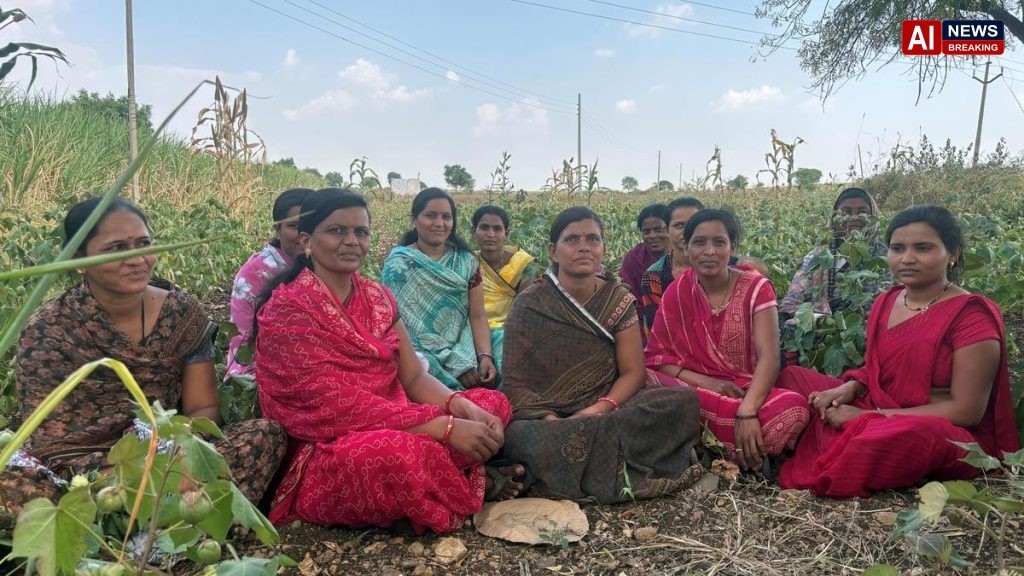
While the scale of the financial commitment appears substantial, critics argue that the bulk of the funds is earmarked for large‑scale infrastructure projects, such as dam construction and inter‑state water transfers, rather than immediate relief for the most vulnerable. Moreover, bureaucratic bottlenecks have slowed the disbursement of cash assistance, leaving many households waiting months for the promised support. In the village of Ashti, a small group of women farmers has organized a collective to voice their concerns at district meetings..
Their spokesperson, 38‑year‑old Sunita Patil, describes the collective’s efforts as a “last resort” after repeated visits to the district collector’s office yielded only polite assurances. The women have documented declining yields, rising input costs and the psychological strain of watching their children abandon school to help with the dwindling farms. Their petition, signed by over 200 households, calls for expedited release of drought‑relief funds and the establishment of local water‑storage facilities..
The migration pattern emerging from Beed mirrors a broader trend across the Deccan plateau, where distress migration to urban centres such as Hyderabad and Mumbai has surged. Young men, in particular, are leaving their ancestral homes in search of construction and factory work, often sending remittances back to families that remain entrenched in agriculture. Sociologists warn that this outflow not only erodes the rural labour base but also threatens the social fabric of villages, as traditional support networks weaken and gender roles shift dramatically..
Local schools report a noticeable decline in enrolment, especially among girls, as families prioritize short‑term income generation over education. Teachers cite increasing absenteeism and a growing number of students who drop out after primary grades to assist with household chores or migrate with their parents. The long‑term implications for human capital development are stark, with experts projecting a widening skills gap that could hinder the district’s post‑drought recovery..
Water‑management experts argue that Beed’s chronic drought vulnerability stems from a combination of over‑extraction of groundwater, inadequate rainwater harvesting, and fragmented irrigation policies. Studies suggest that even modest interventions—such as constructing community check‑dams, promoting drip irrigation and enforcing groundwater recharge norms—could significantly mitigate water stress. However, implementation has been hampered by land‑ownership disputes and a lack of technical training among farmers, many of whom remain skeptical of new technologies after previous failed schemes..
The central government’s recent policy shift towards “climate‑smart agriculture” has introduced subsidies for drought‑resistant seed varieties and low‑cost irrigation kits. Pilot projects in neighboring districts have shown promising results, with some farms reporting up to a 30 percent increase in yield despite low rainfall. Yet, distribution challenges persist in Beed, where supply chains are disrupted by poor road connectivity and limited access to extension services..
Without concerted efforts to bridge these gaps, the benefits of such programmes may bypass the most affected communities. As the monsoon season approaches, the atmosphere in Beed is one of cautious anticipation. Farmers have begun preparing their fields for sowing, despite the lingering uncertainty about rainfall..
Community leaders have organized awareness campaigns on water conservation and are urging residents to participate in local rainwater harvesting initiatives. While the ₹6,728‑crore package offers a framework for long‑term resilience, its success will depend.
Updated: November 15, 2026
Three years of monsoon failure have left Beed’s rain‑fed farms parched, driving women to trek for water, pushing seasonal laborers into precarious jobs and spurring a surge in distress migration. A ₹6,728‑crore state relief plan promises infrastructure and cash aid, but slow fund releases and focus on large‑scale projects leave the district’s poorest families waiting for urgent support.






