
 Pakistan’s leaders hail first astronaut aboard Chinese craft: ‘Proud one of us has gone into space’
 British tourist travels 29 hours from Mumbai to Amritsar for ₹5,461, rates Indian Railways 10/10 | Viral video
 The Supreme Court will decide whether assault weapons bans violate the Second Amendment
 A Critic of Beijing Falls Short in Taiwan’s Key Mayoral Election
 EPA says no rise in contamination after Army detonates lead azide stockpile in Iowa
In Europe, an Emboldened Iran Contributes to a Sense of Anxiety
**
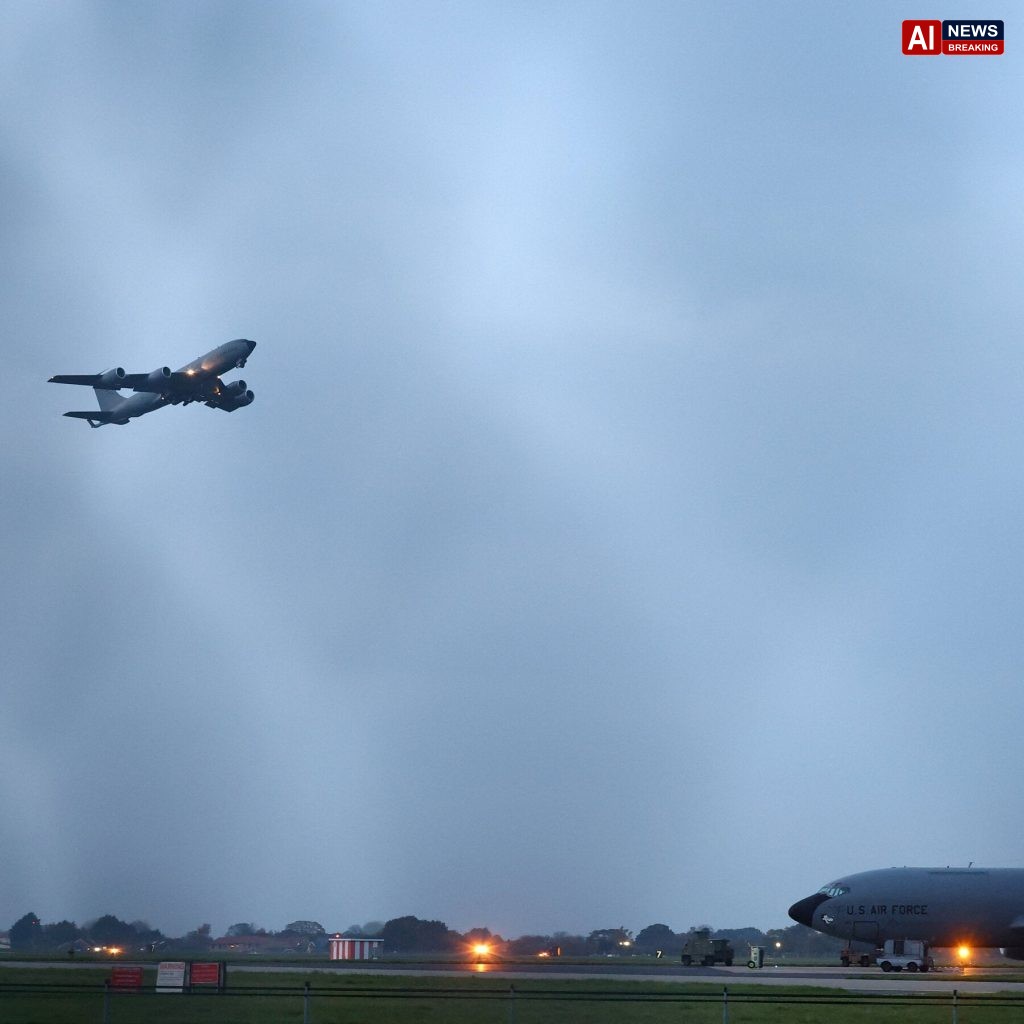
In Europe, an Emboldened Iran Contributes to a Sense of Anxiety - AI News Breaking
europe emboldened iran contributes:
Prosecutors and government officials in the United Kingdom and across Europe have increasingly pointed to Iran and its network of proxies as the likely architects of a series of security breaches and threats that have unsettled the region over the past year. From alleged cyber‑attacks on critical infrastructure to suspected espionage operations targeting political figures, the pattern of incidents has revived concerns about Tehran’s willingness to project power beyond its borders. While some analysts caution against a rush to judgment, the cumulative weight of intelligence assessments, court filings and diplomatic exchanges suggests a coordinated campaign designed to exploit perceived weaknesses in Western security apparatuses.The first high‑profile incident that raised alarms was the disruption of a major oil refinery in southern England in March 2023..
The plant, which supplies a substantial share of the nation’s fuel, experienced a temporary shutdown after a sophisticated malware infection crippled its control systems. British authorities quickly traced the code to a known Iranian hacking group, dubbed “APT‑42”, which had previously been linked to attacks on Iranian dissidents abroad. Although the refinery resumed operations within days, the episode sparked a wave of parliamentary questions about the adequacy of cyber‑defence measures and the extent of Iranian involvement.A second, more overt episode unfolded in August when a covert surveillance operation targeting a senior Member of the European Parliament was uncovered..
German intelligence services, in cooperation with their French and Dutch counterparts, disclosed that a network of Iranian operatives had attempted to infiltrate the politician’s office using forged credentials and concealed recording devices. The operation was foiled before any material was obtained, but the revelation prompted a joint statement from the European Commission condemning “state‑sponsored espionage that threatens the democratic process”. The implicated individuals were subsequently arrested, and diplomatic channels were used to convey the seriousness of the breach to Tehran.Parallel to these incidents, a series of unexplained bomb threats against Iranian cultural centres and diaspora organisations in several European capitals added a further layer of complexity..
While the threats were ultimately dismissed as hoaxes, the pattern of targeting suggested a coordinated effort to intimidate communities that oppose the Iranian regime. Human rights groups have argued that such intimidation tactics aim to silence dissent and stifle the freedom of expression that many European societies cherish. In response, several city councils have bolstered security at cultural venues and launched awareness campaigns to reassure affected communities.The British government’s response has been multifaceted, involving both legal action and diplomatic pressure..
In December 2023, the Crown Prosecution Service announced charges against two Iranian nationals suspected of facilitating the cyber‑attack on the refinery, citing “conspiracy to cause serious damage to a computer system”. The defendants, both of whom hold dual citizenship, have denied the allegations, claiming they are victims of a politically motivated prosecution. Nonetheless, the case marks a rare instance of direct legal accountability for alleged Iranian‑linked cyber activity on British soil.Meanwhile, the European Union has taken steps to strengthen collective defence mechanisms against state‑backed threats..
In a landmark decision earlier this year, the EU adopted a new framework for intelligence sharing that obliges member states to report incidents deemed “strategic” within 48 hours. The framework also establishes a rapid‑response task force capable of deploying technical experts to investigate and contain breaches. Officials say the move reflects an acknowledgement that traditional, nation‑centric approaches are insufficient in an era where hostile actors operate across borders with unprecedented agility.Iran’s own narrative, however, remains one of denial and counter‑accusation..
Tehran has consistently dismissed the allegations as “fabricated” and “part of a broader Western campaign to isolate Iran”. State media outlets have portrayed the incidents as evidence of a “new Cold War” in which Europe seeks to undermine Iran’s sovereignty. Diplomatic cables leaked to the press reveal that Iranian officials have instructed their overseas networks to adopt “more covert” methods, signalling an awareness that overt aggression would invite further sanctions and international condemnation.The sanctions landscape has evolved in tandem with the growing perception of an Iranian threat..
In February 2024, the United Kingdom imposed a new round of economic measures targeting individuals and entities believed to be involved in cyber‑espionage. The sanctions freeze assets held in the UK and bar affected parties from entering the country. The EU followed suit with a coordinated list of sanctioned persons, adding pressure on Tehran’s financial channels..
Critics argue that sanctions, while symbolically potent, often fail to disrupt the clandestine financial flows that underpin intelligence operations, but policymakers maintain that they serve as a deterrent and a tool for signalling resolve.Security experts caution that the situation remains fluid and that attribution in cyber‑related incidents is inherently challenging. Dr Amira Khalid, a senior researcher at the European Centre for Strategic Studies, notes that “while there is compelling evidence linking these attacks to Iranian actors, the possibility of false‑flag operations cannot be dismissed”. She emphasizes the need for robust forensic capabilities and transparent investigative processes to avoid missteps that could exacerbate diplomatic tensions..
Nonetheless, the preponderance of technical indicators – such as code signatures, command‑and‑control servers, and linguistic markers – points toward a consistent modus operandi associated with Iran’s cyber‑espionage units.The broader geopolitical context also shapes the perception of threat. Iran’s regional ambitions, its strained relationship with the United States, and its involvement in conflicts across the Middle East have contributed to a perception that Tehran is increasingly willing to use asymmetric tools to advance its interests. Observers note that the European security environment is already complicated by Russian aggression in Ukraine, and the emergence of a second state actor pursuing covert operations adds a layer of strategic complexity..
Governments across the continent are now tasked with balancing resource allocation between conventional defence, cyber resilience and counter‑intelligence measures.Public opinion in Europe reflects a growing unease about foreign interference. Recent polls conducted in the United Kingdom, France and Germany indicate that a majority of respondents view Iran as a “significant security concern” and support stronger measures to protect national infrastructure. At the same time, civil liberties advocates warn against over‑broad surveillance laws that could infringe on privacy rights in the name of security..
The debate underscores the delicate equilibrium that democratic societies must maintain while confronting sophisticated, state‑sponsored threats.In conclusion, the series of security breaches and intimidation tactics attributed to Iran and its proxies have heightened anxiety across Europe, prompting a coordinated response that spans legal action, diplomatic engagement and policy reform. While definitive proof remains a complex puzzle, the convergence of intelligence, forensic analysis and court proceedings builds a compelling case for Tehran’s involvement. As European nations adapt to an increasingly contested security landscape, the challenge will be to develop resilient defences without compromising the democratic values that underpin their societies..
The coming months will likely see further scrutiny of Iran’s covert activities and a continued debate over the most effective.
Updated: November 15, 2026
European governments allege that Iran and its proxies have orchestrated a string of cyber‑attacks and espionage operations across the region, prompting a coordinated legal, diplomatic and intelligence‑sharing response. While Tehran denies involvement, the UK and EU have imposed fresh sanctions and bolstered cyber‑defence measures amid growing public concern over state‑sponsored threats.
Insight: The EU’s new rapid‑response task force, while a welcome step, risks turning a reactive patchwork of sanctions and legal prosecutions into an opaque “security‑by‑accusation” model that could alienate allies and erode trust in evidence‑based policy. If Europe continues to rely on swift indictments without a parallel investment in transparent cyber‑forensics, the very institutions it seeks to protect may be weakened by overreach and internal dissent.





