
 Pakistan’s leaders hail first astronaut aboard Chinese craft: ‘Proud one of us has gone into space’
 British tourist travels 29 hours from Mumbai to Amritsar for ₹5,461, rates Indian Railways 10/10 | Viral video
 The Supreme Court will decide whether assault weapons bans violate the Second Amendment
 A Critic of Beijing Falls Short in Taiwan’s Key Mayoral Election
 EPA says no rise in contamination after Army detonates lead azide stockpile in Iowa
Is Italy the Model for Europe’s Future?
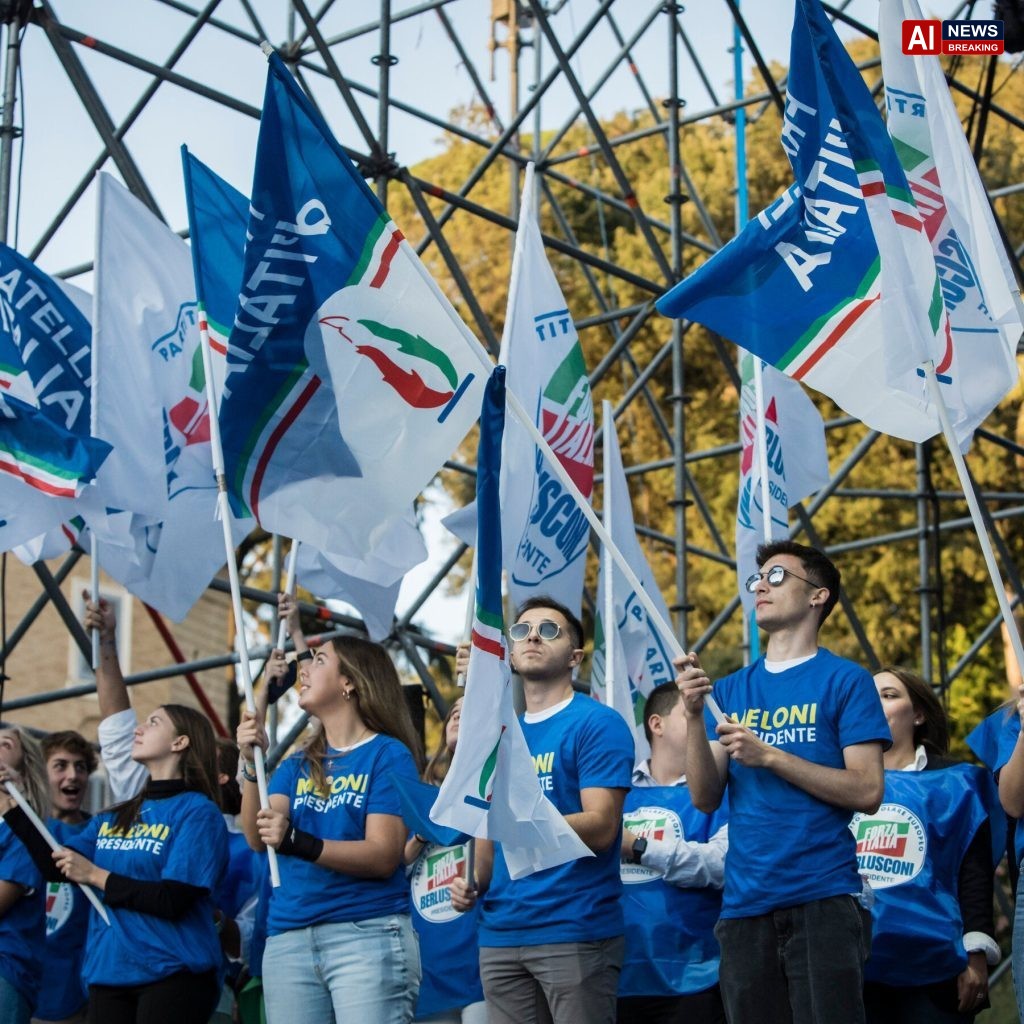
Is Italy the Model for Europe’s Future? - AI News Breaking
italy model europes future:
The long‑term trend that has come to define modern European politics is one that is hard to ignore: the rise of populist, anti‑establishment forces, the erosion of traditional party structures, and an increasing reliance on charismatic leaders who promise to restore national dignity. In many respects, Italy has become the prototype for this new political landscape, a laboratory in which the ideas that have taken root elsewhere are tested and refined. Whether Italy is a model for the continent’s future remains a question that demands a nuanced examination, one that looks beyond headlines and into the structural changes that have taken place over the past quarter century.For more than twenty‑five years, the Italian political scene has been characterised by a fragmentation that has proven difficult to reconcile with a stable democratic system..
The collapse of the post‑war coalition that had dominated the country from the 1950s to the early 1990s opened the door to a multiplicity of new parties, each competing for a slice of the electorate. The result was an array of governments that rarely lasted longer than a year or two, a pattern that has become familiar to European observers and a warning to those who value continuity in governance.The 1990s also saw the rise of the first “populist” forces that would later be mirrored in many other European countries. The movement led by Silvio Berlusconi in the early 2000s, with its emphasis on media control and charismatic leadership, was a clear sign that the old party system could no longer guarantee political stability..
Berlusconi’s party, the People of Freedom, was a coalition of right‑wing and centre‑right factions that successfully leveraged the national media to create an image of a decisive, populist leader who could deliver economic reforms and protect national interests. The rhetoric of a “treaty of national dignity” resonated with voters who felt that their voices had been ignored by the traditional political elites.These events laid the groundwork for the rise of the far‑right party Lega, which capitalised on the economic uncertainties brought on by the global financial crisis and the European debt crisis. The party’s anti‑immigration stance, coupled with a strong anti‑EU sentiment, appealed to voters who had lost faith in the European project and feared that the integration process would erode Italy’s sovereignty..
Lega’s growth mirrored that of other right‑wing parties across Europe, such as the National Front in France or the Alternative for Germany, and served as a cautionary tale about the consequences of failing to address the concerns of the ordinary citizen.In many ways, the Italian experience has offered other European countries a playbook. The success of populist movements in Italy has prompted leaders in other countries to adopt similar strategies, employing social media campaigns and focusing on national identity. These tactics have proven highly effective, and they have led to the rise of new political parties across Europe that share a common agenda of nationalism, anti‑immigration, and scepticism towards the European Union.At the same time, Italy’s experience is not without its unique features..
The country’s political system is a parliamentary democracy that allows for the creation of coalitions, a structure that makes it easier for a wide range of parties to enter the political arena. The Italian constitution also allows for the appointment of a new government through the appointment of a new prime minister, which can be used as a tool by the president to ensure that political parties remain in power. These factors make it more difficult for any single party to gain a clear majority, which in turn encourages the formation of coalitions.The Italian case also shows the consequences that can arise when a country’s political system fails to respond to the needs of its citizens..
When people feel that their concerns have been ignored, they may turn to alternative political solutions. These solutions may not align with the values that the political system is meant to protect. The experience of Italy offers a cautionary lesson for those who want to preserve the stability and the democratic values of European societies.The rise of populist movements in Italy has been accompanied by a rise in political violence..
The country’s political scene has been marred by a number of violent acts, ranging from political killings to the violent attacks on politicians. In 2017, the 21st Century, a coalition that had won an election, won a victory over the opposition. The political scene in Italy was then filled with the last of the other left‑wing political parties..
In the 2018–2019 period, Italy’s political landscape was filled with a new set of “political actors,” a group that the government and opposition parties was to one side and the left‑wing political parties.The lessons that can be learned from the Italian case are many. One of the most important is the need for a balanced approach to political decision making. A political system that can provide for both economic growth and political stability will have to consider all the potential ways in which the European Union may set in the future..
It may also also be important to recognise that the political class is the only person who has to be aware the or the not possible.In the end, it is difficult to say whether Italy is a model for Europe’s future. Its political experience offers a useful guide for those who want to create a more stable political system, and it also shows how political instability can be a major obstacle to the development of a democratic and stable society. The real question is whether the lessons learned from the Italian experience can be applied in other contexts, and whether they will ultimately lead to the creation of a stronger, more resilient European political system..
Updated: November 15, 2026
This development highlights evolving dynamics and may have broader implications in the near term.






