Pakistan’s leaders hail first astronaut aboard Chinese craft: ‘Proud one of us has gone into space’
 British tourist travels 29 hours from Mumbai to Amritsar for ₹5,461, rates Indian Railways 10/10 | Viral video
 The Supreme Court will decide whether assault weapons bans violate the Second Amendment
 A Critic of Beijing Falls Short in Taiwan’s Key Mayoral Election
 EPA says no rise in contamination after Army detonates lead azide stockpile in Iowa
Statewide vaccination drive to protect children aged 10 and 16 against tetanus and diphtheria
**
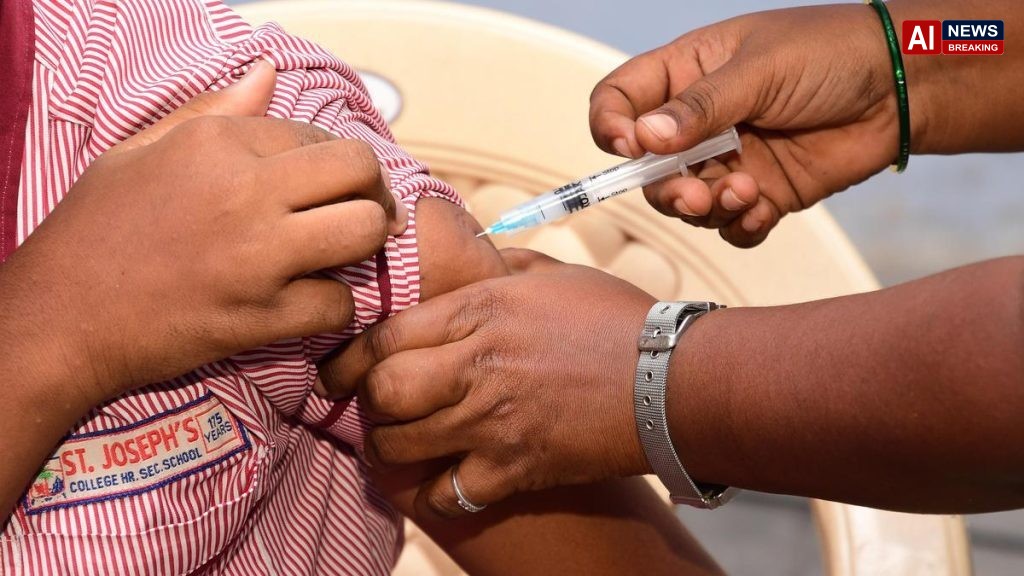
Statewide vaccination drive to protect children aged 10 and 16 against tetanus and diphtheria - AI News Breaking
statewide vaccination drive protect:
Statewide vaccination drive to protect children aged 10 and 16 against tetanus and diphtheria The health ministry has launched a coordinated vaccination campaign targeting children aged ten and sixteen across the nation, aiming to bolster immunity against tetanus and diphtheria. The initiative follows a recommendation from the National Immunisation Technical Advisory Group, which highlighted a gap in adolescent protection despite high coverage of early‑life vaccines. Officials say the drive will complement the existing schedule, which already includes the Pentavalent vaccine for infants, by delivering a booster dose of the TD (tetanus‑diphtheria) vaccine to school‑aged children..
Planning for the campaign began in the autumn, when epidemiologists analysed recent surveillance data indicating a modest rise in tetanus cases among teenagers in remote districts. While the overall incidence remains low, the upward trend prompted concerns about waning immunity as the protective effect of the infant series diminishes over time. The ministry therefore earmarked funds to procure an additional five million doses of the TD vaccine, ensuring sufficient supply for the two targeted age groups and allowing for a buffer to cover unforeseen demand..
The rollout will be phased over six weeks, starting with schools in the northern provinces where the most recent cases were recorded. Health workers will visit primary and secondary schools, setting up temporary clinics in gymnasiums or community halls. Parents will receive information leaflets in multiple languages explaining the benefits of the booster, the minimal risk of adverse reactions, and the schedule for the two‑dose series, which will be administered four weeks apart..
The ministry has also arranged for mobile units to reach children not enrolled in school, particularly in nomadic and rural communities. Vaccinologists stress that the TD booster is a well‑established intervention, with a safety profile comparable to other routine immunisations. The vaccine contains inactivated toxins that stimulate the immune system without causing disease, and the dosage for adolescents is identical to that used for adults..
Clinical trials conducted in the region over the past decade have shown over 95 % seroconversion rates, indicating robust protection against both tetanus and diphtheria. Side effects are generally mild, such as soreness at the injection site or low‑grade fever, and severe reactions are exceedingly rare. In addition to the health benefits, the campaign is expected to ease the burden on the country’s healthcare system..
Tetanus, though preventable, can be fatal if not treated promptly, and managing severe cases requires intensive care resources that are already stretched thin. Diphtheria, while less common, can cause serious respiratory complications and long‑term cardiac damage. By preventing these infections before they occur, the ministry hopes to reduce hospital admissions and associated costs, freeing up capacity for other pressing health priorities..
The program is also aligned with the World Health Organization’s goal of achieving at least 90 % coverage for all recommended vaccines in the adolescent population by 2030. International partners, including UNICEF and Gavi, have pledged technical assistance and monitoring support to ensure that data on coverage and adverse events are collected transparently. Real‑time dashboards will be updated daily, allowing regional health officers to identify gaps quickly and deploy additional resources where needed..
Teachers have been enlisted as key partners in the effort, receiving training on how to communicate vaccine information to students and parents. In many districts, school principals will act as liaison officers, coordinating the arrival of health teams and overseeing the documentation of doses administered. The ministry has emphasized that parental consent remains a prerequisite; consent forms will be distributed weeks in advance, and alternative arrangements can be made for families with specific concerns or medical contraindications..
Early feedback from pilot sites suggests strong community acceptance. In a town in the eastern highlands, a local health committee reported that more than 98 % of eligible children had already received the first dose, with parents citing confidence in the safety record of the national immunisation programme. Similar enthusiasm has been noted in urban centres, where the campaign is being integrated with routine school health checks..
Nonetheless, officials caution that ongoing vigilance is required to address misinformation that occasionally circulates on social media platforms. To monitor the impact of the drive, the ministry will conduct serological surveys six months after the second dose is administered. These surveys will assess antibody levels in a representative sample of participants, providing quantitative evidence of the boost in immunity..
The findings will be published in peer‑reviewed journals and shared with global health bodies, contributing to the broader evidence base on adolescent booster strategies. The campaign also serves as an opportunity to reinforce broader public health messages, such as the importance of wound care and hygiene in preventing tetanus, and the need for early medical attention if symptoms of diphtheria appear. Outreach workers will use the school visits to distribute educational pamphlets and demonstrate proper first‑aid techniques, aiming to embed a culture of preventive health among the younger generation..
Looking ahead, the health ministry plans to evaluate the feasibility of extending the booster schedule to include other age cohorts, potentially introducing a combined tetanus‑diphtheria‑pertussis (Tdap) vaccine for older adolescents. Such a move would align the country with many high‑income nations that have adopted Tdap boosters to maintain immunity against pertussis, which can resurge in the absence of periodic reinforcement. Decisions will be guided by the outcomes of the current campaign, cost‑effectiveness analyses, and recommendations from the advisory group..
As the first vaccination teams set up their stations next week, officials remain optimistic that the concerted effort will close the immunity gap for teenagers and safeguard the nation’s children against two preventable diseases. The coordinated approach—combining school partnerships, mobile outreach, and rigorous data monitoring—.
The health ministry has launched a six‑week, school‑based booster campaign delivering tetanus‑diphtheria shots to 10‑ and 16‑year‑olds, aiming to close an immunity gap identified by recent surveillance. Backed by UNICEF and Gavi, the drive includes mobile outreach, parental consent processes and real‑time monitoring to achieve near‑universal adolescent coverage.
The booster drive turns adolescent vaccination from a passive afterthought into a proactive health‑system pillar, showing that targeted school‑based campaigns can plug immunity gaps before they become costly outbreaks. If the high uptake holds, it could reshape national vaccine policy, encouraging future boosters (e.g., Tdap) and cementing