
 Pakistan’s leaders hail first astronaut aboard Chinese craft: ‘Proud one of us has gone into space’
 British tourist travels 29 hours from Mumbai to Amritsar for ₹5,461, rates Indian Railways 10/10 | Viral video
 The Supreme Court will decide whether assault weapons bans violate the Second Amendment
 A Critic of Beijing Falls Short in Taiwan’s Key Mayoral Election
 EPA says no rise in contamination after Army detonates lead azide stockpile in Iowa
Karnataka Assembly launches youth parliament competition
**
Democracy based on the Constitution is a model, says Tenginkai - AI News Breaking
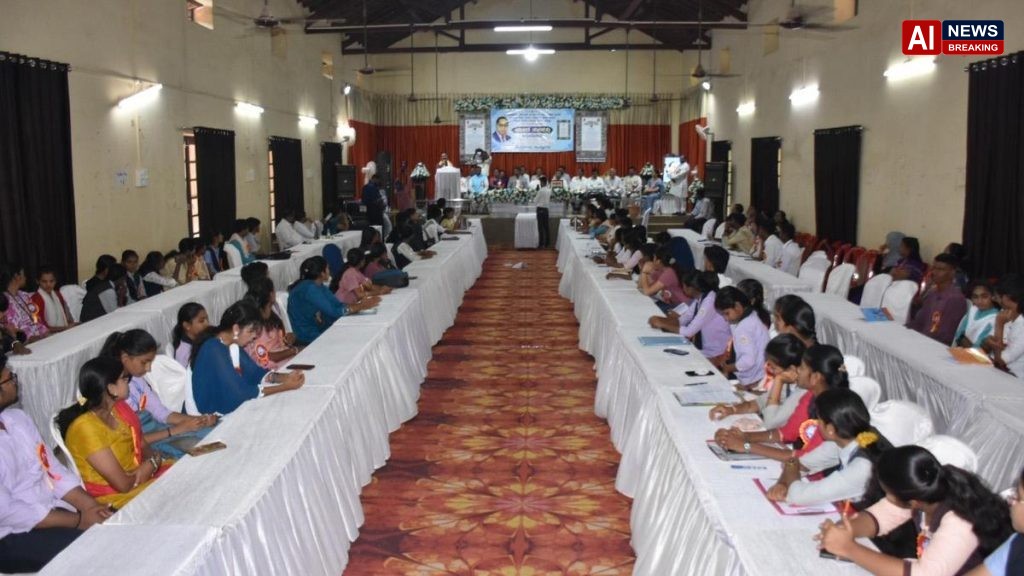
Democracy based on the Constitution is a model, says Tenginkai In the bustling city of Hubballi, the Karnataka Legislative Assembly made a significant mark on the International Day of Democracy, celebrating the day with a unique initiative aimed at the younger generation. Tenginkai, officially opened a taluk‑level youth parliament competition, a first of its kind in the region. The event, held at the assembly’s grand auditorium, drew students from schools and colleges across the district, all eager to participate in a simulated parliamentary session that mirrors the workings of the state legislature..
The assembly’s decision to host this competition reflects a broader push to engage young citizens in democratic processes and instil constitutional values early on. Tenginkai’s opening remarks highlighted the importance of a constitutionally grounded democracy. He praised the constitution for providing a framework that balances power, protects individual rights, and encourages participation from all sections of society..
“The constitution is not a static document; it is a living guide that must be understood and respected by every citizen, especially the youth,” he said. The MLA underscored that a well‑informed and engaged youth can sustain democracy’s vibrancy, preventing the erosion of democratic norms that can occur when citizens become disengaged or apathetic. The competition structure was explained in detail during the session..
Teams of students were given a set of bills, each representing a contemporary social issue such as environmental protection, digital privacy, or education reform. Over three days, participants debated these bills, drafted amendments, and presented their arguments before a panel of judges, including senior legislators and academic experts. The format was designed to simulate actual parliamentary procedures, with motions, questions, and voting, allowing students to experience the legislative process firsthand..
This immersive experience aims to translate theoretical knowledge of democracy into practical skills. During the debates, many participants showcased a sophisticated understanding of constitutional principles. One student from a local high school argued that the right to education, enshrined in Article 45 of the Indian Constitution, should be expanded to include digital literacy..
The student cited landmark judgments that have broadened the interpretation of fundamental rights, showing how constitutional law can evolve to address contemporary challenges. Other contestants debated the balance between national security and individual freedoms, drawing parallels between the constitution’s provision on free speech and judicial oversight. The judges praised the students’ engagement and the quality of the arguments presented..
Patel, a former law professor, noted that the level of debate demonstrated a commendable grasp of both legal frameworks and policy implications. “It is encouraging to see students applying constitutional concepts to real‑world problems,” he remarked. His comments were echoed by other panel members who highlighted the importance of fostering critical thinking and civic responsibility among young people..
In addition to the parliamentary simulation, the event included a series of workshops focused on constitutional literacy. Experienced law teachers and constitutional scholars led sessions on interpreting the constitution, the role of the judiciary, and the mechanics of public administration. These workshops aimed to demystify complex legal jargon, making constitutional concepts more accessible to high‑school and college students..
The workshops also provided participants with tools to analyse policy proposals and to understand their implications within the constitutional framework. The MLA also announced that the competition will become an annual event, with plans to expand its reach to neighboring districts in the coming years. “Our vision is to create a network of youth parliaments across the state,” he said..
The expansion will allow more students to experience democratic engagement, fostering a statewide culture of participatory governance. The assembly also pledged to provide scholarships to the top performers, encouraging academic pursuits in law, public administration, and related fields. The initiative aligns with Karnataka’s broader educational reforms, which emphasize skill development and civic education..
The state government has previously launched programs to incorporate democratic processes into school curricula, aiming to produce citizens who are not only academically competent but also socially conscious. This youth parliament competition is seen as a practical extension of those reforms, allowing students to apply theoretical knowledge in a structured, competitive environment. Public reception to the event was overwhelmingly positive..
Parents and teachers gathered to observe the debates, expressing pride in their children’s active participation. Many highlighted the importance of such events in countering the growing apathy among the youth towards political processes. “When children see their ideas debated on a platform like this, it fuels their curiosity and respect for democratic institutions,” commented a local teacher who attended the event..
The event concluded with the distribution of certificates and awards to the winning teams. The top performers were also invited to a luncheon with the MLA and a senior legislator, where they discussed potential pathways to influence real‑time policy. This interaction was seen as an opportunity for students to network with political leaders, providing a glimpse into the practical aspects of governance..
The luncheon was accompanied by a short speech from Tenginkai, who reiterated the importance of continuous learning and active participation in democratic life. The closing ceremony featured a symbolic act of the students laying a wreath at the statue of Dr. Ambedkar, the chief architect of the Indian Constitution..
The gesture was meant to honour Ambedkar’s vision of a democratic society built on equality and justice. The act resonated with the assembly’s message that democracy, rooted in constitutional principles, requires active stewardship from every generation. The MLA’s inauguration of the taluk‑level youth parliament competition marks a significant step toward embedding constitutional democracy in the hearts of Karnataka’s younger citizens..
Updated: November 15, 2026
Embedding constitutional debates in schools may forge a generation that sees rights as negotiable tools, not static guarantees—potentially tightening civil‑society oversight of future legislators.
Yet, by institutionalizing youth parliaments, the state also stakes a political claim over civic education, subtly shaping the narrative of patriotism to align with its own policy agenda.






