
 Pakistan’s leaders hail first astronaut aboard Chinese craft: ‘Proud one of us has gone into space’
 British tourist travels 29 hours from Mumbai to Amritsar for ₹5,461, rates Indian Railways 10/10 | Viral video
 The Supreme Court will decide whether assault weapons bans violate the Second Amendment
 A Critic of Beijing Falls Short in Taiwan’s Key Mayoral Election
 EPA says no rise in contamination after Army detonates lead azide stockpile in Iowa
Andhra Pradesh launches 25 sector‑specific industrial parks.
**
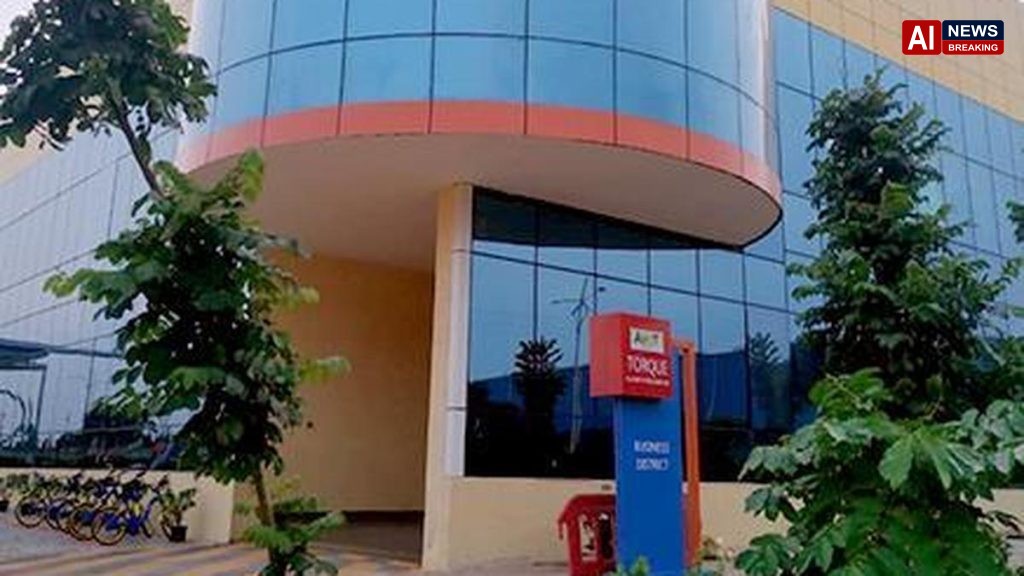
Govt. gives renewed push for development of 25 sector-specific industrial parks in A.P. - AI News Breaking
andhra pradesh launches sectorspecific:
gives renewed push for development of 25 sector‑specific industrial parks in A.P. The Andhra Pradesh government has announced an ambitious expansion of its industrial infrastructure, planning 25 new sector‑specific parks across the state. These parks are designed to attract investment in high‑growth areas such as data centres, aerospace and defence, hardware manufacturing, solar energy and a host of other emerging sectors..
By clustering related businesses together, the initiative aims to create ecosystems that foster innovation, reduce logistics costs and generate skilled employment for the region’s burgeoning workforce. Strategic placement of the parks is a cornerstone of the plan. Each site has been aligned with one of three major industrial corridors – Visakhapatnam‑Chennai, Chennai‑Bengaluru and Hyderabad‑Bengaluru – that already serve as arteries of commerce and transport..
The corridors provide seamless road, rail and port connectivity, enabling firms in the parks to move raw materials and finished products efficiently. Planners say this integration will also allow the parks to tap into existing supply chains and ancillary services, accelerating time‑to‑market for new technologies. The data‑centre park, slated for the Visakhapatnam‑Chennai corridor, will focus on building robust digital infrastructure to support the growing demand for cloud services in India’s south‑east..
The government has earmarked 1,200 acres for the park, with provisions for high‑capacity power, cooling systems and fibre‑optic networks. Industry insiders expect that the park could host both domestic and multinational tech firms, leveraging Andhra Pradesh’s relatively low electricity tariffs and stable power supply to compete with established hubs in Hyderabad and Bengaluru. In the aerospace and defence segment, the Hyderabad‑Bengaluru corridor will host a specialised park that aims to complement India’s push for self‑reliance in defence manufacturing..
The park will provide dedicated test‑beds, secure zones for classified projects and proximity to key research institutions. Officials have highlighted the presence of a skilled labour pool, thanks to local engineering colleges and defence academies, as a critical factor that will attract original equipment manufacturers and their supply‑chain partners. Hardware manufacturing, a sector that has traditionally thrived on economies of scale, will find a new home in a park positioned along the Chennai‑Bengaluru corridor..
The site will feature modular factory units, shared logistics facilities and a “one‑stop‑shop” for regulatory approvals. By clustering electronics assemblers, component makers and design firms, the government hopes to replicate the success of other Indian manufacturing hubs while reducing dependence on imports of critical hardware components. Solar energy development is another pillar of the park strategy..
A dedicated solar manufacturing park is planned on the outskirts of Visakhapatnam, where abundant sunlight and coastal land availability make it ideal for large‑scale photovoltaic panel production. The park will include research labs for next‑generation solar technologies, as well as a battery‑storage testing centre. Stakeholders anticipate that the park could become a key supplier for India’s ambitious renewable‑energy targets, reducing the cost of solar power across the nation..
Beyond these flagship sectors, the remaining parks will cater to niche industries such as biotechnology, food processing, textile innovation and advanced materials. Each park will be equipped with sector‑specific utilities – for instance, water‑recycling plants for food processing and clean‑room facilities for biotech – to lower entry barriers for small and medium enterprises. The government has also pledged to streamline land acquisition and provide fiscal incentives, including tax holidays and subsidised power, to make the parks financially attractive..
Financing the massive rollout will involve a blend of state funds, central government support and private‑sector participation. The Andhra Pradesh Industrial Development Corporation (APIDC) will act as the nodal agency, coordinating with the Ministry of Commerce and Industry to secure central grants earmarked for corridor development. Additionally, the state plans to invite public‑private partnership (PPP) models, allowing corporate players to invest in park infrastructure in exchange for long‑term lease rights and revenue‑sharing arrangements..
Environmental considerations have been woven into the planning process. An independent panel of experts will conduct impact assessments for each park, ensuring compliance with national pollution control norms and state-level sustainability guidelines. Green buffers, rainwater harvesting systems and renewable‑energy integration are mandatory features..
The government has also announced a commitment to preserve existing wetlands and forested areas near the park sites, balancing industrial growth with ecological stewardship. The human‑resource dimension of the initiative is receiving equal attention. The state will launch skill‑development programmes in collaboration with technical institutes and industry bodies, focusing on the specific needs of each sector..
Apprenticeship schemes, certification courses and on‑the‑job training will be scaled up to supply a pipeline of qualified workers. Officials believe that aligning education with industry demand will not only reduce unemployment but also raise the overall productivity of the parks. Industry reactions have been cautiously optimistic..
Representatives from leading multinational corporations have welcomed the clear policy direction and infrastructural promises, while urging the government to expedite approvals and maintain regulatory certainty. Domestic players, particularly in the hardware and solar segments, see the parks as an opportunity to upgrade their capabilities and expand market reach. Analysts note that the success of the parks will hinge on the timely delivery of promised utilities and the ability to attract a critical mass of tenants..
If implemented as outlined, the 25 sector‑specific industrial parks could transform Andhra Pradesh into a diversified manufacturing and technology hub, reinforcing its strategic position within India’s broader industrial corridor network. The initiative aligns with the central government’s “Make in India” vision and the state’s own ambition to become a leading destination for high‑value investment. As construction begins and the first phases roll out, the coming months will reveal whether the renewed push can deliver.
Updated: November 15, 2026
By weaving sector‑specific parks into existing corridors, Andhra Pradesh aims to turn logistical advantage into a self‑reinforcing innovation cluster, potentially reshaping the state’s economic hierarchy. Yet the venture’s payoff hinges on rapid utility delivery and sustained tenant momentum; any lag could relegate the parks to costly placeholders rather than engines of growth.






