
 Pakistan’s leaders hail first astronaut aboard Chinese craft: ‘Proud one of us has gone into space’
 British tourist travels 29 hours from Mumbai to Amritsar for ₹5,461, rates Indian Railways 10/10 | Viral video
 The Supreme Court will decide whether assault weapons bans violate the Second Amendment
 A Critic of Beijing Falls Short in Taiwan’s Key Mayoral Election
 EPA says no rise in contamination after Army detonates lead azide stockpile in Iowa
Saudi-Backed Forces in Yemen Retreat From Red Sea as Houthis Advance
The Saudi‑backed coalition announced a strategic pull‑back from key Red Sea coastal positions in Yemen, allowing Iran‑backed Houthi forces to seize the ports of Al‑Maqal and Al‑Hodeidah. The move marks the first large‑scale withdrawal since 2015, threatening humanitarian aid routes, disrupting global shipping lanes, and reshaping the regional balance of power.
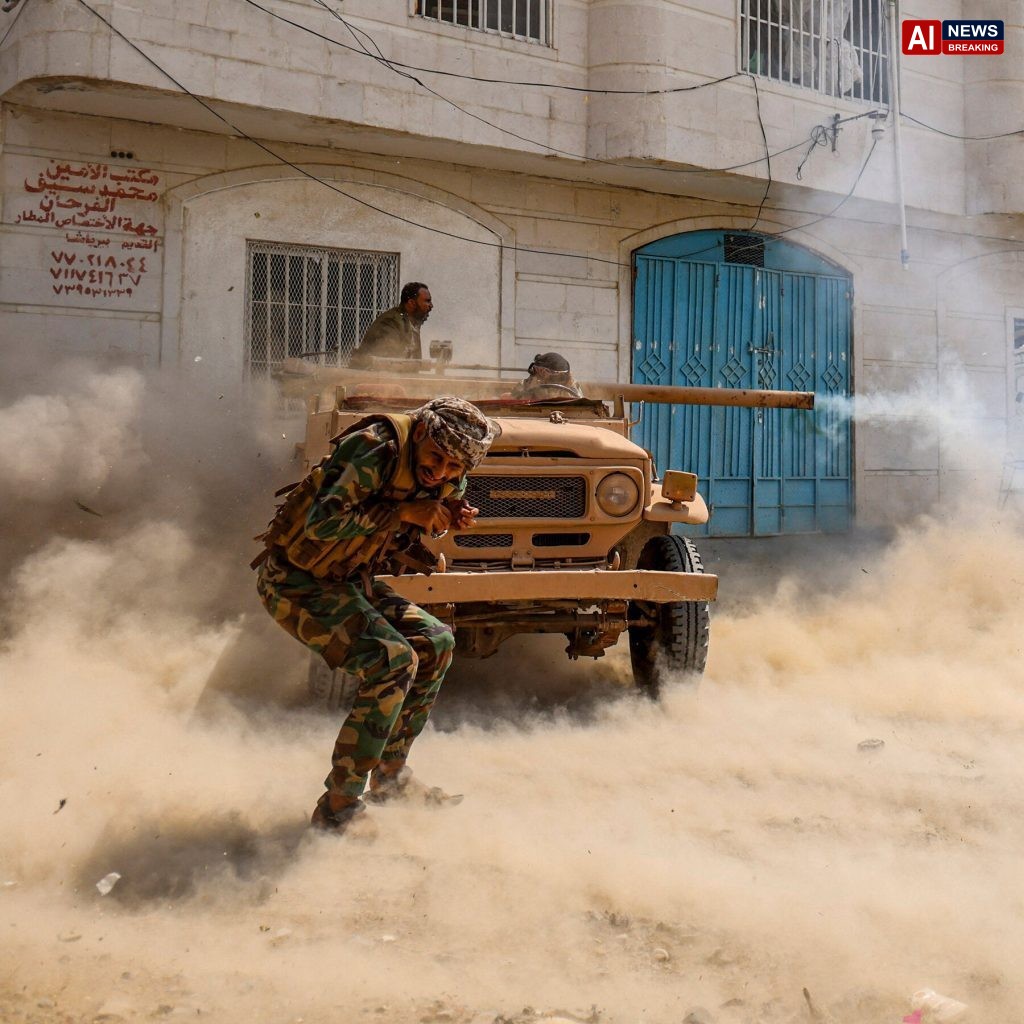
Saudi-Backed Forces in Yemen Retreat From Red Sea as Houthis Advance - AI News Breaking
saudibacked forces yemen retreat:
Saudi-Backed Forces in Yemen Retreat From Red Sea as Houthis Advance The coalition led by Saudi Arabia announced on Tuesday that its forces have withdrawn from key positions along the Red Sea coastline in Yemen, ceding ground to the Iran‑backed Houthi militia. The retreat marks the first large‑scale pull‑back since the coalition’s intervention in 2015 and has sparked concerns that the balance of power in the protracted civil war may be shifting decisively in favour of the rebels. Military officials described the move as a tactical redeployment, but analysts argue it signals a strategic defeat for the Yemeni government and its Gulf ally..
The withdrawal involved the evacuation of several coastal bases that had previously served as launch points for naval patrols and anti‑missile batteries protecting commercial shipping lanes. Coalition warships and air assets were ordered to relocate inland, leaving the Red Sea’s western shore largely unguarded. In the days that followed, Houthi forces advanced rapidly, seizing ports at Al‑Maqal and Al‑Hodeidah with minimal resistance..
Satellite imagery released by independent observers showed Houthi artillery emplacements being erected along the shoreline within 48 hours of the coalition’s exit. For the Yemeni government, the loss of these ports is a blow to its limited economic lifelines. Both Al‑Maqal and Al‑Hodeidah handle a significant share of the country’s humanitarian imports, and their capture threatens to exacerbate the already dire food security situation..
United Nations officials warned that the retreat could delay the delivery of aid supplies that rely on the Red Sea corridor, potentially pushing more millions of Yemenis toward famine conditions. Saudi Arabia, which has borne the bulk of the financial and military costs of the intervention, issued a terse statement claiming the redeployment was part of a reassessment of operational priorities aimed at preserving coalition resources. The kingdom declined to elaborate on the specific threats prompting the pull‑back, but senior Saudi defence sources hinted at mounting pressure from Houthi missile attacks that have increasingly targeted coalition vessels and oil installations in the Gulf..
The Houthi leadership celebrated the development as a historic victory for the resistance, framing it as evidence of their growing capability to challenge the coalition’s dominance at sea. In a televised address, senior Houthi commander Saleh al‑Sammad praised the brave fighters who had seized the ports and warned neighbouring states that any further attempts to intervene would be met with uncompromising force. The rhetoric underscores the militia’s confidence after a series of successful drone and missile strikes on Saudi oil facilities earlier this year..
International observers have noted that the retreat could have wider implications for global shipping. The Red Sea, a vital artery for oil and container traffic between Europe and Asia, has already seen a surge in insurance premiums and rerouting costs due to Houthi threats. With coalition naval patrols scaling back, shipping companies may be forced to consider alternative routes around the Cape of Good Hope, adding weeks to voyages and increasing fuel consumption..
The United States, a key supporter of the Saudi‑led coalition, expressed concern over the development but refrained from committing additional forces to the region. In a press briefing, a State Department spokesperson emphasised the importance of maintaining the safety of commercial vessels while urging all parties to return to diplomatic negotiations under the auspices of the United Nations. Washington’s cautious stance reflects a broader fatigue in Washington over prolonged Middle Eastern entanglements..
Regional powers such as the United Arab Emirates, which has also contributed troops and aircraft to the coalition, are reassessing their involvement. Emirati officials have hinted at a possible reduction in their own ground deployments, citing the need to focus on internal security challenges. The shifting dynamics may prompt a reconfiguration of the anti‑Houthi alliance, with some members considering a more limited engagement focused on protecting maritime routes rather than ground offensives..
Humanitarian agencies on the ground reported a spike in displacement as civilians flee the newly captured coastal towns. Aid workers described chaotic scenes at makeshift checkpoints where families, fearing reprisals, abandoned their homes and livestock. The International Committee of the Red Cross warned that the loss of port infrastructure could hamper the delivery of medical supplies, exacerbating the spread of cholera and other water‑borne diseases already plaguing the war‑torn population..
Economists monitoring the conflict noted that the retreat may also affect oil market dynamics. While global oil prices have remained relatively stable, analysts predict that renewed Houthi control over parts of the Red Sea could introduce a new layer of risk premium, especially if the militia escalates attacks on tankers transiting the Bab al‑Mandab strait. Such a scenario could compel oil producers to adjust output forecasts, with knock‑on effects for both exporters and consumers worldwide..
In the diplomatic arena, the United Nations Special Envoy for Yemen called for an emergency meeting of the Security Council to discuss the ramifications of the coalition’s pull‑back. The envoy urged all sides to honour existing ceasefire agreements and to facilitate unhindered humanitarian access. The meeting is expected to address not only the immediate security vacuum but also the broader question of how to bring the warring factions back to the negotiating table before the conflict spirals further out of control..
As the situation unfolds, the retreat of Saudi‑backed forces from the Red Sea stands as a stark indicator of the evolving balance of power in Yemen’s civil war. Whether the coalition will regroup and attempt to reclaim the lost ports, or whether the Houthis will consolidate their gains and push further inland, remains uncertain. What is clear, however, is that the development.
Updated: November 15, 2026
Saudi‑backed troops have pulled out of key Red Sea coastal bases in Yemen, allowing Houthi forces to seize the ports of Al‑Maqal and Al‑Hodeidah with little resistance. The retreat raises alarms over a humanitarian aid bottleneck and could force commercial shipping to reroute around the Cape of Good Hope, reshaping regional power dynamics.
Insight: The coalition’s exit signals a strategic shift: Saudi Arabia is prioritizing its own resource preservation over holding a costly front, hinting that the war may now be fought more on the sea lanes than on land. If the Houthis consolidate, global shipping could be forced into a new, risk‑laden corridor







