
 Pakistan’s leaders hail first astronaut aboard Chinese craft: ‘Proud one of us has gone into space’
 British tourist travels 29 hours from Mumbai to Amritsar for ₹5,461, rates Indian Railways 10/10 | Viral video
 The Supreme Court will decide whether assault weapons bans violate the Second Amendment
 A Critic of Beijing Falls Short in Taiwan’s Key Mayoral Election
 EPA says no rise in contamination after Army detonates lead azide stockpile in Iowa
32 Americans named as Rhodes scholars have variety of interests, from space junk to art history
**
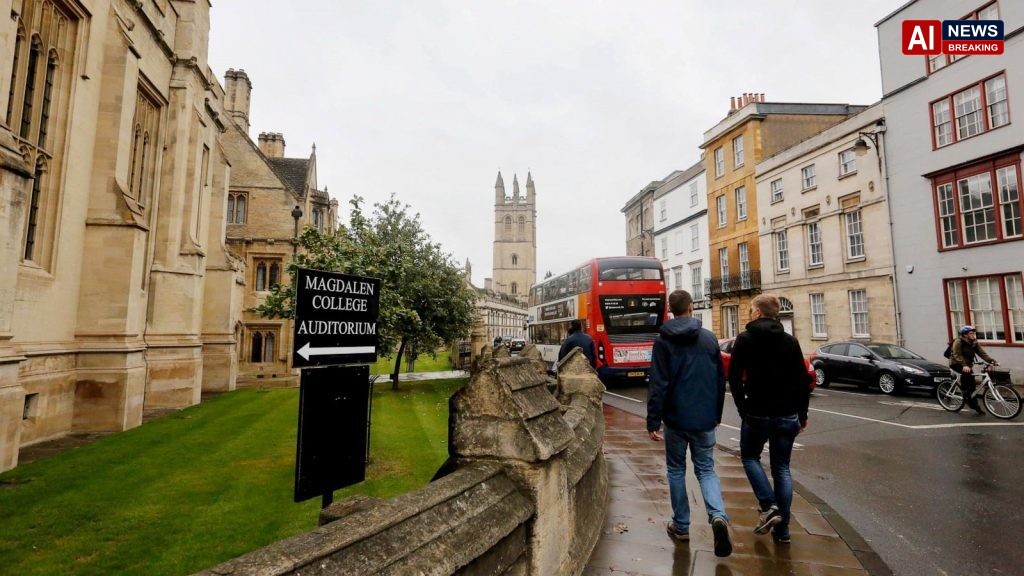
32 Americans named as Rhodes scholars have variety of interests, from space junk to art history - AI News Breaking
americans named rhodes scholars:
The United Kingdom’s historic Rhodes Scholarship has once again spotlighted a new cohort of scholars, with 32 American students selected for the 2027 intake. The scholars, drawn from a wide array of universities and disciplines, exemplify the breadth of talent and ambition that the programme seeks to nurture. While the scholarship’s legacy dates back to 1902, its contemporary relevance is underscored by the eclectic interests of this year’s winners, ranging from orbital debris mitigation to the nuanced study of Renaissance art..
Their collective achievements not only reflect personal excellence but also signal emerging priorities in research, public policy and cultural preservation.Among the most striking profiles is that of Maya Patel, a senior at the Massachusetts Institute of Technology, whose senior thesis proposes a networked system of nanosatellites to track and de‑orbit space junk. Patel’s work, conducted in collaboration with NASA’s Orbital Debris Program Office, addresses a growing concern that the accumulation of defunct satellites and spent rocket stages poses a collision risk to operational spacecraft and the International Space Station. If funded, her proposed solution could reduce the annual increase of debris by up to 30 percent, a figure that could dramatically extend the sustainable use of low‑Earth orbit for scientific and commercial purposes.Equally compelling is the research of Jordan Lee, a biomedical engineering student at Stanford University, who has spent the past two years investigating the ethical and practical implications of artificial intelligence in clinical decision‑making..
Lee’s paper, published in the Journal of Medical Ethics, evaluates how machine‑learning algorithms interpret radiographic images and the potential for bias in diagnostic outcomes. His findings suggest that while AI can improve detection rates for certain cancers, it also risks reinforcing existing health disparities unless rigorously audited. Lee intends to continue his work at Oxford’s Department of Global Health Sciences, where he will explore policy frameworks that balance innovation with equity.The scholars’ interests are not confined to the sciences..
Several winners are devoted to the humanities, illustrating the Rhodes Trust’s commitment to interdisciplinary scholarship. Sophie Dubois, a senior at Yale College studying art history, has curated a digital archive of lesser‑known works by women painters of the Dutch Golden Age. Her project, which partners with the Rijksmuseum, employs high‑resolution imaging and open‑source metadata to make these pieces accessible to scholars worldwide..
By spotlighting artists who have been historically marginalized, Dubois hopes to rewrite a more inclusive narrative of art history and inspire future generations of curators.In the realm of public policy, Carlos Mendes, a political science major at the University of Chicago, has examined the impact of climate‑related migration on urban infrastructure in coastal megacities. Mendes’ fieldwork, conducted in partnership with the United Nations Human Settlements Programme, involved surveys in Manila, Lagos and Rio de Janeiro, revealing how informal settlements adapt to rising sea levels. His policy brief, now under consideration by the U.S..
State Department, recommends a suite of adaptive zoning measures that could be piloted in vulnerable American cities such as New Orleans and Miami.A distinct thread running through many of the scholars’ proposals is a focus on community engagement. Aisha Rahman, studying sociology at the University of Michigan, has designed a participatory research model that empowers Indigenous youth in the Pacific Northwest to document traditional ecological knowledge. Rahman’s methodology blends oral history techniques with geographic information systems, creating a living map of resource stewardship practices that can inform regional conservation strategies..
Her work underscores a growing recognition that scientific solutions are most effective when they incorporate local perspectives.Technology and entrepreneurship also feature prominently among the selections. Ethan Kim, a computer science senior at Carnegie Mellon University, founded a startup that develops low‑cost, solar‑powered water purification units for remote villages in sub‑Saharan Africa. Kim’s prototype, which uses a novel membrane technology, has already passed field trials in Kenya, delivering safe drinking water to over 2,000 households..
The Rhodes Scholarship will allow him to refine the business model at Oxford’s Saïd Business School, where he plans to explore partnerships with international NGOs and impact investors.The scholars’ achievements are complemented by a shared commitment to service. Several nominees highlighted volunteer work that aligns with their academic pursuits. For instance, Maya Patel spent a summer teaching robotics to high‑school students in Detroit, while Jordan Lee volunteered at a community health clinic that serves underserved populations, gaining firsthand insight into the challenges of delivering AI‑enhanced diagnostics in low‑resource settings..
Such experiences reinforce the Rhodes ideal of “service above self” and suggest that the scholars view their future roles as both innovators and public servants.The selection committee, chaired by former Rhodes Scholar and current Oxford professor Sir Jonathan Horne, emphasized that this year’s cohort reflects “the evolving landscape of global challenges and the interdisciplinary approaches required to address them.” In a statement released alongside the names, the committee noted that the scholars’ projects collectively span climate resilience, health equity, cultural preservation and space sustainability—areas that will shape policy and research agendas for decades to come.The 32 scholars will convene at Oxford in October to begin their studies, joining a network that includes past laureates who have become heads of state, Nobel laureates and leaders of major NGOs. Their diverse backgrounds promise a vibrant exchange of ideas across continents and disciplines. As the United States navigates an era marked by rapid technological change, environmental uncertainty and social upheaval, the achievements of these scholars serve as a microcosm of the nation’s intellectual capital and its potential to contribute solutions on the world stage.While the Rhodes Scholarship continues to be a symbol of academic excellence, this year’s American cohort underscores a broader narrative: that the future of research and leadership lies at the intersection of science, humanities and civic responsibility..
Whether tracking debris orbiting the planet, redesigning AI‑driven health systems, or reviving forgotten artistic voices, the scholars embody a commitment to harness knowledge for the common good. Their journeys, now set against the historic backdrop of Oxford’s venerable colleges, will be watched closely by policymakers, educators and the public alike, as they translate ambitious ideas into tangible impact..
Thirty‑two American Rhodes Scholars for 2027, ranging from MIT engineers tackling space‑debris to Yale art historians reviving overlooked Dutch women painters, showcase interdisciplinary projects that blend cutting‑edge science, cultural preservation and public‑policy research. Their selections highlight a shift toward solutions that marry technical innovation with community engagement and global responsibility.
The 2027 U.S. Rhodes cohort crystallizes a shift toward problem‑solving that fuses high‑tech innovation with social equity, hinting that future policy will be steered by interdisciplinary scholars who can navigate both scientific complexity and community impact. Their presence at Oxford signals an emerging elite pipeline poised to shape global agendas—from orbital safety to inclusive cultural narratives—reinforcing the notion that elite education now serves as a crucible for cross‑sector leadership, not just academic prestige






