Pakistan’s leaders hail first astronaut aboard Chinese craft: ‘Proud one of us has gone into space’
 British tourist travels 29 hours from Mumbai to Amritsar for ₹5,461, rates Indian Railways 10/10 | Viral video
 The Supreme Court will decide whether assault weapons bans violate the Second Amendment
 A Critic of Beijing Falls Short in Taiwan’s Key Mayoral Election
 EPA says no rise in contamination after Army detonates lead azide stockpile in Iowa
Study shows North Atlantic right whale population falls 7%
**
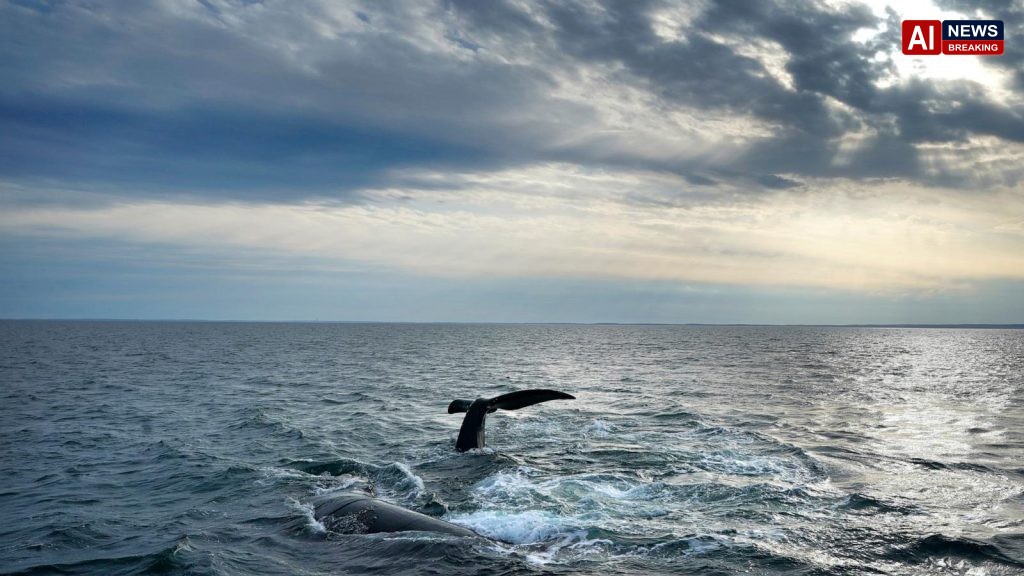
Study shows North Atlantic right whale population falls 7% - AI News Breaking
The last few years had offered a glimmer of hope for the North Atlantic right whale, a species that has survived in a world increasingly hostile to its slow, coastal habits. A new study published this week in Marine Mammal Science reports that the population of these rare cetaceans has declined, reversing a trend of modest growth that had been documented for more than a decade. The findings are unsettling, raising questions about the effectiveness of current conservation measures and the cumulative impact of human activities on this vulnerable species.Researchers from the University of Rhode Island, working in partnership with the National Oceanic and Atmospheric Administration and several marine mammal rescue organizations, conducted a comprehensive review of data collected from 2008 to 2023..
Using a combination of aerial surveys, passive acoustic monitoring, and genetic sampling, they estimated a total population of 1,220 individuals as of 2023, down from an estimated 1,310 in 2019. This represents a decline of roughly 7 percent over a five‑year period, a change that scientists say is statistically significant and not merely a natural fluctuation.The study’s lead author, Dr. Maria Ortega, explains that while the absolute numbers are still low, the decline is concerning given the species’ long lifespan and low reproductive rate..
“Right whales typically give birth to a single calf every four to five years,” Ortega says. “If the population is not stable or growing, any additional losses can have long‑term repercussions.” She stresses that even small changes in population dynamics can affect genetic diversity and the species’ resilience to disease and environmental shifts.A key driver identified in the paper is ship strike mortality. The North Atlantic right whale is notorious for its habit of staying close to shorelines, where it feeds on shrimp and small fish..
This behaviour, while essential for survival, brings it into the path of large vessels that cruise along the coast and through the Gulf of Maine. The study found that the average number of right whale–ship collisions has risen from 12 per year in the early 2010s to 26 in the most recent five years. Despite regulations that require speed reductions in high‑traffic zones, enforcement appears uneven, and some vessels still travel at speeds that can cause fatal injuries.The researchers also point to increasing frequency of entanglements in fishing gear..
Long‑line fishing, particularly in the Gulf of Maine, has been linked to both direct harm—where whales become tangled and are unable to surface—and indirect harm, such as nutritional stress from missing meals. The study notes a 30 percent rise in entanglement incidents over the same period, with a disproportionate impact on females and calves. These animals are crucial for population recovery, and their loss can further amplify demographic declines.Climate change is another factor that could be contributing to the downturn, albeit more indirectly..
As ocean temperatures rise, prey species shift their ranges, forcing right whales to travel further to find sufficient food. Longer foraging trips increase exposure to human threats, such as shipping lanes and fishing grounds. Furthermore, changes in sea ice and storm patterns can alter migration routes, leading to increased overlap with human activities..
While the study could not quantify the exact impact of these climate variables, the authors warn that the species may already be operating at the edge of its ecological niche.The decline has prompted calls for stricter enforcement of existing regulations and the adoption of new protective measures. federal government enacted the North Atlantic Right Whale Conservation Plan, which established “shark‑friendly” speed zones, designated feeding areas, and required shipping companies to implement collision mitigation protocols. However, the study notes that compliance has been patchy, especially in international waters beyond the U.S..
A number of non‑governmental organisations argue that an expanded global framework is needed to ensure uniform protection across the whales’ entire range.One proposal on the table is the creation of a “right whale corridor” that would demarcate safe travel routes with real‑time monitoring of whale positions. This would involve satellite‑tracked buoys and automatic identification systems that could warn vessels in advance of a whale’s presence. Such technology, already in use in a few European coastal areas, could reduce the incidence of ship strikes by providing timely information to captains..
However, the cost and logistical challenges of implementing such a system across the entire Atlantic remain a significant hurdle.Conservationists are also advocating for a re‑evaluation of fishing practices in the Gulf of Maine. The 2018 Atlantic Fishery Management Council meeting saw a proposal to reduce the number of long‑line operations in known feeding areas during peak whale activity periods. While some stakeholders welcomed the idea, others cited economic concerns for the fishing industry, arguing that such restrictions could threaten livelihoods..
The debate underscores the delicate balance between human economic interests and the protection of a species that has already endured centuries of hunting and environmental change.The study’s findings arrive at a time when the global community is increasingly aware of the fragility of marine ecosystems. The North Atlantic right whale’s plight is emblematic of the broader challenges faced by large marine mammals, many of which share similar vulnerabilities. From increased noise pollution to changing ocean chemistry, the cumulative effects of human activities are altering the habitats that these whales rely upon..
Scientists stress that without decisive action, the right whale could slip further toward a status of “endangered” under the U.S. Endangered Species Act, triggering more stringent protective measures that could affect not only the whales but also the industries that operate in their habitats.In the face of these challenges, some experts point to the resilience of marine mammals that have survived past crises. The right whale, for example, survived the mass culling of the 20th century and the subsequent implementation of protective legislation in the 1970s..
Yet, the current trajectory differs in key respects. “We have a window of opportunity,” says Dr. “If we intensify conservation efforts now—through better enforcement, technological innovation, and stakeholder cooperation—we may still reverse this decline.” The study ends on a note of cautious optimism, urging policymakers, industry leaders, and the public to recognize that the fate of the North Atlantic right whale is intertwined with the health of the ocean as a whole..
Updated: November 16, 2026
The steady 7 % slide in right‑whale numbers signals that current “rules of the road” are more symbolic than effective—human vessels and fishing gear are still squeezing a species with a painfully slow reproductive clock. If enforcement gaps persist, the whales’ decline could turn the Atlantic into a maritime