
 Pakistan’s leaders hail first astronaut aboard Chinese craft: ‘Proud one of us has gone into space’
 British tourist travels 29 hours from Mumbai to Amritsar for ₹5,461, rates Indian Railways 10/10 | Viral video
 The Supreme Court will decide whether assault weapons bans violate the Second Amendment
 A Critic of Beijing Falls Short in Taiwan’s Key Mayoral Election
 EPA says no rise in contamination after Army detonates lead azide stockpile in Iowa
Pope visits South America after lung tumour
**
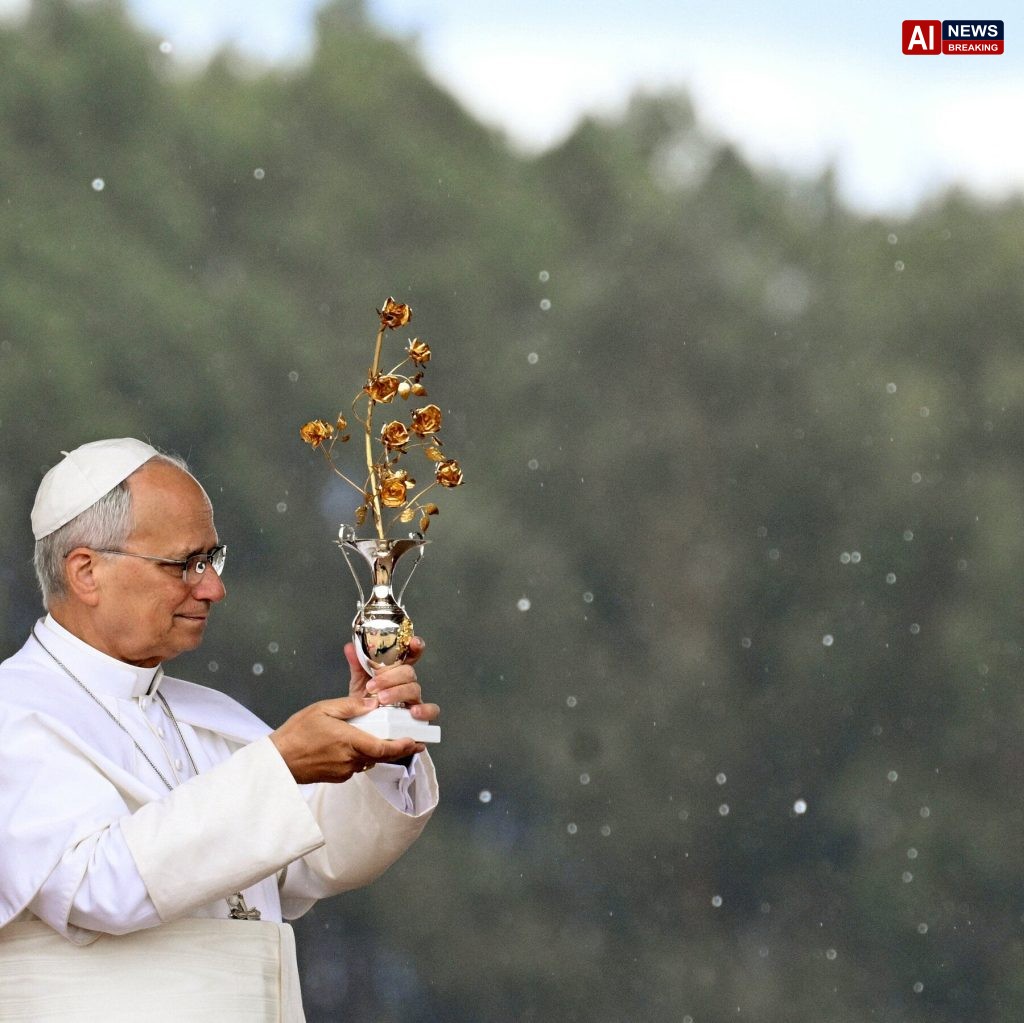
Pope visits South America after lung tumour - AI News Breaking
The 84‑year‑old pontiff made his first public appearance after a major operation on the 12th of October, when surgeons removed a tumour from his right lung. The operation, which left him with a weakened respiratory system and a prolonged recovery period, prompted speculation that the long‑awaited trip to South America would have to be cancelled. In the end, the Holy See announced that the trip would proceed as scheduled, with the pope visiting Peru, Brazil, and Chile over the course of two weeks in mid‑November.The trip was announced by the Vatican’s press office on the 6th of November, a week before the pope was due to land in Lima..
The itinerary included a pilgrimage to the Sanctuary of the Lord of Miracles, a meeting with President Dina Boluarte and a speech to the United Nations’ Sustainable Development Goals forum in Rio de Janeiro. A stop in Santiago was added to coincide with a summit on climate change and the role of faith communities in the Amazon basin. The trip was seen as a symbolic gesture of solidarity with the people of the region, many of whom have struggled with poverty, migration and ecological devastation.The pope’s arrival in Lima was greeted by a crowd of more than 100,000 people, an estimate made by local media after the press ary confirmed that the Vatican had not imposed a cap on attendance..
He was met at the airport by a delegation of Peruvian clergy and representatives of the Catholic Bishops’ Conference. In the days that followed, the pontiff carried out his usual schedule of daily masses and meetings, but the Vatican announced that he would be limiting his speaking engagements to brief remarks at most. The medical team had advised that he should avoid heavy exertion and prolonged speaking.According to an interview with the Vatican’s chief medical officer, Dr..
Marco Nardi, the pope’s lungs had not yet fully healed from the removal of the tumour. “He has a reduced capacity for oxygen exchange, and he needs to avoid any situation that could increase respiratory demand,” he explained. “The itinerary was carefully designed to balance the need for pastoral outreach with the physical realities of his recovery..
The travel schedule includes short flights, and he will have access to a medical team on standby.”The first destination in Peru was the Sanctuary of the Lord of Miracles, a site that draws millions of pilgrims every year. The pope’s appearance there was filmed in a short, 10‑minute video that was shared on the Vatican’s social‑media channels. In his address, he spoke of the importance of faith in the midst of crises, and called for renewed solidarity among people of all faiths in the fight against poverty..
He also highlighted the environmental degradation that has threatened the Amazon basin, urging the international community to take concrete action.In Brazil, the pope visited the city of Rio de Janeiro, where he delivered a keynote address at the United Nations’ Sustainable Development Goals conference. His remarks emphasised the role of religious communities in fostering social cohesion, particularly in the context of the global refugee crisis. He also met with Brazilian President Luiz Inácio Lula da Silva, where the two discussed the plight of indigenous peoples in the Amazon and the need for greater investment in sustainable development projects..
The meeting was brief, but it was clear from the press releases that the pope was eager to support Brazil’s efforts to balance economic growth with environmental stewardship.The final stop in Chile was marked by a pastoral visit to the city of Santiago. The pope was seen walking along the streets of the historic quarter, meeting with local clergy and members of the community. He also visited a community garden that had been built on the site of a former quarry, a project that had received support from both the government and the Catholic Church..
The garden was presented as an example of how faith can inspire innovative solutions to climate change.Throughout the trip, the pope was accompanied by a small, highly trained medical team. The team’s presence was a reminder of the physical toll that the operation had taken on the pontiff. They were equipped to administer emergency treatment, and were in constant communication with the Vatican’s health office..
The medical staff reported that the pope’s condition had stabilized, and that he had been able to participate in the itinerary with minimal discomfort.Despite the medical precautions, the pope’s trip was not without its challenges. He had to navigate long travel times, varying climates and the demands of a packed schedule. In one instance, the pope had to pause a scheduled mass in Peru because his breathing rate had spiked during the flight to Brazil..
The Vatican’s communications office explained that the decision was made in consultation with his doctors, and that the pope was given time to rest and recover before the next engagement.The trip was also a logistical triumph for the Vatican’s travel planners. The itinerary was coordinated with local authorities and religious organisations to ensure a smooth flow of events. In Peru, a convoy of cars carried the pope through the streets of Lima, while in Brazil and Chile, special arrangements were made to accommodate large crowds..
The Vatican’s press office praised the cooperation of local governments and religious leaders in facilitating the trip.At the end of the two‑week journey, the pope returned to Rome on the 21st of November, where he resumed his usual duties. He gave a short address to the Congregation for Bishops, in which he thanked the people of South America for their hospitality and reaffirmed the Church’s commitment to social justice. He also addressed the need for ongoing medical monitoring, stating that he would continue to work closely with his medical team to manage his recovery..
The Vatican’s official statement concluded that the trip had been a success, both spiritually and politically, and that it had strengthened the bonds between the Church and the people of South America..
Updated: November 16, 2026
Pope Francis returned to a packed South‑American itinerary two weeks after a lung‑tumour operation, balancing brief speeches with a strict medical protocol. Despite breathing setbacks, his visits to Peru, Brazil and Chile were hailed as a symbolic boost to faith‑based social justice and environmental action in the region.
Insight: By touring the continent while his lungs still heal, the pope turns a personal health crisis into a public declaration that the Church’s moral authority hinges on tangible action—yet it also reveals how heavily the Vatican’s diplomacy now rides on the fragile physicality of its leader, a gamble that could backfire should his condition deteriorate. This delicate balancing act underscores a broader trend: institutions must now hedge their credibility against the unpredictable health of their figures, risking the very message they seek to promote.






