
 Pakistan’s leaders hail first astronaut aboard Chinese craft: ‘Proud one of us has gone into space’
 British tourist travels 29 hours from Mumbai to Amritsar for ₹5,461, rates Indian Railways 10/10 | Viral video
 The Supreme Court will decide whether assault weapons bans violate the Second Amendment
 A Critic of Beijing Falls Short in Taiwan’s Key Mayoral Election
 EPA says no rise in contamination after Army detonates lead azide stockpile in Iowa
Dolores Huerta, late labor leader and civil rights icon, honored at memorial
**
Dolores Huerta, late labor leader and civil rights icon, honored at memorial - AI News Breaking
dolores huerta late labor:
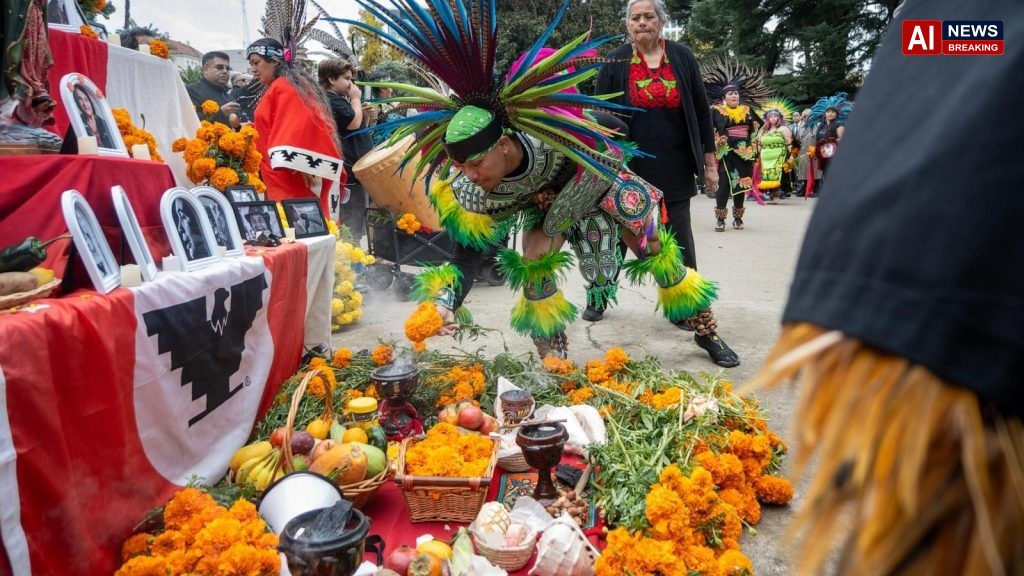
California’s capital was filled with a solemn crowd on Thursday as a memorial service paid tribute to Dolores Huerta, the 95‑year‑old labor organizer and civil‑rights champion who died last week. The ceremony, held in the rotunda of the state capitol, drew a cross‑section of elected officials, union leaders, community activists and ordinary citizens whose lives had been shaped by Huerta’s decades‑long fight for farmworkers’ rights. Speakers rose one after another, recalling how her relentless advocacy helped forge the modern labor movement and left an indelible imprint on the state’s political landscape.Governor Gavin Newsom opened the proceedings by describing Huerta as “the conscience of California’s labor movement” and emphasizing the breadth of her influence..
He noted that the 1965 Delano grape strike, in which Huerta co‑founded the United Farm Workers (UFW) alongside Cesar Chavez, “changed the trajectory of agricultural labor and set a precedent for collective bargaining that still resonates today.” The governor’s remarks also highlighted her role in the passage of the California Agricultural Labor Relations Act of 1975, the nation’s first law granting farmworkers the right to organize. Newsom concluded by urging the audience to continue Huerta’s work, particularly in addressing the lingering wage gaps and unsafe conditions that still affect many in the state’s fields.Former U.S. ary of Labor Marty Walsh, who attended with his wife, offered a federal perspective on Huerta’s legacy, noting that the policies she helped champion informed national labor standards..
He recalled his own meetings with Huerta in the 1990s, when she advocated for a federal farmworker health‑care bill that, while never enacted, spurred later legislation on occupational safety. Walsh stressed that “the courage she displayed in confronting powerful agribusiness interests set a benchmark for activists across the country,” and he pledged to keep her memory alive in upcoming Department of Labor initiatives aimed at expanding protections for seasonal workers.The service also featured remarks from former Senate Majority Leader Harry Reid’s daughter, former congresswoman Barbara Lee, and California State Senate President pro tem Toni Atkins. Lee, a longtime ally of the UFW, recounted how Huerta’s grassroots organizing techniques—door‑to‑door canvassing, bilingual education campaigns, and community rallies—had become a template for modern political outreach..
Atkins, who chairs the Senate Labor Committee, highlighted Huerta’s role in securing the 2000 California Minimum Wage Act, pointing out that the legislation’s incremental rise to $15 an hour owed much to the groundwork laid by Huerta’s campaigns in the 1990s.Union representatives were among the most emotive speakers. Maria Elena Durazo, president of the Los Angeles County Federation of Labor, described Huetta as “the heart and soul of the labor movement,” recalling how the activist would join picket lines even after her formal retirement. She recounted a 2017 incident in which Huerta, at age 92, stood beside immigrant farmworkers protesting a proposed pesticide ban, shouting “¡No hay nada más importante que la vida de la gente!” The anecdote underscored the activist’s belief that labor rights and environmental justice were inseparable, a principle that continues to guide the federation’s current agenda.A poignant moment arrived when a choir of high school students from the Central Valley performed “El Tren” – a folk song that had become an anthem during the 1960s grape strike..
Their rendition, sung in both Spanish and English, evoked the intergenerational nature of the struggle Huerta had championed. After the performance, a young activist from Fresno, who introduced herself as a member of the Youth Climate Action Network, addressed the crowd, saying that Huerta’s “unwavering commitment to justice taught us that climate action must include the people who live on the land.”Family members, including Huerta’s son, Arturo, stood quietly in the front row, accepting a framed copy of the 1975 agricultural labor law that the Capitol’s archivist presented. Arturo’s brief remarks were spare but moving; he thanked the audience for “keeping mamá’s spirit alive” and reminded listeners that her work was never about personal accolades but about “building a world where every worker can stand with dignity.” His words were echoed by a former UFW organizer who, in a quiet voice, recited a line from Huerta’s most famous slogan: “Sí, se puede,” noting that it had become a rallying cry far beyond labor circles.The memorial concluded with a moment of silence followed by the planting of a sapling in the Capitol’s garden, a gesture symbolizing growth and renewal..
The tree, a native oak, was donated by the California Farm Workers Association and will be tended by volunteers from local schools. Organizers said the sapling will serve as a living reminder that the fight for workers’ rights is an ongoing process, one that requires continual nurturing, much like the tree itself.In the hours after the service, social media platforms were awash with tributes from across the political spectrum. Tweets from progressive lawmakers praised Huerta’s role in shaping the modern Democratic platform, while a handful of conservative commentators acknowledged her “unquestionable impact on labor legislation,” even as they debated the broader implications of her tactics..
The diversity of responses highlighted how Huerta’s legacy transcended partisan lines, cementing her status as a national figure whose influence extended far beyond the fields of California.As California mourns the passing of one of its most iconic advocates, the memorial underscored both the achievements and the unfinished battles that defined Huerta’s life. The state’s farmworkers, many of whom still face low wages, limited healthcare access and exposure to hazardous chemicals, continue to look to her example for inspiration. In the words of a veteran organizer who concluded the ceremony, “Dolores taught us that change is possible when we stand together, speak loudly, and never back down.” The sentiment resonated through the Capitol’s marble halls, a testament to a woman whose perseverance reshaped the labor landscape and whose spirit, according to attendees, will continue to guide future generations..
Huerta’s death reignites pressure on California to translate her historic victories into concrete, enforceable standards for today’s farmworkers, turning symbolic reverence into policy urgency.
Her cross‑partisan reverence signals that future labor reforms—particularly around wages, health care, and climate justice—must be framed as universal economic rights, not merely progressive agenda items.





