Pakistan’s leaders hail first astronaut aboard Chinese craft: ‘Proud one of us has gone into space’
 British tourist travels 29 hours from Mumbai to Amritsar for ₹5,461, rates Indian Railways 10/10 | Viral video
 The Supreme Court will decide whether assault weapons bans violate the Second Amendment
 A Critic of Beijing Falls Short in Taiwan’s Key Mayoral Election
 EPA says no rise in contamination after Army detonates lead azide stockpile in Iowa
Trump signs order to retrofit carriers with steam cat
**
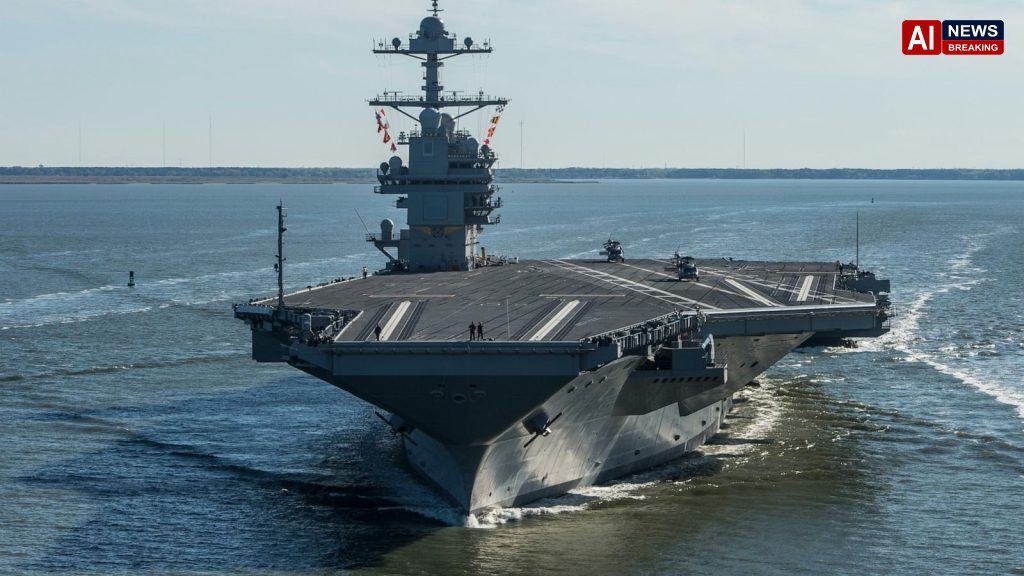
Trump signs order to retrofit carriers with steam cat - AI News Breaking
trump signs order retrofit:
Trump faces GOP push‑back to his order to use steam to launch jets from aircraft carriers Senators are pushing back against President Donald Trump’s order to retrofit new aircraft carriers with old steam catapults. Washington – The White House announced on Monday that President Donald Trump had signed an executive order directing the Navy to “re‑evaluate the feasibility of installing steam‑powered catapult systems on the next generation of aircraft carriers.” The move, intended to revive a technology used on World‑War‑II‑era vessels, has sparked an unexpected wave of criticism from within the president’s own party, with several senior Republican senators calling the plan “reckless” and “a waste of taxpayer money.” The order follows a series of high‑profile meetings between Trump and senior defence contractors, who argue that steam catapults, despite being superseded by electromagnetic launch systems, can be fielded more quickly and at lower cost. Proponents claim that the technology, first deployed on the Kitty Hawk class, can be upgraded with modern materials to meet today’s performance standards..
However, Navy officials have warned that retrofitting a brand‑new ship in the middle of construction could cause costly delays and compromise the integration of other advanced systems. Senator James Lankford (R‑OK), chairman of the Senate Armed Services Committee, was among the first to publicly question the order. In a statement released on Tuesday, Lankford said, “Our warfighters deserve the best technology the United States can provide, not a nostalgic return to obsolete equipment that could jeopardise fleet readiness.” He urged the Pentagon to complete a comprehensive cost‑benefit analysis before any further steps are taken, noting that the Navy’s current investment in the Electromagnetic Aircraft Launch System (EMALS) runs into the billions..
Other GOP lawmakers have echoed Lankford’s concerns. Senator Susan Collins (R‑ME) wrote to the ary of the Navy, urging a pause on the retrofitting plan until an independent audit can verify the projected savings. “The president’s enthusiasm for steam catapults must be balanced against the reality of modern naval warfare,” she wrote..
Meanwhile, a group of nine Republican senators signed a letter demanding a full briefing from the Department of Defense on the technical risks, potential schedule slips, and impact on the Navy’s 2035 carrier build schedule. The Navy’s response, delivered through a spokesperson on the White House press pool, emphasized that the order does not mandate an immediate shift away from EMALS. “We are reviewing the president’s directive within the context of our existing acquisition strategy,” the spokesperson said..
“If the analysis determines that steam catapults can be integrated without compromising the carrier’s overall capability, we will present those findings to the administration and Congress.” The statement stopped short of confirming any timeline, leaving the Pentagon’s long‑term plans in a state of flux. Industry analysts say the debate is symptomatic of a broader tension between the Trump administration’s “America‑first” procurement agenda and the Pentagon’s push toward high‑tech, long‑term solutions. Alan Roberts, a senior fellow at the Center for Strategic and International Studies, warned that “re‑introducing steam catapults could set a precedent for retrofitting legacy systems onto next‑generation platforms, a practice that historically inflates costs and reduces operational effectiveness.” He added that while steam catapults are proven, they lack the precision and reduced maintenance footprint of EMALS, which the Navy credits for smoother carrier operations..
Supporters of the order argue that steam catapults have a lower per‑launch energy requirement and a proven track record for reliability under combat conditions. Admiral William “Bill” Owens, a retired carrier strike group commander, told BBC News that “the simplicity of steam catapults means fewer electronic failures and a faster learning curve for pilots transitioning from older aircraft.” He also noted that many allied navies, such as the United Kingdom’s Royal Navy, still rely on steam‑based launch systems for a portion of their fleets, suggesting a potential for interoperability with allied forces. The political ramifications extend beyond defence procurement..
The order has become a flashpoint in the ongoing struggle between the president and congressional Republicans over control of the defence budget. House Appropriations Chairman Hal Rogers (R‑KY) hinted that the upcoming FY 2027 defence appropriations bill could include language limiting the Navy’s ability to divert funds toward steam catapult retrofits without explicit congressional approval. “We must ensure that any deviation from the approved budget is justified to the American people,” Rogers said during a televised hearing..
Critics also point to the timing of the directive, which comes as the Navy is already grappling with supply‑chain shortages and a shortage of qualified shipyard workers. A recent Government Accountability Office report warned that “major alterations to carrier construction during the build phase could increase overall program costs by up to 15 %.” If the retrofitting plan proceeds, the Navy may need to re‑negotiate contracts with shipbuilders such as Huntington Ingalls Industries, potentially leading to legal disputes and further delays. Meanwhile, the Pentagon’s own budget office released a preliminary estimate that retrofitting steam catapults on the upcoming USS Enterprise (CVN‑80) could add $1.2 billion to the vessel’s price tag..
The figure, though provisional, has heightened concerns among lawmakers about fiscal responsibility, especially as the administration pursues large‑scale infrastructure projects and tax cuts. In a briefing, the Office of Management and Budget stressed that “any significant change to a capital acquisition program.
Updated: November 18, 2026
Summary: Republican senators are urging a cost‑benefit review after President Trump ordered new carriers to consider steam‑catapult retrofits, warning the move could delay construction and waste billions. The Navy says the directive won’t force an immediate shift from its EMALS program, but lawmakers demand a full briefing on technical risks and budget impacts.
Reviving steam catapults risks turning a costly, late‑stage design change into a budgetary flashpoint that could stall the Navy’s broader modernization drive. The intra‑party revolt signals that even within the GOP, fiscal prudence and future‑proof tech are outweighing nostalgic, short‑term fixes.