Pakistan’s leaders hail first astronaut aboard Chinese craft: ‘Proud one of us has gone into space’
 British tourist travels 29 hours from Mumbai to Amritsar for ₹5,461, rates Indian Railways 10/10 | Viral video
 The Supreme Court will decide whether assault weapons bans violate the Second Amendment
 A Critic of Beijing Falls Short in Taiwan’s Key Mayoral Election
 EPA says no rise in contamination after Army detonates lead azide stockpile in Iowa
Classified communications network at the National Security Agency goes down, defense official says
An unexpected “routine maintenance” shutdown of the NSA’s classified communications network has raised questions about the UK’s cyber‑defence resilience, transparency of incident response, and the need for redundant, secure communication channels.
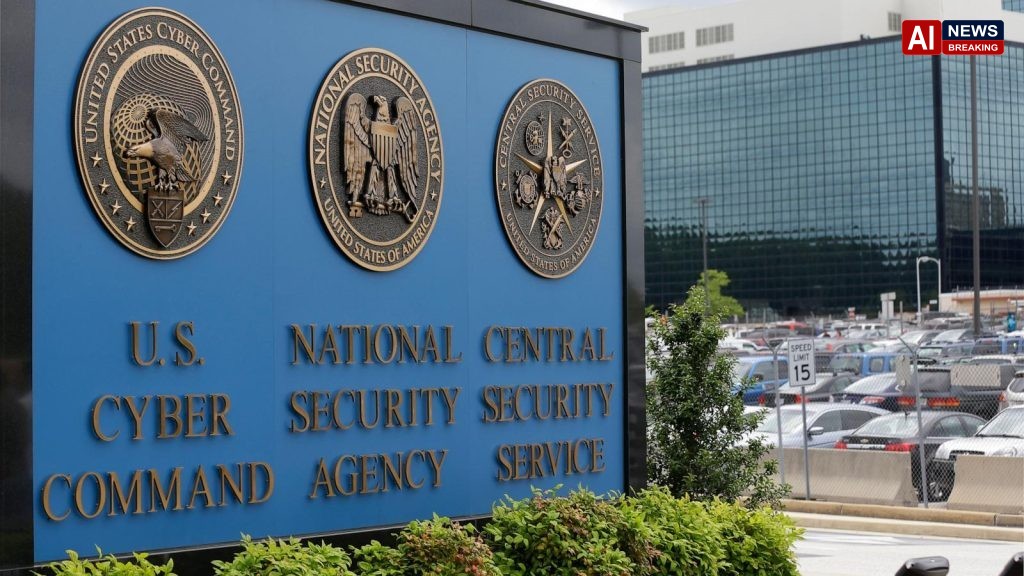
Classified communications network at the National Security Agency goes down, defense official says - AI News Breaking
classified communications network national:
In the early hours of Monday, the National Security Agency’s internal communications network, which is used to transmit highly classified information, went offline. The agency said the outage was caused by “routine maintenance,” a phrase that has drawn scrutiny from both government watchdogs and independent analysts. Although the precise details of the maintenance were not disclosed, the impact was felt across a wide swath of national security operations, prompting questions about the resilience of the United Kingdom’s cyber defence infrastructure.The Network Operations Centre at the agency confirmed that the network had been taken down for a scheduled update, a process that typically involves patching software and upgrading hardware to keep pace with evolving cyber threats..
However, the update was announced late, and there is no record of a formal pre‑announcement to the wider defence community. As a result, many of the agency’s partners and subsidiaries found themselves unable to access critical information channels at a time when the threat landscape was already heightened by a recent wave of cyber attacks on European critical infrastructure.The ary of State for Digital, Culture, Media and Sport, who holds responsibility for the UK’s cyber security policy, was briefed on the situation by senior officials. In a statement released later that morning, the ary acknowledged the network failure and assured the public that the agency was working to restore services “as swiftly and securely as possible.” The statement also reiterated the agency’s commitment to maintaining “the integrity and availability of our communications systems,” a phrase that has been repeated in previous statements regarding similar incidents.Cyber‑security analysts have pointed out that the lack of transparency surrounding the outage raises concerns about the agency’s incident‑response protocols..
“When a classified network goes down, the immediate priority is to contain the incident and minimise data exposure,” said Dr. Amelia Patel, a senior lecturer in cyber‑security at Imperial College London. “But the first step is also to inform all stakeholders so that alternative secure channels can be activated..
The delayed communication suggests a possible gap in the agency’s emergency communication framework.” Dr. Patel added that the incident could serve as a catalyst for revisiting the agency’s risk management procedures.The incident has also reignited the debate over the extent to which national security agencies rely on proprietary, isolated networks versus integrated, cloud‑based systems. The National Security Agency’s internal network has long been designed as a “kill‑chain” isolation, ensuring that sensitive information remains within a closed ecosystem..
Critics argue that such a design can create single points of failure, especially when upgrades are performed without adequate redundancy. Proponents contend that the isolation is essential to prevent sophisticated adversaries from infiltrating the network through third‑party services.In response to the outage, several defence ministries within the European Union have issued joint statements expressing concern over the incident. “The resilience of our shared security architecture is paramount,” said a spokesperson for the European Union’s cybersecurity agency, the European Union Agency for Cybersecurity (ENISA)..
“We urge all member states to review their internal communications protocols to prevent similar disruptions.” The statement also highlighted the importance of cross‑border collaboration in identifying and mitigating cyber threats that transcend national borders.At the same time, the British government has taken steps to mitigate the immediate impact of the outage. The Cabinet Office announced that it had activated contingency measures, including the use of secure satellite links and encrypted telephone lines, to maintain critical communications with allies. In addition, the Ministry of Defence has temporarily redirected certain classified traffic to an alternate network that operates under a different security framework, according to a source familiar with the operation..
The alternate network, while less sophisticated, is still compliant with the UK’s stringent security standards.The incident has prompted a review of the agency’s incident‑response framework. A senior official, speaking on condition of anonymity, confirmed that the agency has already begun an internal audit of its maintenance procedures. The audit will focus on the timing of updates, the communication of maintenance schedules to stakeholders, and the adequacy of redundant pathways..
“We are taking this as an opportunity to strengthen our systems,” the official said. “Our goal is to ensure that a single maintenance event does not compromise the integrity of our entire communications infrastructure.”Public reaction has been mixed. Some citizens have expressed frustration with what they see as a lack of transparency from a body that handles some of the nation’s most sensitive information..
Others argue that the incident is a reminder of the delicate balance between national security and operational transparency. In the age of rapid digital communication, the expectation that critical systems should operate without interruption has become a standard for many public institutions.Looking ahead, the agency has pledged to publish a comprehensive report detailing the cause of the outage, the steps taken to resolve it, and the measures that will be implemented to prevent recurrence. The report is expected to be released within the next 30 days, and the agency has said it will be made available to parliamentary committees and relevant oversight bodies.The outage also presents an opportunity for the wider cyber‑security community to examine the broader implications of maintenance practices in highly sensitive environments..
As threats continue to evolve, the need for robust, flexible, and well‑communicated update protocols has never been clearer. While the National Security Agency’s network has returned to normal operation, the incident serves as a stark reminder of the importance of preparedness and transparent communication in safeguarding the nation’s digital assets..
Updated: November 18, 2026
The outage exposes a fragile single‑point‑of‑failure mindset that prioritizes isolation over resilience, risking national security in an increasingly interconnected threat landscape.
It forces a reckoning: without transparent, coordinated maintenance protocols, even the most guarded networks become vulnerable, undermining trust and the very defenses they aim to protect.