The Supreme Court will decide whether assault weapons bans violate the Second Amendment
 A Critic of Beijing Falls Short in Taiwan’s Key Mayoral Election
 EPA says no rise in contamination after Army detonates lead azide stockpile in Iowa
 Israeli Strike Kills 2 Workers at Gaza Clinic, Doctors Without Borders Says
 McQueen Pre-Fall 2027
Senator Cornyn blocks confirmation of DOJ nominee for Fifth Circuit.
**
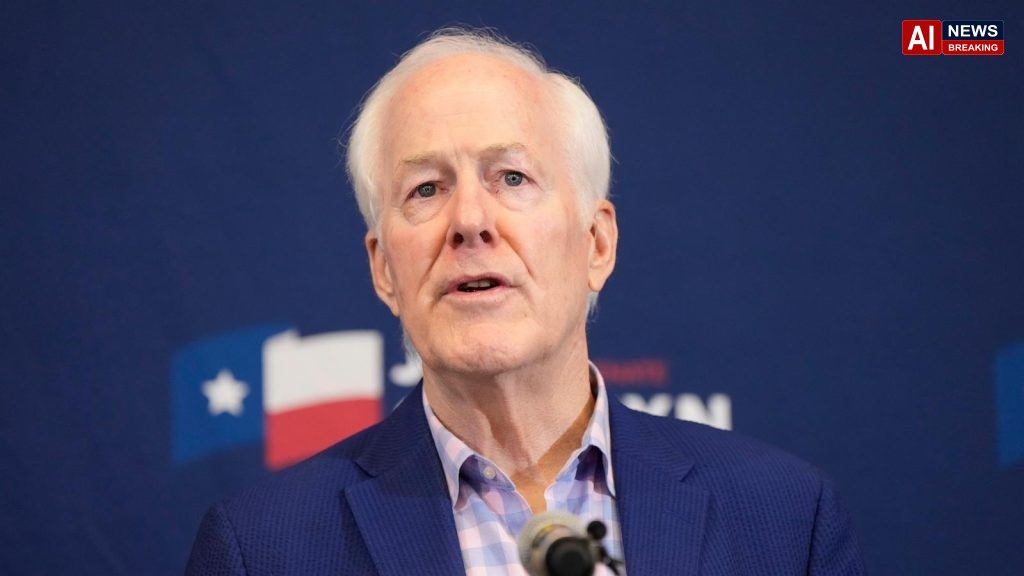
Senator Cornyn blocks confirmation of DOJ nominee for Fifth Circuit. - AI News Breaking
Senator John Cornyn, the senior Republican voice in the United States Senate from Texas, has announced that he will refuse to confirm the nomination of a high‑ranking Justice Department official to fill a vacancy on the United States Court of Appeals for the Fifth Circuit. The decision, which has already caused a stir in Washington, is part of the senator’s broader effort to protect the judiciary in Texas from what he describes as the “political overreach” of the current administration.The nominee in question is James E. Smith, a former Assistant Attorney General for the Department of Justice’s Civil Division..
Smith’s appointment, recommended by President Donald J. Trump, was slated for a seat that had become open following the retirement of Judge Karen J. Kelley in late 2023. Kelley, a Republican appointee, had served the Fifth Circuit for twenty years, shaping the court’s approach to civil rights, corporate regulation, and criminal justice. Her departure left a vacancy that the Trump administration has been eager to fill with a judge who shares its conservative philosophy.Cornyn’s opposition is grounded in a mix of procedural concerns and policy disagreements..
He has long been an advocate for a rigorous vetting process that involves a thorough review of a nominee’s judicial record, public statements, and policy positions. In Smith’s case, the senator has highlighted a series of public remarks in which the former DOJ official appeared to support more expansive federal oversight of state criminal justice systems. “The Fifth Circuit is not a forum for national policy experiments,” Cornyn said in a statement released on Thursday..
“Our judges must be independent, not politically driven.”The senator’s statement also references the broader debate over the appointment of Trump’s judicial picks. Critics of the administration’s nominees argue that they have a tendency to lean toward a narrow interpretation of the Constitution, potentially stalling reforms in areas such as voting rights, environmental regulation, and corporate accountability. Supporters, meanwhile, contend that the new judges will reinforce a return to originalist principles and provide a bulwark against what they see as a liberal judiciary that has overstepped its mandate.In addition to procedural arguments, Cornyn has raised concerns about Smith’s record on civil litigation involving the Department of Justice’s enforcement of federal civil rights statutes..
During Smith’s tenure as Assistant Attorney General, he oversaw several high‑profile cases in which the Department had sued companies for alleged violations of the Civil Rights Act of 1964. Cornyn notes that some of these cases, while legally sound, were criticized by civil rights groups for their perceived aggression. “Our state has a long history of respecting civil liberties,” Cornyn said..
“We cannot allow a judge who has a record of aggressively pursuing federal civil rights cases to sit on a court that is so closely tied to Texas law.”The refusal to confirm Smith is not without precedent. In the past, Senator Cornyn has blocked the confirmation of other federal judges, most notably the nomination of Judge Patricia A. Morris in 2015, citing concerns over her judicial temperament and record. His approach has earned him both praise and criticism, with some lawmakers viewing him as a principled guardian of the Senate’s advice and consent role, while others see him as a partisan obstructionist.The implications of Cornyn’s decision are far-reaching..
If the senator’s veto is successful, the vacancy on the Fifth Circuit remains unfilled, potentially creating a backlog of cases that could delay proceedings for months or even years. The Fifth Circuit, known for its jurisdiction over a broad swath of Southern states including Texas, Louisiana, and Mississippi, handles a substantial docket of civil and criminal appeals. An empty seat could mean increased caseloads for the remaining judges, leading to longer deliberations and possibly more appeals that need to be heard by the Supreme Court.The Trump administration, meanwhile, has stated that it remains committed to filling the vacancy..
President Trump’s legal team has indicated that they will work with the Senate Judiciary Committee to present an alternative nominee who might satisfy the concerns raised by Cornyn. The administration has not yet named a replacement, but speculation points to a former federal judge with a solid conservative record as a likely candidate. The new nominee would be expected to navigate the same political and procedural hurdles that Smith faced.For the Republican caucus in the Senate, Cornyn’s stance presents a delicate balancing act..
While the party’s base generally supports the administration’s judicial appointments, the senior senator’s influence in the Senate and his ability to rally fellow Republicans to block or support nominations is a factor that could influence the party’s legislative strategy. The Senate’s procedural rules allow a single senator to delay a nomination with a filibuster or a hold, and Cornyn has signaled that he will use these tools if necessary. The Republican majority in the Senate, however, has a narrow margin, and any refusal to confirm a Trump nominee could trigger a political backlash from President Trump’s supporters, potentially impacting other legislative priorities.From a broader perspective, the dispute underscores a long‑standing tension between the executive and legislative branches over the shaping of the federal judiciary..
The Senate’s role in confirming judges has historically been a point of contention, with each administration seeking to appoint judges who will carry forward its policy agenda. The Fifth Circuit, in particular, is considered a highly influential court for issues ranging from intellectual property to immigration, making the appointment of its judges a matter of national importance.Legal analysts suggest that, if Cornyn’s opposition succeeds, the nomination process will likely move toward a more bipartisan approach. Past examples show that when a single senator blocks a nominee, the administration often seeks a compromise candidate who can satisfy both the executive’s preference and the Senate’s concerns..
This may involve selecting a nominee with a less contentious record or one who has demonstrated a willingness to collaborate across party lines. Alternatively, the administration could move to nominate a judge from outside the Department of Justice, perhaps a former district court judge or a state appellate judge, to sidestep the specific issues raised by Cornyn.The current legal landscape also reflects a broader trend toward increased scrutiny of judicial nominees, particularly in light of the Supreme Court’s recent rulings on high‑profile cases such as Roe v. Wade and the challenges to the Affordable Care Act. State senators, including Cornyn, have taken a keen interest in ensuring that federal judges have a record that aligns with their state’s legal philosophy..
Texas, in particular, has been a battleground for many of the country’s most contentious legal debates, including gun rights, voting regulations, and environmental policy.In the weeks ahead, the Senate Judiciary Committee is expected to hold a hearing to assess the merits of a new nominee. The committee’s agenda will include a review of the nominee’s background, past rulings, and public statements, as well as.
Updated: November 18, 2026