
 Pakistan’s leaders hail first astronaut aboard Chinese craft: ‘Proud one of us has gone into space’
 British tourist travels 29 hours from Mumbai to Amritsar for ₹5,461, rates Indian Railways 10/10 | Viral video
 The Supreme Court will decide whether assault weapons bans violate the Second Amendment
 A Critic of Beijing Falls Short in Taiwan’s Key Mayoral Election
 EPA says no rise in contamination after Army detonates lead azide stockpile in Iowa
Florida pastor convicted of US charges related to assassination of Haitian president
**
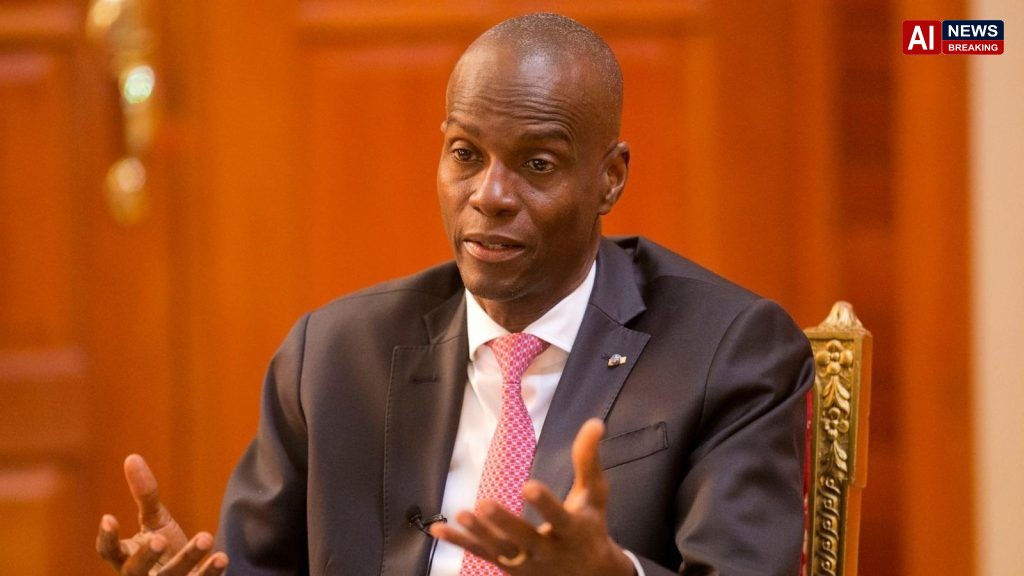
Florida pastor convicted of US charges related to assassination of Haitian president - AI News Breaking
florida pastor convicted charges:
A federal jury in Jacksonville, Florida, on Tuesday found Pastor Joseph “Joe” Frantz, a dual Haitian‑American citizen, guilty on multiple counts tied to the 2021 assassination of Haiti’s President Jovenel Moïse. The verdict, delivered after a three‑day trial, marked the first time a U.S. court has held a foreign‑based religious leader criminally responsible for a political killing on Haitian soil..
Prosecutors said Frantz used his pastoral network to recruit and finance a group of mercenaries, providing logistical support that enabled the attack on the president’s private residence in Port‑au‑Prince on July 7, 2021.The case hinged on a trove of wire‑tap recordings, text messages and financial records that prosecutors presented as evidence of Frantz’s coordination with the hired gunmen. According to the indictment, Frantz acted as an intermediary between the mercenaries—many of whom were former members of the Haitian police or private security firms—and a shadowy consortium of Haitian business interests allegedly opposed to Moïse’s reform agenda. The jury heard that Frantz allegedly arranged for the procurement of firearms, paid for travel tickets to the United States, and facilitated the transfer of cash through a network of shell companies based in Delaware and the Virgin Islands..
While Frantz denied any involvement, the prosecution argued that his role as a “spiritual advisor” was a cover for a covert operational command center that directed the assault.Defense counsel for Frantz contended that the pastor was being scapegoated for a complex political crisis that continues to destabilise Haiti. They argued that the evidence was circumstantial, pointing to the fact that the mercenaries had long-standing ties to rival factions within the Haitian armed forces. The defense also highlighted the absence of any direct orders signed by Frantz, asserting that the pastor’s sermons about “justice” and “divine retribution” were misinterpreted as conspiratorial directives..
Yet the jurors, after deliberating for approximately twelve hours, concluded that the cumulative weight of the communications and financial trails proved “beyond a reasonable doubt” that Frantz knowingly facilitated the plot.Judge Laura Taylor Swain, who presided over the case, emphasized during sentencing remarks that the conviction underscored the reach of U.S. law in addressing transnational crimes that threaten regional stability. She noted that the United States has a vested interest in curbing the proliferation of private military actors who exploit the porous borders between the Caribbean and the mainland..
“When a religious figure leverages his spiritual authority to orchestrate violence abroad, it erodes the very foundations of community trust,” Swain said, adding that the sentencing would send a clear message to others who might consider using American soil as a staging ground for foreign coups or assassinations.The sentencing phase, scheduled for next month, will determine the length of Frantz’s imprisonment and the possibility of asset forfeiture. Prosecutors have recommended a term of 30 years, arguing that the gravity of the crime—an act that destabilised a nation already grappling with economic collapse, natural disasters and a burgeoning humanitarian crisis—warrants a severe penalty. They also seek the forfeiture of properties linked to the shell companies used to funnel money, estimating that the total illicit proceeds exceed $2 million..
The defense, meanwhile, is expected to argue for a reduced term, citing Frantz’s previously clean record, his contributions to community outreach programs, and the potential for rehabilitation.International reactions have been swift. Haiti’s interim prime minister, Ariel Henry, who assumed office following Moïse’s death, issued a statement welcoming the verdict but urging the United States to cooperate with Haitian authorities in ongoing investigations. Henry stressed that accountability must extend beyond Frantz to the broader network of actors implicated in the murder, including alleged foreign mercenaries and political operatives still at large..
The United Nations Office for the Coordination of Humanitarian Affairs (OCHA) welcomed the development as a step toward justice but warned that the underlying political fractures in Haiti remain unresolved, risking further cycles of violence.In Washington, the Department of Justice hailed the outcome as a demonstration of the United States’ commitment to combating illicit transnational activities that threaten democratic governance. A senior DOJ official, speaking on condition of anonymity, said the case set a precedent for future prosecutions involving diaspora‑linked conspiracies. “We are sending a clear signal that the U.S..
will not be a safe haven for those who plot against elected leaders, no matter where the target lies,” the official remarked. The statement also referenced recent efforts to tighten regulations on foreign funding of religious institutions, a move aimed at preventing the misuse of charitable donations for violent ends.Human rights groups, while acknowledging the conviction, cautioned against conflating religious freedom with criminal conduct. Amnesty International issued a brief commentary urging authorities to ensure that the investigation and any subsequent legal actions respect due process and avoid casting a wide net over Haitian‑American religious communities..
“Targeted prosecutions must not become a pretext for broader surveillance of diaspora groups,” the organization warned, noting past incidents where anti‑terrorism legislation was used to monitor legitimate religious activity.The case has also revived debate within the Haitian diaspora about the role of expatriate networks in the nation’s politics. Many Haitian‑American community leaders expressed mixed feelings, recognising the need for accountability while fearing that the conviction could fuel anti‑Haitian sentiment in the United States. Pastor Frantz’s own congregation, based in Miami, released a statement asserting his innocence and pledging to appeal the verdict..
They described the trial as “a politically motivated attempt to silence a voice that has spoken out against corruption and oppression in Haiti.”As the legal process moves toward sentencing, the broader implications for U.S. foreign policy in the Caribbean remain to be seen. Analysts suggest that the conviction may encourage closer intelligence sharing between Washington and Port‑au‑Prince, potentially bolstering efforts to dismantle armed gangs that have seized control of large swaths of Haitian territory..
However, they also warn that without a comprehensive political solution addressing Haiti’s deep‑seated economic and governance challenges, judicial outcomes alone will not quell the cycle of violence that led to Moïse’s death. The upcoming sentencing will thus be watched not only as a measure of individual accountability but also as an indicator of how the United States will navigate the delicate balance between law enforcement and diplomatic engagement in a region fraught with instability..
Updated: November 18, 2026
The jury’s verdict signals that U.S. courts are willing to extend their reach into foreign political violence, treating faith‑based influence as a legitimate tool of covert warfare. Yet the case also underscores how a single conviction can illuminate, rather than resolve, the tangled web of diaspora politics, mercenary networks,





