
 Pakistan’s leaders hail first astronaut aboard Chinese craft: ‘Proud one of us has gone into space’
 British tourist travels 29 hours from Mumbai to Amritsar for ₹5,461, rates Indian Railways 10/10 | Viral video
 The Supreme Court will decide whether assault weapons bans violate the Second Amendment
 A Critic of Beijing Falls Short in Taiwan’s Key Mayoral Election
 EPA says no rise in contamination after Army detonates lead azide stockpile in Iowa
Judge issues 14-day extension of order blocking Trump’s memorial arch in DC
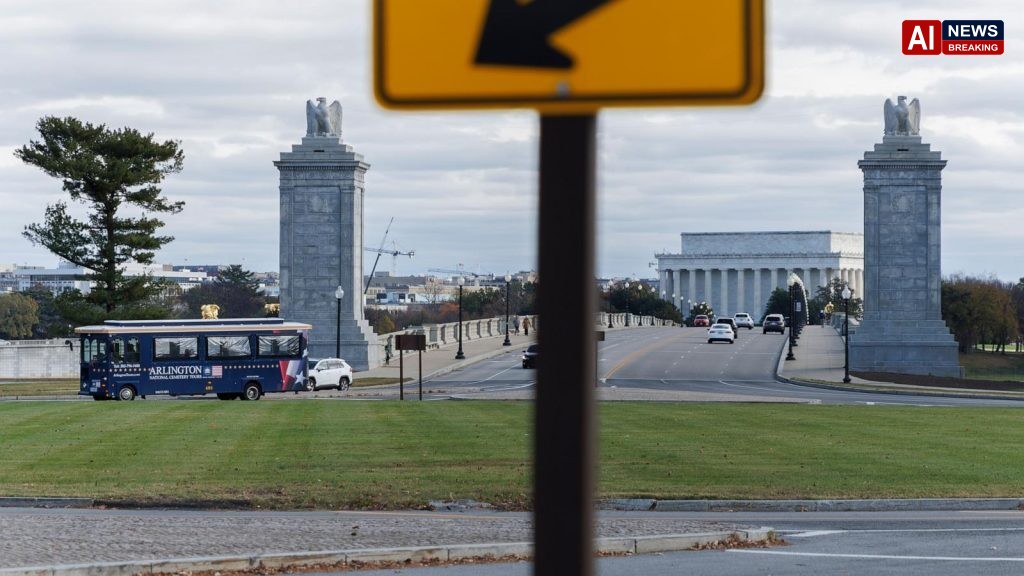
Judge issues 14-day extension of order blocking Trump's memorial arch in DC - AI News Breaking
judge issues 14day extension:
A federal judge in Washington, D.C., has granted a 14‑day extension to a preliminary injunction that bars the Trump administration from commencing construction on a proposed memorial arch intended to honor former president Donald J. Chutkan, preserves the status quo while the government continues to contest the legality of the project, which has sparked intense debate over historical memory, public space and the use of federal land.The original injunction, dated 15 May, halted any ground‑breaking activities after plaintiffs – a coalition of historic preservation groups, local residents and the District’s Office of Planning – argued that the memorial violated the Commemorative Works Act of 1986. That legislation requires any new monument on the National Mall or its immediate environs to receive approval from the National Capital Planning Commission and the Commission of Fine Arts, as well as to meet stringent criteria regarding design, size and historical significance..
The plaintiffs contend that the proposed arch, slated to rise more than 150 feet, fails to satisfy those requirements and would dominate an area already crowded with monuments.In a brief opinion, Judge Chutkan noted that the parties have not yet resolved the key factual disputes concerning the arch’s compliance with the Act and its impact on the surrounding landscape. She therefore deemed a short extension appropriate to allow the government additional time to file a more detailed response and to explore possible settlement options. The judge also reminded the parties that the injunction remains in effect, meaning that any physical work – including site preparation, foundation laying or the erection of temporary structures – would constitute a violation of the court order.The administration, represented by the Department of the Interior’s Office of the Solicitor, has argued that the memorial is a lawful exercise of congressional authority granted by the 2023 “Trump Memorial Authorization Act.” That statute, passed with bipartisan support, specifically earmarks a parcel of land near the south side of the National Mall for the construction of a “monument honoring the 45th President of the United States.” The government’s position is that the statutory language supersedes the procedural safeguards of the Commemorative Works Act, effectively granting it a waiver to proceed without the usual approvals.Legal experts caution that the clash between the two statutes could set a significant precedent..
Professor Elena Ramirez of Georgetown Law’s Institute for Public Law observes that “if the court ultimately finds that Congress can override the Commemorative Works Act by a simple authorisation, it may open the door to a wave of similarly situated monuments, each demanding its own set of exemptions.” Conversely, constitutional scholars argue that the Act embodies a longstanding congressional intent to protect the Mall’s visual integrity, and that any attempt to bypass it could be struck down as an overreach of legislative power.Public reaction to the proposed arch has been sharply divided. Supporters, many of whom are members of Trump’s political base, view the monument as a rightful tribute to a president they believe reshaped American politics and foreign policy. They cite the 2023 law as evidence of democratic legitimacy and have organized rallies outside the proposed site, displaying banners and chanting slogans..
Opponents, including veterans’ groups and civil‑rights organisations, contend that the memorial glorifies a figure whose tenure was marked by controversy, impeachment and a disputed claim to electoral victory. They argue that the arch would not only mar the aesthetic balance of the capital’s core but also send a polarising message to visitors from around the world.City officials have been caught in a delicate position. Office of Planning, which originally denied the project’s design proposal on grounds of scale and compatibility, has reiterated its stance that any alteration to the Mall’s layout must undergo rigorous review..
However, the mayor’s office, while acknowledging the legal complexities, has expressed a desire to avoid a protracted courtroom battle that could further inflame partisan tensions. In a recent press briefing, the mayor’s spokesperson said that the administration is “committed to a solution that respects both the rule of law and the diverse perspectives of Washington’s residents.”The extension also provides an opportunity for additional stakeholders to submit amicus briefs. So far, the National Trust for Historic Preservation, the American Institute of Architects and several foreign embassies have offered to weigh in, citing concerns about the arch’s potential to disrupt sightlines to the Washington Monument and the Lincoln Memorial..
Their submissions argue that the Mall’s open vistas are integral to the nation’s symbolic landscape, a principle that has guided federal planning decisions since the early twentieth century.Meanwhile, the broader political context cannot be ignored. The arch proposal emerged amid ongoing efforts by former President Trump and his allies to cement a narrative of enduring influence, including the establishment of foundations, museums and educational programmes linked to his name. Critics suggest that the memorial is part of a larger strategy to rewrite historical memory, a claim the administration rejects as “political theatre.” The judge’s decision to grant a modest extension reflects an attempt to balance these competing narratives while the courts work through the intricate statutory questions.The next procedural milestone is set for 5 July, when both sides are expected to file further briefs outlining their interpretations of the relevant statutes..
If the government fails to persuade the court that the 2023 authorisation law supersedes the Commemorative Works Act, the injunction could become permanent, effectively halting the project. Conversely, a ruling in favour of the administration would likely trigger a new round of design approvals, potentially reshaping the final appearance of the arch. As the deadline approaches, Washington remains a focal point for a debate that extends far beyond a single structure, touching on how a nation chooses to commemorate its leaders and the legal frameworks that govern public space..
This development highlights evolving dynamics and may have broader implications in the near term.






