
 Pakistan’s leaders hail first astronaut aboard Chinese craft: ‘Proud one of us has gone into space’
 British tourist travels 29 hours from Mumbai to Amritsar for ₹5,461, rates Indian Railways 10/10 | Viral video
 The Supreme Court will decide whether assault weapons bans violate the Second Amendment
 A Critic of Beijing Falls Short in Taiwan’s Key Mayoral Election
 EPA says no rise in contamination after Army detonates lead azide stockpile in Iowa
Cyclone Akvan: Landfall process begins
**
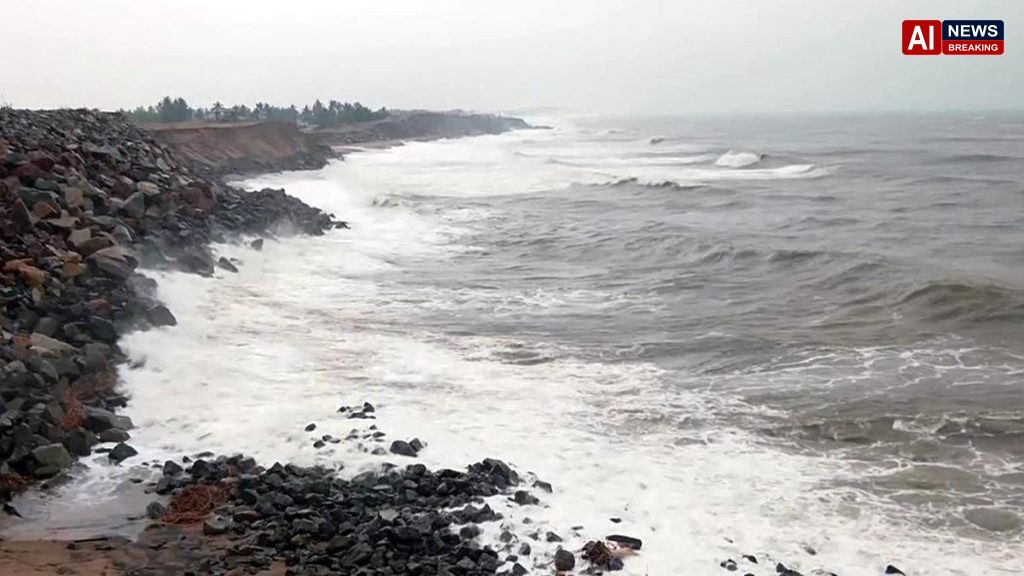
Cyclone Akvan: Landfall process begins - AI News Breaking
cyclone akvan landfall process:
Cyclone Akvan: Landfall process begins The India Meteorological Department (IMD) has confirmed that Cyclone Akvan is set to make landfall on the eastern coast of India within the next twelve hours. Forecast models show the storm approaching the state of Odisha, with the city of Bhubaneswar identified as a focal point for potential impacts. The cyclone, currently classified as a very severe cyclonic storm, carries sustained wind speeds of up to 140 km/h and heavy rainfall estimates of up to 250 millimetres over a 24‑hour period..
Authorities have issued a series of warnings, urging residents in coastal districts to prepare for the imminent threat. Director of the Bhubaneswar Meteorological Centre, Manorama Mohanty, addressed the press earlier today, stating that the duration of the landfall process would be a long one, possibly stretching over seven to eight hours. She explained that the storm’s slow forward motion, combined with its broad circulation, would result in an extended period of severe weather conditions across the region..
“The system will not simply hit and move on; it will linger, bringing prolonged wind, rain and storm surge,” Mohanty said, emphasizing the need for sustained vigilance. In anticipation of the prolonged impact, state officials have activated disaster management protocols across 15 districts. The Odisha State Disaster Management Authority (OSDMA) has mobilised over 3,500 personnel, including police, fire services and the National Disaster Response Force (NDRF)..
Temporary shelters have been set up in schools and community halls, with supplies of food, drinking water and medical kits pre‑positioned. The OSDMA chief, Pradeep Kumar, warned that evacuation orders could be issued at short notice, urging families in low‑lying areas to relocate to safer grounds. The Indian Navy has also been placed on high alert, with several vessels and aircraft redirected to assist in relief operations if required..
A joint task force comprising the Navy, Army and Air Force is ready to provide air‑lift capabilities, logistical support and rapid response teams. Meanwhile, the Ministry of Home Affairs has instructed state governments to ensure that power and communication networks remain operational, recognizing the critical role of information flow during such emergencies. Meteorological data indicate that Akvan’s core will cross the coastline near the Puri district, a region known for its historic temples and tourist influx..
The combination of high winds and a predicted storm surge of up to 3.5 metres poses a significant risk to both heritage sites and modern infrastructure. Experts from the Archaeological Survey of India have been briefed on protective measures for vulnerable monuments, including the installation of temporary barriers and sandbagging of key structures. Agricultural communities in the adjoining districts are bracing for the worst..
The state’s Department of Agriculture reports that approximately 1.2 million hectares of paddy fields lie in the projected path of the cyclone. Officials have urged farmers to secure harvests where possible and to store equipment in elevated locations to minimise damage. The state’s Chief Minister, Naveen Patnaik, announced a compensation scheme that will provide immediate financial assistance to those whose crops are destroyed, pending a detailed damage assessment after the storm subsides..
Transport networks are already feeling the strain. The East Coast Railway has suspended services on the Khurda Road–Puri line, citing safety concerns over potential track flooding and landslides. The National Highway Authority has issued an advisory to halt heavy vehicle movement on NH-16 for the duration of the cyclone, aiming to reduce the risk of accidents on water‑logged roads..
Ports along the Bay of Bengal, including the Paradip and Dhamra terminals, have been temporarily closed to commercial shipping, with authorities warning of possible delays in cargo handling for weeks. Public health officials have warned of secondary risks associated with the cyclone, notably the spread of water‑borne diseases such as cholera and dengue. Temporary clinics are being set up in evacuation centres, and teams from the state health department are conducting awareness campaigns on hygiene practices..
The World Health Organization’s regional office has pledged to support local efforts by providing medical supplies and technical guidance, highlighting the importance of coordinated action in the aftermath of natural disasters. In the international arena, the United Nations Office for the Coordination of Humanitarian Affairs (OCHA) has expressed readiness to mobilise resources should the situation deteriorate beyond national response capacities. A preliminary appeal for funding has been drafted, targeting contributions from donor nations and private sector partners..
Meanwhile, neighbouring Bangladesh, which has faced similar cyclonic threats in recent years, has offered to share satellite imagery and modelling expertise to assist Indian forecasters in tracking Akvan’s progression. Analysts note that the prolonged landfall period could exacerbate flooding in river basins that feed into the Mahanadi and Brahmani systems. Historical data suggest that when cyclones stall over coastal plains, the cumulative rainfall can trigger flash floods and landslides in inland areas, compounding the challenges faced by rescue teams..
Early warning systems along these rivers have been activated, with real‑time water level monitoring stations transmitting data to central command centres. As night falls, the public is urged to stay informed through official channels, including the IMD’s mobile alerts and state government briefings. Residents are reminded to keep emergency kits ready, maintain a battery‑powered radio, and avoid unnecessary travel..
While the full impact of Cyclone Akvan remains.
Updated: November 20, 2026
Akvan’s unusually slow, eight‑hour landfall will turn Odisha’s coast into a prolonged “rain‑and‑wind dam,” amplifying flood risks far inland and stretching rescue resources beyond the typical short‑burst scenario.
The extended exposure also forces policymakers to rethink disaster budgets: temporary shelters and rapid






